
? Training Your Cat to Communicate With Meows: A Step-by-Step Guide
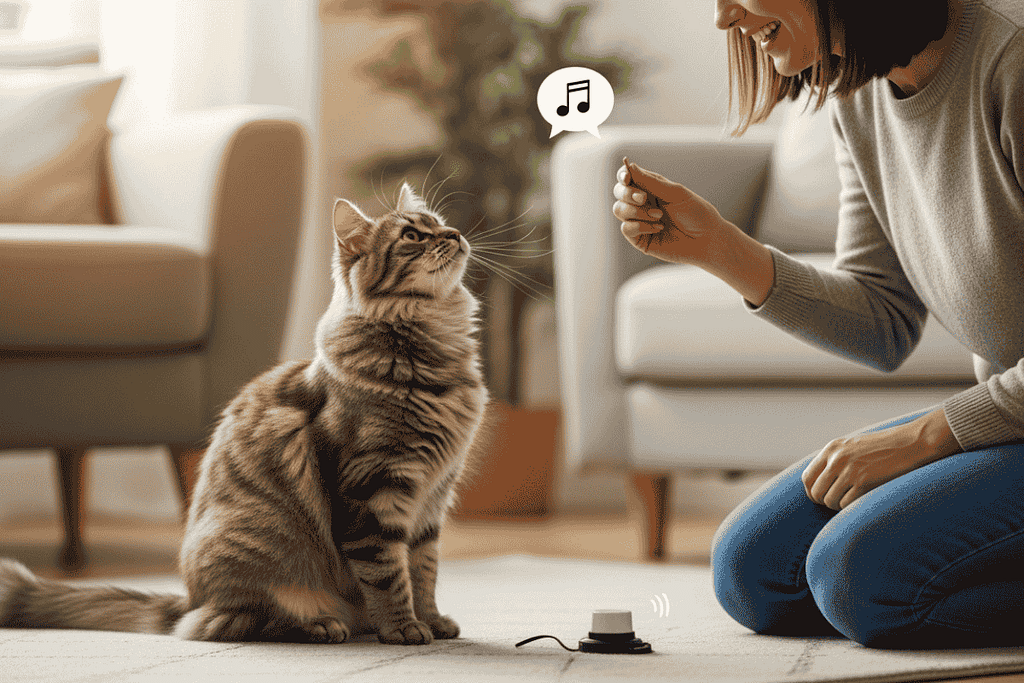
Training your cat to communicate with meows is about observation, consistency, and positive reinforcement — not forcing behavior.
By understanding the meaning behind each vocalization and rewarding clear communication, you can help your cat express needs more effectively.
1️⃣ Observe patterns: Note when and why your cat meows — time, tone, and context.
2️⃣ Reinforce good signals: Respond with attention or treats when meows are appropriate.
3️⃣ Use consistent cues: Pair sounds or phrases (like “playtime” or a bell before meals) with actions.
4️⃣ Encourage variety: Reward even soft meows to build confidence and engagement.
5️⃣ Avoid confusion: Never punish meowing — stay calm and consistent.
Each meow becomes a message — a small but powerful bridge of trust between you and your cat. ??
? Why Cats Meow: Understanding Their Language
Cats are naturally expressive creatures, and their meows are a primary way they communicate with us. But did you know you can train your cat to communicate more effectively through meows? In this guide, we’ll show you practical steps to understand, respond, and even encourage your cat’s vocal expressions—helping you build a stronger bond.
Before training, it’s crucial to understand what your cat’s meows mean. Cats don’t just meow randomly—they have distinct vocal patterns for different needs.
? Different Types of Meows and What They Convey
- Short, soft meows: Often a greeting or attention-seeking.
- Long, drawn-out meows: Express discomfort or desire.
- Repeated meows: Persistent requests, often for food or interaction.
- Chirps or trills: Positive signals, excitement, or wanting to play.
Understanding these nuances is the first step in training your cat to communicate with meows intentionally.
❤️ Emotional Context Behind Meows
Cats’ vocalizations are influenced by mood, environment, and bonding with you. Paying attention to these factors helps you respond appropriately and strengthens the communication loop.
? Pro Tip: Keep a small notebook or use your phone to track patterns of your cat’s meows—it’s a key step in effective training.
? Steps to Train Your Cat to Communicate
Training doesn’t mean forcing your cat—it’s about encouraging clear signals and rewarding communication.
? Observing Patterns and Behaviors
Start by tracking when your cat meows and why. Note: time of day, type of meow, and your cat’s activity. This helps identify which meows are meaningful and which are just random sounds.
? Rewarding Clear Communication
Cats respond well to positive reinforcement. For example:
- Respond to a meow by giving attention, petting, or treats.
- Reinforce specific meows for certain requests (like food or playtime).
- Use a clicker or verbal praise to mark desirable communication.
Consistency is key: the more your cat experiences rewards for clear meows, the more they will actively “talk” to you.
? Using Consistent Cues and Signals
Introduce verbal or visual cues to associate with meows. For example:
- Say “playtime” every time you start playing.
- Ring a bell before feeding.
Over time, your cat learns to meow in response to these cues, creating intentional communication.
? Tips to Encourage Meow-Based Communication
Training is ongoing. These tips help maintain a positive, effective communication system with your cat.
? Responding Appropriately to Your Cat
Always respond in a calm and consistent manner.
- If your cat meows for attention, engage gently.
- Avoid shouting or punishing meows—this confuses them and reduces trust.
❌ Avoiding Miscommunication
- Don’t reinforce negative meows, like loud yowls when frustrated.
- Redirect attention or address the underlying cause calmly.
This ensures your cat learns functional and meaningful communication.
? Encouraging Vocal Variety
Some cats are naturally quiet. To encourage more meows:
- Reward even soft vocalizations.
- Pair play or treats with meowing attempts.
- Speak to your cat often—cats learn by listening and responding.
✅ Benefits of Training Your Cat to Communicate
Training your cat to communicate through meows isn’t just fun—it has lasting benefits.
? Stronger Bond With Your Cat
By understanding and responding correctly, you strengthen trust and emotional connection. Your cat feels heard, and you feel more in tune with their needs.
? Reducing Frustration for Both Owner and Cat
Clear communication prevents misunderstandings. Fewer ignored requests, less stress, and a happier environment for both you and your cat.
? Improved Daily Routine
Cats that communicate effectively help you anticipate:
- Feeding times
- Play sessions
- Emotional comfort needs
This makes everyday life smoother and more predictable for both you and your feline friend.
✨ Want to explore the science behind feline communication? Visit the Cornell Feline Health Center for expert insights on cat vocalization and behavior.
? Conclusion
Training your cat to communicate through meows is a rewarding process that combines observation, reinforcement, and patience. Start small, stay consistent, and celebrate every clear meow!
Remember: every cat is unique, so progress may vary—but with attention and love, you can turn meows into meaningful conversations.
? Want to understand what your cat is really saying?
Dive into The Complete Guide to Cat Meows and Feline Vocalizations — a clear, science-backed resource on purrs, meows, chirps and the signals behind them. Read it on A Cat With Story for practical tips you can use today.
Read the Guide
With the sensitivity of one who loves deeply, Sissi writes stories celebrating the animal world. Her felines Estrela and Safira illuminate her days, while Pete and Gabrich live eternally through her words. Every piece she writes is a love letter to the companions who make life truly meaningful.