
? Do Cats Feel Love and Sadness? What Science Suggests — and Where It’s Unclear
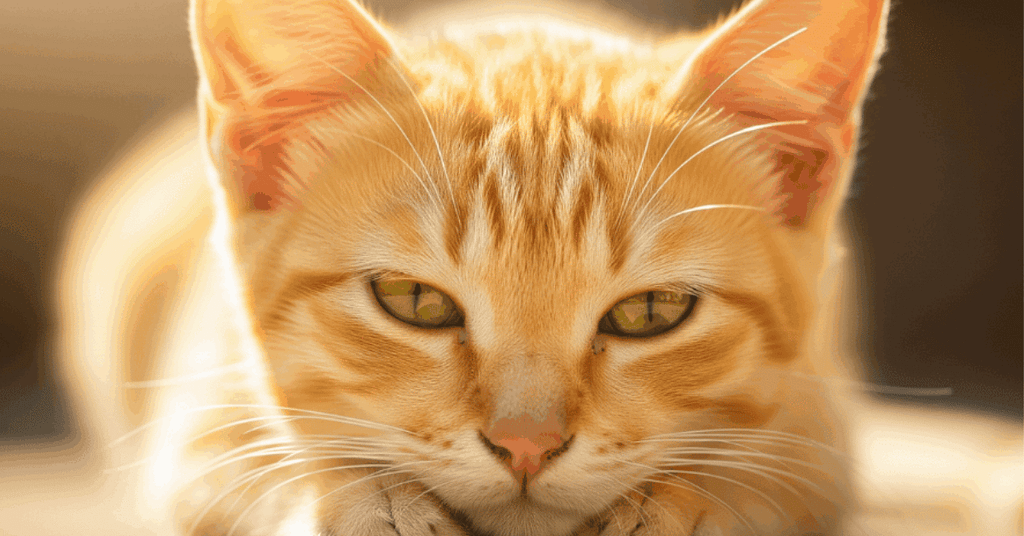
Cats form real bonds with humans, but they don’t experience love and sadness the way we do. Research suggests cats respond to safety, routine, and change — not complex emotions. Understanding where science ends and interpretation begins helps protect the bond without overhumanizing your cat.
Many cat guardians quietly wonder about this.
Does my cat really love me?
Can they feel sad when something changes — or when someone is gone?
These questions rarely come from theory.
They come from lived moments: a cat staying close during hard days, withdrawing after loss, or behaving differently when routines shift.
This article explores what science suggests about cat emotions — while also acknowledging where human interpretation naturally enters the bond.
Not to dismiss the connection.
But to understand it more clearly.
? What Science Suggests About Cat Emotions
For a long time, cats were described as instinct-driven animals, reacting mainly to hunger, fear, or comfort. Modern research paints a more nuanced picture.
Studies suggest cats experience basic emotional states, often called primary emotions, such as:
- fear
- contentment
- frustration
- surprise
These states are linked to brain structures like the amygdala and limbic system, which cats share with many mammals.
What this means is important:
Cats can experience emotional states tied to survival, memory, and safety — not complex emotional narratives.
? Bonding and Brain Chemistry: What Oxytocin Really Means
Research indicates that cats can release oxytocin during positive interactions with familiar humans. Oxytocin is associated with bonding and social affiliation across many species.
This suggests cats are capable of forming attachment bonds.
However, oxytocin alone does not prove complex emotions like guilt, devotion, or emotional responsibility. It reflects familiarity and social comfort — not human-style love.
The bond is real.
The meaning we assign to it often goes further than the science allows.
This distinction is explored more carefully in
? Why Cat Empathy Is Often Misunderstood — What Science Actually Says
❤️ Do Cats Feel Love — or Something Else?
Cats don’t experience love as a concept.
But they do form preference-based relationships.
Common signs of feline attachment include:
- choosing to stay nearby
- slow blinking
- scent-marking through rubbing
- sleeping in shared spaces
- relaxed body language
These behaviors reflect trust and safety, not emotional devotion in the human sense.
What feels like love to us often grows from:
- consistency
- predictability
- shared routines
Which is why the bond can feel deeply personal — even when its roots are behavioral.
? Can Cats Feel Sadness or Grief?
Cats can show behavioral changes associated with stress or loss, such as:
- reduced appetite
- withdrawal or hiding
- changes in sleep
- decreased interest in play
These changes may appear after:
- loss of a companion
- environmental disruption
- routine changes
Science does not confirm that cats experience sadness as a reflective emotional state. But it does show that cats respond strongly to change and instability.
Understanding this distinction helps avoid mislabeling behavior — and supports better care.
If changes persist, veterinary evaluation is always important.
? Why Cat Behavior Often Feels Emotionally Meaningful
Cats are attentive observers.
They notice:
- shifts in movement
- tone of voice
- daily patterns
- environmental predictability
When humans are emotionally distressed, these signals change — and cats respond.
Not to emotion itself, but to what emotion alters.
This explains why many guardians feel their cat “knows” how they’re feeling.
The experience is real.
The mechanism is often misunderstood.
You can explore this more clearly in
? How Can Cats Detect Changes in Human Emotions?
⚖️ Where Human Interpretation Enters the Bond
Humans naturally search for meaning during emotional moments.
When a cat stays close, we feel comforted.
When they step away, we feel rejected.
But cats don’t organize relationships around emotional reassurance.
They organize them around safety, choice, and regulation.
Misunderstanding this is one of the most common sources of disappointment — a theme explored gently in
? Which Cat Behaviors Are Often Mistaken for Emotional Sensitivity?
? Supporting Your Cat’s Emotional Well-Being (Without Overinterpreting)
Healthy emotional environments for cats are built through:
- consistent routines
- predictable interaction
- environmental enrichment
- respect for boundaries
Affection matters — but only when it’s voluntary.
Letting cats choose closeness is what preserves trust.
This perspective becomes especially important during emotional moments, as explained in
? What Should You Expect From a Cat During Emotional Moments?
? A More Grounded Way to Think About the Bond
Your cat’s responses are not empty.
But they are not explanations either.
Cats don’t carry emotional stories about us.
They respond to what feels safe, familiar, and stable.
When we understand that, the bond becomes lighter — not weaker.
Less pressure.
More honesty.
More mutual comfort.
Final Reflection
Cats don’t love us the way humans love.
They don’t grieve the way humans grieve.
But they do form bonds.
They do respond to change.
They do choose presence.
And sometimes, that choice feels powerful precisely because it isn’t guaranteed
❓ Understanding Cat Emotions ?
A grounded view of feline emotions and behavior
u003cstrongu003eCan cats feel hurt feelings?u003c/strongu003e
Cats don’t experience hurt feelings the way humans do. They don’t reflect on past events or assign emotional meaning to them. However, cats can experience stress, fear, or discomfort linked to specific situations — especially when routines or environments change.
u003cstrongu003eHow long does it take for a cat to adjust after a loss or major change?u003c/strongu003e
Adjustment timelines vary by cat. Some adapt within weeks, while others may take months. What helps most is consistency: predictable routines, familiar spaces, and calm interaction. Ongoing behavioral changes should always be discussed with a veterinarian.
u003cstrongu003eCan cats sense when you’re sad?u003c/strongu003e
Cats don’t recognize sadness as an emotion, but they do notice changes in behavior, tone, routine, and scent. These changes can influence how a cat responds — sometimes leading to increased proximity, other times to distance.
u003cstrongu003eDo all cats show affection the same way?u003c/strongu003e
No. Cat personalities vary widely. Some cats seek physical closeness, while others express comfort through proximity, shared space, or calm presence. Both are valid forms of feline attachment and shouldn’t be compared or ranked.
u003cstrongu003eu003cstrongu003eWhat if my cat seems emotionless or distant?u003c/strongu003eu003c/strongu003e
Some cats express emotional states very subtly. Instead of obvious affection, look for quiet signs like relaxed body language, slow blinking, or choosing to stay nearby. Distance doesn’t automatically mean lack of bond.
u003cstrongu003eCan a cat’s emotional state affect their physical health?u003c/strongu003e
Yes. Chronic stress or prolonged instability can impact a cat’s physical well-being, sometimes showing up as changes in appetite, grooming, or litter box habits. Emotional and physical health are closely connected in cats.
u003cstrongu003eHow can I tell if my cat is anxious or physically ill?u003c/strongu003e
Because behavioral signs can overlap, sudden or persistent changes — such as not eating, hiding excessively, or avoiding the litter box — should always be evaluated by a veterinarian first to rule out medical issues.
Curious about what science really says — and where interpretation begins?
Explore Can Cats Sense Human Emotions — or Are They Reacting to Something Else? to understand how behavior, not feelings, shapes the bond.
X

With the sensitivity of one who loves deeply, Sissi writes stories celebrating the animal world. Her felines Estrela and Safira illuminate her days, while Pete and Gabrich live eternally through her words. Every piece she writes is a love letter to the companions who make life truly meaningful.