
Feline Biological Clock: How Cats Organize Their Day
The feline biological clock regulates when cats become active, rest, eat, and anticipate recurring events. These internal circadian rhythms help organize behavior across the day, especially around dawn and dusk when feline activity naturally increases.
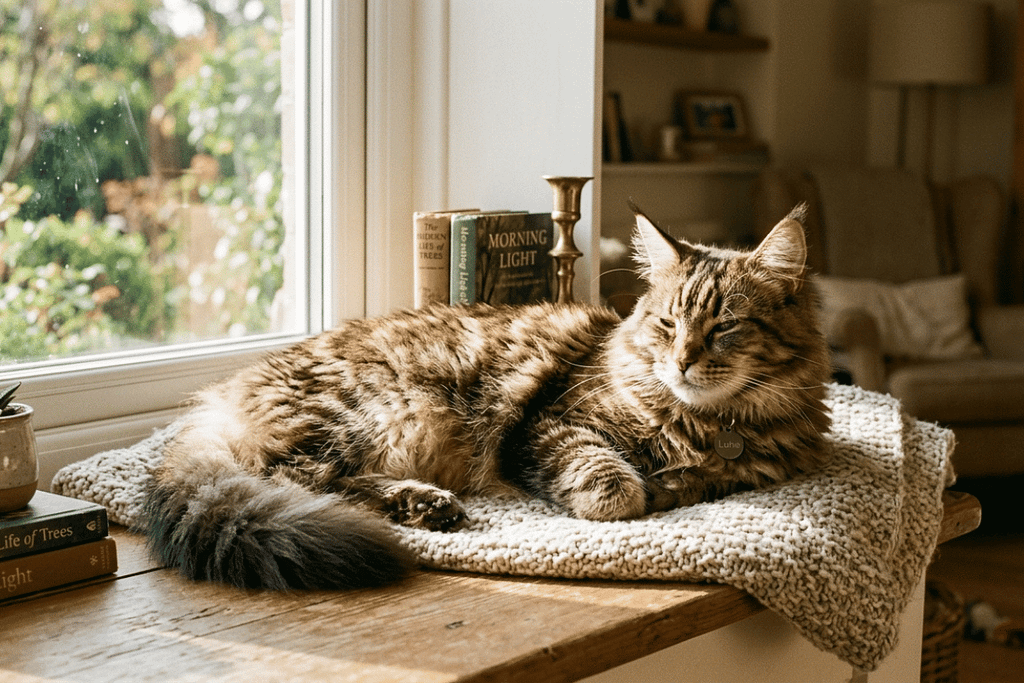
Many cat owners notice that certain behaviors happen at surprisingly similar times each day.
A cat wakes up before the alarm. Becomes active at dawn. Waits near the feeding area before food appears. Suddenly becomes playful late at night while the house grows quiet.
These patterns are not random habits.
They are connected to the feline biological clock — internal timing systems that regulate activity, rest, alertness, and behavioral anticipation throughout the day.
Understanding how cats organize their day begins with recognizing that feline behavior is strongly influenced by biological rhythms that remain active even in indoor environments.
According to research from institutions such as the University of Lincoln, domestic cats continue to display circadian patterns shaped by both internal timing systems and environmental cues.
🕰️ What Is the Feline Biological Clock?
The feline biological clock is part of the circadian system — internal biological rhythms that help regulate when the body becomes more active or more inclined to rest.
These rhythms influence:
- activity levels,
- sleep timing,
- alertness,
- feeding anticipation,
- behavioral readiness.
Rather than following fixed schedules, cats respond to recurring biological and environmental signals that repeat across the day.
This creates recognizable timing patterns even when daily behavior is not identical.
In practical terms, this is why many cats naturally develop recurring activity windows and predictable behavioral rhythms.
🌅 Why Cats Are More Active at Dawn and Dusk
Cats are naturally crepuscular animals.
This means their biological rhythms favor activity during:
- early morning,
- dawn,
- late evening,
- dusk.
These periods historically aligned with the activity of small prey animals, making them biologically important for hunting and environmental awareness.
Even indoor cats continue to follow these inherited activity patterns.
This explains why many cats:
- become energetic early in the morning,
- experience nighttime zoomies,
- become more alert as the environment grows quieter.
These recurring activity patterns are closely connected to Cat Energy Cycles Explained, where periods of activation alternate with recovery and rest.
💡 How Light and Environment Influence Cat Timing
The feline biological clock continuously responds to environmental signals.
One of the strongest influences is light exposure.
Changes in:
- daylight intensity,
- environmental quietness,
- household activity,
- feeding routines
all help regulate when the nervous system becomes more alert or more relaxed.
This process is known as environmental entrainment — when biological rhythms synchronize with recurring external conditions.
For example:
- dim lighting may increase alertness,
- household quietness may trigger exploration,
- repeated feeding times may increase anticipatory behavior.
Over time, these repeated signals help organize daily behavioral timing.
🔁 How Cats Learn to Anticipate Recurring Events
Many cats appear to “predict” events before they happen.
They approach the kitchen before feeding time, wake up shortly before household activity begins, or move toward familiar spaces before interaction occurs.
This behavior develops through repeated associations between timing, environmental cues, and expected outcomes.
The feline brain gradually links:
- recurring sounds,
- changes in light,
- repeated household movement,
- familiar routines
with likely future events.
This pattern is explored more deeply in Anticipatory Behavior in Cats, where repeated experiences gradually build behavioral expectation.
⚖️ Why Your Cat’s Timing May Not Match Yours
Human schedules are highly structured.
Wake. Work. Eat. Sleep.
Cats organize time differently.
Their biological clock responds more strongly to:
- environmental stimulation,
- activity windows,
- rest cycles,
- sensory changes throughout the day.
This is why a cat may:
- rest during busy daytime hours,
- become active late at night,
- seek interaction when the environment becomes calmer.
This difference does not mean your cat is “out of sync.”
It reflects a biological timing system organized differently from human daily structure.
👁️ Practical Signs of the Feline Biological Clock
Once you begin observing timing patterns, the feline biological clock becomes easier to recognize.
Common signs include:
- waking before alarms or feeding times,
- increased activity at dawn or dusk,
- recurring sleeping locations during certain hours,
- predictable windows of play or exploration,
- becoming alert before repeated household events.
These patterns may shift slightly from day to day, but the broader timing structure often remains remarkably consistent.
🌿 Why the Feline Biological Clock Makes Behavior Feel Predictable
The feline biological clock helps organize behavior into recurring periods of:
- activation,
- rest,
- anticipation,
- recovery.
What initially feels unpredictable often becomes easier to recognize when viewed across multiple days instead of isolated moments.
Over time, these rhythms create behavioral familiarity.
Not because cats follow rigid schedules — but because internal timing systems continuously interact with repeated environmental patterns.
This connection becomes even clearer in Cat Daily Routines Explained, where recurring rhythms gradually form recognizable daily behavioral structure.
The feline biological clock does not work in isolation. Periods of alertness, nighttime activity, sudden zoomies, and long recovery phases are all connected to broader behavioral systems that regulate energy, timing, and activation. In Why Do Cats Get Bursts of Energy — Then Suddenly Go Still?, we explore how feline rhythms, recovery cycles, anticipation, and energy conservation shape the way cats organize movement and rest throughout the day.
This article reflects Sissi’s lifelong experience living with cats, combined with extensive observation of feline behavior and insights informed by veterinary guidance. Through A Cat With Story, she explores how instinct, neurobiology, and environment shape everyday cat behavior.
❓ FAQ
Do cats have a biological clock?
Yes. Cats have internal circadian rhythms that regulate activity, rest, alertness, and behavioral timing throughout the day.
Why are cats more active at dawn and dusk?
Cats are naturally crepuscular, meaning their biological rhythms favor activity during low-light periods historically associated with hunting.
Why does my cat wake up at the same time every day?
Repeated environmental patterns and biological timing systems help cats anticipate recurring events such as feeding or household activity.
Can indoor cats still follow natural rhythms?
Yes. Even indoor cats continue responding to internal biological timing systems and environmental light changes.

With the sensitivity of one who loves deeply, Sissi writes stories celebrating the animal world. Her felines Estrela and Safira illuminate her days, while Pete and Gabrich live eternally through her words. Every piece she writes is a love letter to the companions who make life truly meaningful.