
? Engaged Cat, Happy Cat: How to Measure Your Cat’s Engagement and Boost Their Well-Being
You can measure your cat’s engagement by observing their play intensity, curiosity, exploration habits, and daily activity levels. Engaged cats show steady energy, healthy interaction with toys, and interest in their environment. Boosting engagement with enrichment, interactive play, and routine variety improves well-being, reduces stress, and supports healthier behavior.
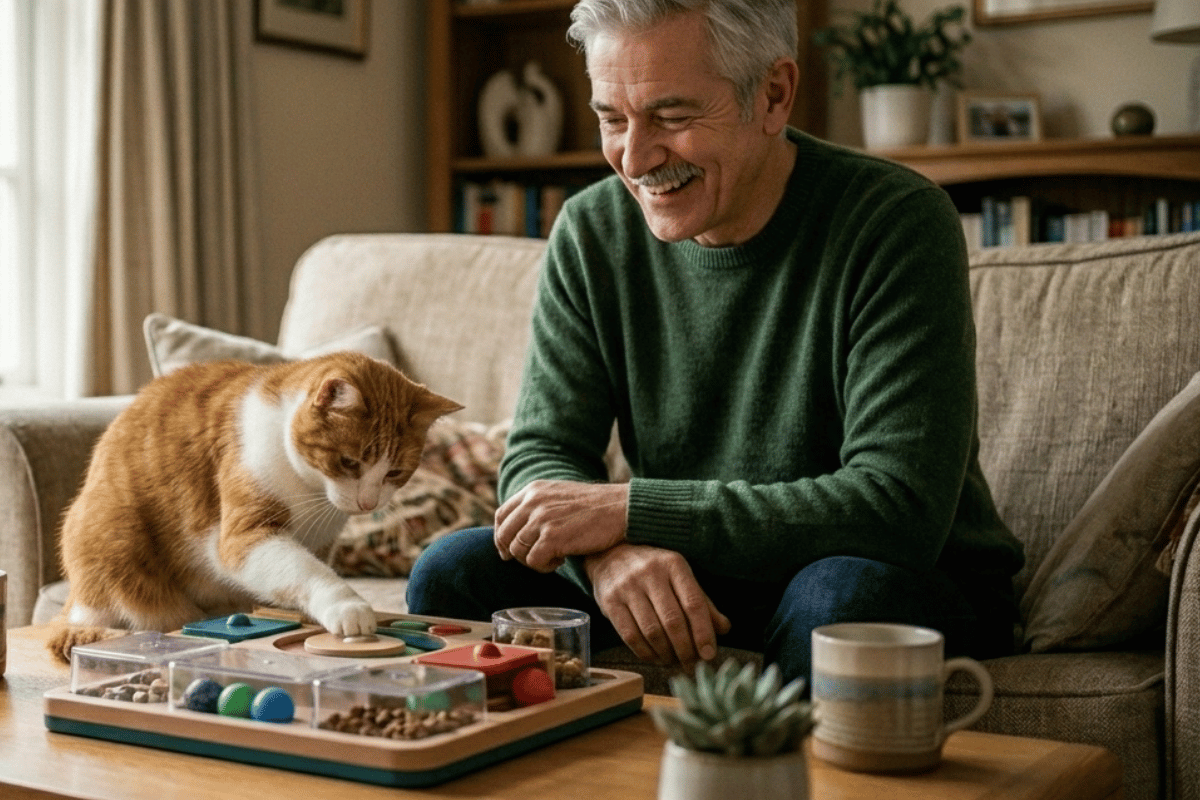
? Engagement Means Connection
An engaged cat isn’t just playful — they’re curious, confident, and emotionally connected to their environment.
“Cat engagement” is about understanding how your cat interacts with the world: how they explore, respond, and connect. These patterns reveal your cat’s happiness and mental health more accurately than toys or treats ever could.
At A Cat With Story, we developed a 5-minute daily observation checklist to help you recognize when your cat is thriving — or when they might need a little extra attention.
? What Is Cat Engagement and Why It Matters
Engagement is not a one-time play session.
It’s a consistent pattern of positive behaviors showing mental activity, social confidence, and emotional security.
An engaged cat tends to be:
- Mentally stimulated;
- Socially connected;
- Physically active;
- Emotionally balanced.
According to a 2024 report by the American Pet Products Association (APPA), over 46 million U.S. households have cats — but nearly 30% of owners report difficulty identifying if their cats are happy. Measuring engagement can help bridge that gap and prevent behavior or stress-related issues before they appear.
? The 5-Point Cat Engagement Checklist
Use this simple 5-point checklist to track how your cat engages with you and their environment.
It’s an easy, science-based way to promote mental and emotional well-being.
? 1. Play and Exploration: Curiosity in Action
An engaged cat explores toys and environments with clear purpose — sniffing, touching, stalking, or returning to an object with focus.
Tip:
Rotate toys weekly and track how long your cat stays interested in each one.
? Fun fact: Studies by Ohio State University show that cats offered new stimuli weekly maintain higher engagement levels and lower stress hormones.
? 2. Social Interaction: Connection and Affection
Engaged cats often approach you voluntarily — for petting, sitting nearby, or simply watching you.
Avoid forcing attention; instead, respect their rhythm.
Tip:
Set predictable times for affection or play. Cats thrive on routine and trust.
? 3. Relaxed Body Language: Comfort Counts
Look for soft eyes, relaxed ears, and a gently curved tail — all signs of emotional comfort.
If your cat shows tension or hides, it’s time to reassess noise, space, or stress factors.
Tip:
Identify where your cat feels safest. Those spots reveal their comfort zones.
? 4. Response to Enrichment: Problem Solving
An engaged cat loves mental challenges — puzzle feeders, treat balls, or obstacle games.
Persistence shows curiosity and satisfaction.
Tip:
Introduce one new enrichment item every two weeks to keep your cat mentally active and confident.
? 5. Reaction to New Experiences
New furniture? Visitors? A moving box?
Watch how your cat reacts. Curiosity and slow approach = good engagement.
Fear or avoidance may signal anxiety or environmental overload.
Tip:
Use familiar scents (like a blanket or your shirt) when introducing something new.
? Creating the Perfect Environment for Engagement
The key to engagement is a stimulating, predictable space.
Make sure your home includes:
- Vertical space (cat trees, wall shelves);
- Quiet resting zones;
- Natural light;
- A mix of solo and shared playtime.
According to the ASPCA, environmental enrichment reduces destructive behaviors in over 70% of indoor cats.
?️♀️ Tracking Engagement: Simple Daily Notes
Consistency is more valuable than perfection.
Try this:
- ? Write one short note daily (“played 5 min, relaxed, came for petting”).
- ? Rate engagement from 0–4.
- ? Record short clips weekly to compare patterns.
Over time, you’ll see trends that help you adjust your cat’s environment and routine.
⚠️ Common Mistakes to Avoid
- ❌ Assuming your cat is “aloof” — they may just express affection differently.
- ⏰ Observing at inconsistent times.
- ? Ignoring small daily changes.
- ? Forgetting that lack of engagement can mean pain or illness.
- ? Using the same toys every day — cats need novelty too!
? Turning Observation into Real Happiness
Measuring cat engagement isn’t about control — it’s about connection.
The more you understand your cat’s emotional world, the more you can adapt to meet their needs.
Small changes — new textures, fresh play ideas, gentle routines — build trust, joy, and emotional security.
Because at the end of the day, a truly engaged cat is a truly happy cat.
? Related Reading
- ?The Complete Guide to Cat Wellness and Longevity
- ? Cat Rescue Stories: Real Tales of Hop and Compassion
? FAQ
What Is Cat Engagement?
It’s your cat’s level of curiosity, social interaction, and emotional connection with their environment.
How Often Should I Measure It?
Spend just five minutes observing daily, and track changes weekly.
Can Shy Cats Be Engaged?
Yes! Engagement varies. Quiet observation or soft blinking are positive signs too.
What If My Cat Stops Playing?
Rule out health issues first, then vary toys and playtimes to reignite interest.
? Conclusion: Connection Builds Confidence
An engaged cat is a thriving cat.
When you take time to observe, respect, and respond to your cat’s emotional cues, you strengthen a relationship that goes beyond feeding and care — it becomes mutual trust.
Looking for science-based resources to support your cat’s well-being? Visit Cornell University’s veterinary research library for trusted information every cat parent can rely on.

With the sensitivity of one who loves deeply, Sissi writes stories celebrating the animal world. Her felines Estrela and Safira illuminate her days, while Pete and Gabrich live eternally through her words. Every piece she writes is a love letter to the companions who make life truly meaningful.