
Positive Reinforcement Training for Rebellious Cats: A Heartfelt 7-Step Guide
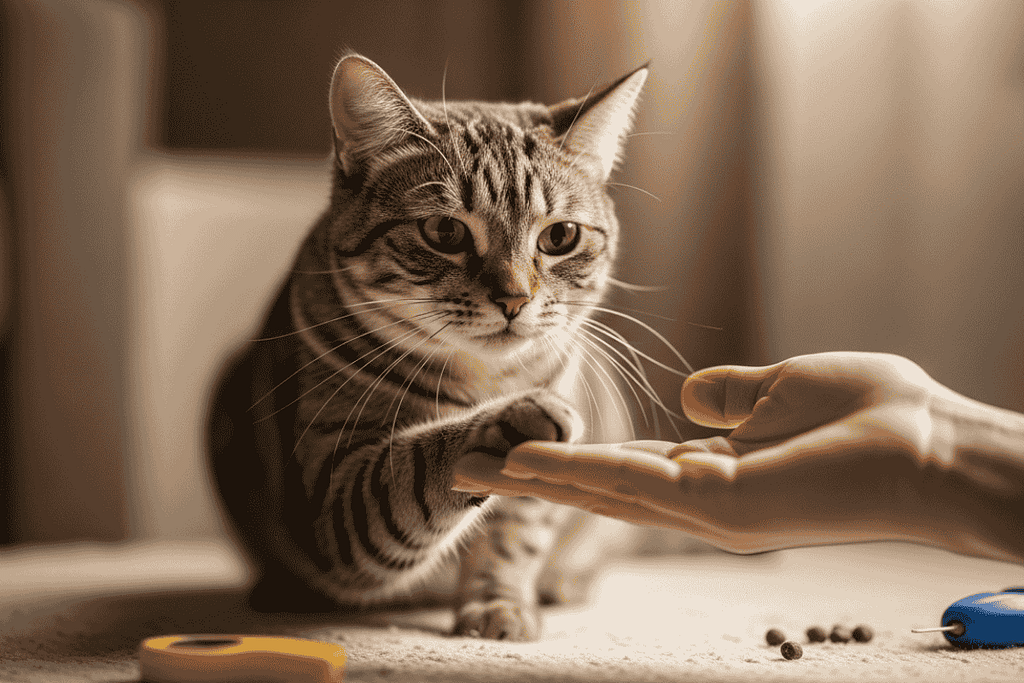
Positive reinforcement training for rebellious cats uses clear communication, precise timing, and emotionally safe sessions to transform difficult behaviors into cooperation. It works through:
- Immediate rewards
- Clear marker signals
- Short, structured sessions
- Shaping small, achievable behaviors
- Consistent reinforcement
? Introduction
Positive reinforcement training for rebellious cats isn’t just a behavior method — it’s a compassionate language that helps strong-willed and misunderstood felines feel safe, seen, and supported.
Some cats seem born with a spark of rebellion — the dramatic tail swish, the bold gaze, the spectacular refusal to do anything you ask. But beneath every “no” is a need, a story, a moment of confusion or overwhelm.
A rebellious cat is often a misunderstood cat—one who craves clarity, safety, and a gentler way to communicate.
Positive reinforcement is more than a training method.
It’s a language of kindness.
A bridge between two species trying to understand each other.
If you’ve ever wondered, “Why won’t my cat listen?” — this guide is your answer.
? What Makes a Cat “Rebellious”? Emotional ROots Behind DIfficult Behavior
“Rebellious” behavior is rarely about defiance. It’s about emotion.
? Fear disguised as boldness
Running away, swatting, or ignoring cues can be the body’s way of saying: I’m overwhelmed.
? Confusion masquerading as stubbornness
Cats don’t come pre-programmed with human expectations. When signals are unclear, they guess—and guessing is exhausting.
? Boredom painted as chaos
A brilliant, energetic brain needs outlets. When it doesn’t get them, mischief fills the void.
? Why punishment breaks the bond
Scolding, spraying water, or “discipline” doesn’t teach—it isolates.
Positive reinforcement whispers: You’re safe. You can try again. I’m listening.
? Step 1 — Positive Reinforcement Training for Rebellious Cats Starts With Clear Behaviors
You can’t train “stop being dramatic,” but with positive reinforcement training for rebellious cats, you can shape tiny, specific, confidence-building behaviors.
? Turn chaos into direction
| Frustration | Trainable Behavior |
|---|---|
| Ignores your call | Touches your hand gently |
| Runs from contact | Approaches for 1 second |
| Knocks things down | Sits calmly on a mat |
| Plays wildly | Waits before pouncing |
Start with 2–4 behaviors. Confidence blossoms when success feels achievable.
? Step 2 — Rewards That Make Positive Reinforcement Training for Rebellious Cats Truly Work
Rewards are not bribes — they’re the emotional bridge that makes positive reinforcement training for rebellious cats effective.
? Find what your cat loves most
- Soft treats
- A 10-second burst of play
- Exploring a cardboard box
- A gentle chin rub
? The secret: timing and sincerity
Rewards must come immediately after the behavior.
? Rotate rewards to keep curiosity alive
Strong-willed cats love novelty.
? Step 3 — Why Markers (Click or “Yes!”) Supercharge Positive Reinforcement Training for Rebellious Cats
Markers create clarity — something rebellious cats crave deeply.
? Why rebellious cats thrive with markers
They crave clarity — and markers create instant understanding.
? Charging the marker
- Click or say “yes!”
- Offer a treat immediately
- Repeat 10–15 times
? Avoid these pitfalls
- Don’t mark late
- Don’t change tone
- Don’t use the marker casually
? Step 4 — Short Sessions: The Secret Weapon in Positive Reinforcement Training for Rebellious Cats
Five minutes is all they need to stay confident and avoid overwhelm.
? Structure of a gentle session
- Warm-up (30s) — easy win
- Focus (3 min) — practice the behavior
- Victory (30s) — end on success
- Stop before frustration
? Step 5 — Weekly Plans Make Positive Reinforcement Training for Rebellious Cats More Predictable
Tracking creates consistency and compassion.
? What to track
- Cue used
- Success rate
- Reward type
- Cat’s mood
- Distractions
- Notes and tiny progress moments
? Step 6 — Generalize the Behavior: Teach Your Cat That Safety Exists Everywhere
Cats often perform beautifully in one room but struggle in another — this is vulnerability, not rebellion.
? The gentle four-step expansion
- Same room, low distractions
- New room, higher-value reward
- Mild distractions
- Real-life moments (before meals, before play, during greetings)
? Step 7 — Troubleshooting With Kindness
? Walks away
They’re done. Try again later.
? Bites from excitement
Lower the intensity.
? Shows fear
Stop immediately. Fear halts learning.
? Offers random behaviors
They’re confused. Reset calmly.
? Still struggling?
Some hearts carry old hurts. A feline behavior professional can help.
? Case Examples — Small Transformations With Big Feelings
? Mimi, The Runner
From fleeing every hand to approaching with curiosity after 2 weeks of soft “touch” training.
? Tico, The Wildling
Play sessions transformed from chaos to calm with micro-pauses and markers.
? Lola, The Overthinker
Gentle, consistent sessions brought her out of hiding in just 5 days.
These transformations were emotional, not just behavioral.
? Long-Term Maintenance — Because Connection Should Last
? Fade rewards slowly
Let confidence grow.
? Weekly refreshers
A 2-minute session is enough.
? Build training into rituals
- Before meals
- Before play
- When you return home
Tiny rituals become shared language.
Ready to understand your rebellious cat on a deeper level?
This resource offers compassionate, research-based insights that beautifully complement your training journey.
? FAQs
Can rebellious cats learn with positive reinforcement?
Absolutely — they often become the most engaged learners.
How long does it take?
7–21 days for simple cues.
Do I need a clicker?
No — a verbal marker works.
What if my cat doesn’t like treats?
Try play, scent exploration, or gentle praise.
? Conclusion — Your Cat Isn’t Rebellious. They’re Reaching Out.
Every stubborn stare, every tail flick, every refusal is communication.
With positive reinforcement, you finally start speaking their language.
Begin with one tiny behavior today.
A moment of clarity.
A shared victory.
Rebellious cats often become the most loyal partners — once they feel understood.
? Want Science-Backed Tips for a Happier Cat?
Small behavior adjustments can transform your cat’s daily comfort and well-being. Explore evidence-based guidance in Cat Behavior Tips Backed by Science for Happier Cats .

With the sensitivity of one who loves deeply, Sissi writes stories celebrating the animal world. Her felines Estrela and Safira illuminate her days, while Pete and Gabrich live eternally through her words. Every piece she writes is a love letter to the companions who make life truly meaningful.