
? The Secret Language of Purring: What Your Cat Is Really Telling You
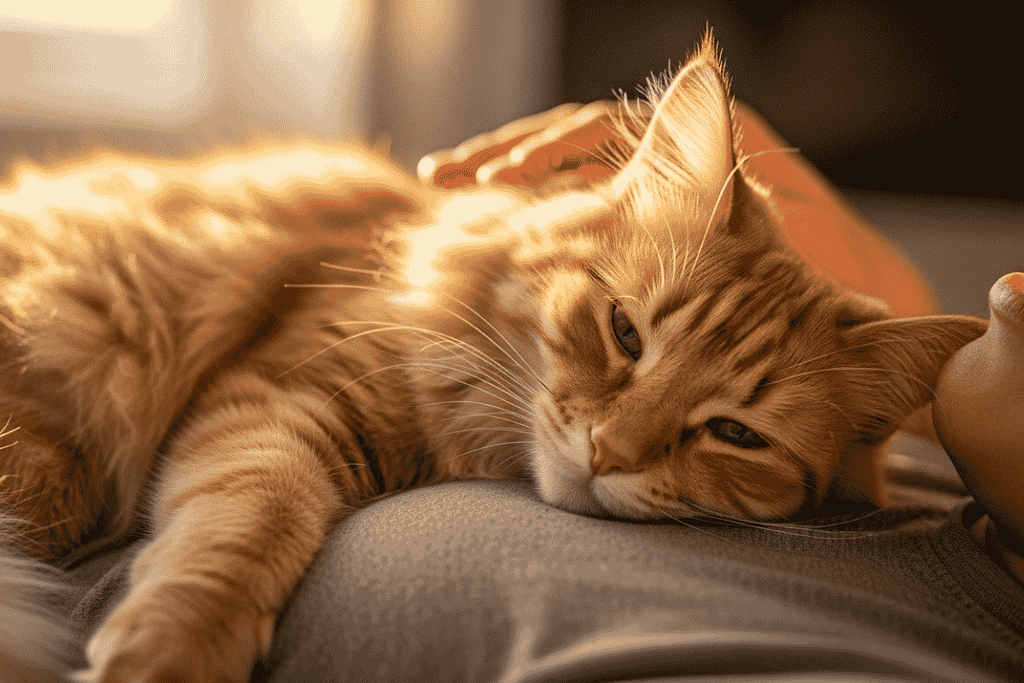
?The Mystery Behind Every Purr
Why cats purr remains one of nature’s most soothing mysteries.
While often a sign of comfort, purring can also express healing, communication, and even pain relief — a language written in vibration.
1️⃣ Kittens first learn to purr to bond and locate their mothers.
2️⃣ Adult cats purr to express contentment and safety.
3️⃣ Cats may purr during stress or pain to self-soothe and release endorphins.
4️⃣ Low-frequency purrs (25–150 Hz) can help heal bones and muscles.
5️⃣ Humans benefit too — studies show purring lowers stress and blood pressure.
Each gentle vibration carries a story of comfort, connection, and resilience — proof that every purr speaks in frequencies of love. ??
? Understanding Why Cats Purr — The Science and Emotion Behind the Sound
It starts softly — a vibration you feel more than hear. A rhythm that fills a quiet room and settles the heart.
The purr is one of nature’s gentlest paradoxes: both ordinary and miraculous. Everyone recognizes it, yet few understand what it truly says.
To scientists, purring is a low-frequency vocalization that emerges through controlled contractions of the laryngeal muscles.
To cat lovers, it’s something deeper — a language that connects bodies and souls through invisible resonance.
Some cats purr to comfort others. Some purr to heal themselves. And some simply purr because life, in that small moment, feels safe.
? Born in a Whisper: The Mother–Kitten Connection
Before a kitten opens its eyes or ears, it already knows the purr.
Newborns, deaf and blind, navigate the warmth of their mother by following the vibrations in her body — a low hum guiding them toward milk and safety. ??
The mother cat purrs as a lullaby, signaling protection. The kittens soon answer back, their tiny throats echoing reassurance: I’m here, I’m alive, I’m home.
In those first days, purring is not joy or habit — it’s survival through vibration.
That early exchange leaves an imprint. Long after the kittens grow, the purr remains a universal signal of trust — the sound of feeling safe again. ?
? Understanding Why Cats Purr When They’re Happy
“Understanding why cats purr during moments of affection helps us decode their emotional language.”
When you stroke your cat and hear that gentle rumble, you’re witnessing a language of affection evolved over millennia.
A relaxed cat will stretch out, blink slowly, and purr with slow, steady breath. Their ears tilt slightly forward, whiskers soft, body weight surrendered to comfort.
It’s a full-body sentence that means, “I’m safe with you.” ?
But happiness isn’t the only reason cats purr. Sometimes, the same vibration can appear in moments of uncertainty — a feline form of emotional regulation.
Like deep breathing for humans, purring helps cats center themselves, quieting the body and mind when the world feels overwhelming. ?
? The Hidden Frequencies: Why Cats Purr to Heal Themselves and others
Researchers at the Cornell Feline Health Center have discovered that a cat’s purr vibrates between 25 and 150 Hz — frequencies known to promote bone density and muscle repair, helping cats heal naturally through sound.
In essence, cats may be using sound to heal. ?✨
This “healing frequency” could explain why injured or sick cats often purr more intensely, even when movement hurts. The vibration increases blood flow, reduces pain, and may even stimulate tissue regeneration.
So when your cat curls up and purrs through an illness, they’re not pretending to be fine — they’re literally treating themselves with sound therapy. ??
And perhaps, when they lie beside you, they’re sharing that therapy — offering calm, one vibration at a time.
? Why Cats Purr in Pain: The Self-Soothing Secret
Because purring can be both comfort and coping, context matters.
A cat that hunches low, keeps ears flat, or breathes rapidly might be purring out of distress, pain, or anxiety. ?
It’s the feline equivalent of whispering, “I’m scared, but I’m trying to stay calm.”
Veterinary behaviorists note that cats may purr at the clinic table or after surgery as a physiological way to self-soothe — the body releasing endorphins while signaling “I’m not a threat.”
If your cat’s purring feels different — sharper, higher, or paired with changes in appetite or mobility — consult your veterinarian. ? Sometimes the quietest sounds hide the loudest needs.
? The Quiet Ones: Why Some Cats Don’t Purr
Not every cat speaks this language audibly.
Some purr so softly you feel it only through touch — a vibration beneath your hand instead of sound in the air. Others hardly purr at all.
That silence doesn’t mean unhappiness.
Cats raised from feral ancestry often learn to communicate quietly, avoiding sounds that might draw attention to predators. ?
Others simply express joy differently: head-butts, slow blinks, or the gentle curl of a tail.
Just as people laugh in different tones, cats have their own acoustic personalities. ?
Happiness doesn’t always need a soundtrack. ?
? The Human Connection: Why We Love the Sound
Why does that vibration feel so healing to us?
Because humans respond instinctively to rhythm. The steady pulse of a purr mimics the frequency of calm breathing and even the cadence of the human heart at rest. ❤️?
Studies suggest that listening to a cat purr can lower blood pressure and reduce stress hormones — a biological duet between species. ?
Maybe cats learned that our bodies relax when they hum. Or maybe we learned to love the creatures who sing calm into our chaos.
Either way, the purr is a dialogue — not just of sound, but of safety shared between two beating hearts. ?
? Listening Beyond Sound
The next time your cat purrs, listen with more than your ears. ??
Feel the vibration, notice their posture, the light in their eyes.
Every purr tells a story: of comfort, of memory, of healing, of love.
And when your cat chooses to purr beside you, know this — in their quiet, resonant way, they’re saying, “With you, I’m home.” ??
? Want to understand what your cat is really saying?
Dive into The Complete Guide to Cat Meows and Feline Vocalizations — a clear, science-backed resource on purrs, meows, chirps and the signals behind them. Read it on A Cat With Story for practical tips you can use today.
Read the Guide
With the sensitivity of one who loves deeply, Sissi writes stories celebrating the animal world. Her felines Estrela and Safira illuminate her days, while Pete and Gabrich live eternally through her words. Every piece she writes is a love letter to the companions who make life truly meaningful.