
? What is the meaning of slow blinking in cats? Understanding the Cat Kiss
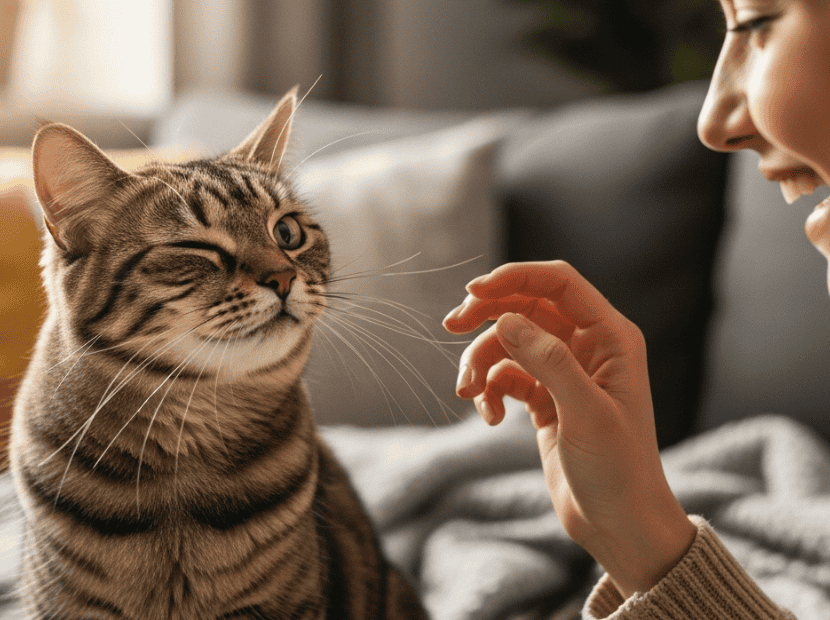
Slow blinking in cats is a gentle form of feline communication that signals trust, affection, and relaxation. Often called the “cat kiss,” this slow eye-closing gesture shows that your cat feels safe with you and is willingly lowering their guard.
What slow blinking in cats means:
- A sign of deep trust
- Non-aggressive, relaxed body language
- An invitation to bond
- A way to show affection
- A signal that your cat feels safe in your presence
✨ The Secret Language of Feline Eye Contact
A slow blink is one of the most subtle and powerful forms of non-verbal communication cats use. When your feline closes their eyes slowly in your direction, they’re expressing trust, affection, and contentment. It’s their way of saying:
“I feel safe enough to let my guard down around you.”
? What Is a Slow Blinking (“Cat Kiss”)?
In the wild, prolonged direct eye contact is often seen as a challenge or threat between cats. So when your pet closes their eyes in your presence, they’re doing the opposite — showing that you’re not a threat.
A “cat kiss” happens when your feline:
- ?️ Maintains gentle eye contact with you
- ? Slowly closes their eyes in a deliberate motion
- ? Sometimes keeps their eyes closed for a few seconds
- ? May repeat the gesture several times
? Signs of Feline Trust: Decoding The Slow Blinking Cat Body Language
Slow blinking is just one of many ways cats show trust. Understanding these signs helps deepen your bond with your feline companion:
✅ Positive signs of trust:
- Exposing their belly voluntarily
- Purring when you approach
- Head-butting or rubbing against you
- Fully relaxing in your presence
- Sleeping near or on you
- Following you around the house
- Bringing you “gifts” (prey or toys)
⚠️ Signs of discomfort to watch for:
- Ears flattened or turned back
- Tail flicking rapidly
- Dilated pupils
- Tense or crouched body
- Attempts to flee
?️ How to Return a Cat’s Slow Blink: A Practical Guide
Responding to your cat’s slow blink is a beautiful way to strengthen your relationship. Here’s how to do it right:
Step-by-Step Guide to Blinking Back
- ? Make soft eye contact — relaxed, not intense
- ? Slowly close your eyes in a calm, deliberate motion
- ? Keep them closed for 2–3 seconds
- ? Gradually open your eyes
- ? Stay still and calm afterward — avoid sudden movements
Tips for Success
- Be patient — not all cats respond immediately
- Choose the right moment — when your cat is calm and relaxed
- Respect their space — don’t force interaction
- Keep your body language relaxed and non-threatening
? The Science Behind the Behavior
Recent studies in feline behavior confirm what cat lovers have long suspected: slow blinking strengthens the bond between cats and humans. Research shows that cats who receive slow blinks from humans are more likely to:
- Approach people
- Allow physical interaction
- Show affiliative behaviors
- Display reduced stress signals
This behavior has evolutionary roots. Among cats, closing the eyes in another’s presence is a clear sign of non-aggression and voluntary vulnerability.
? Building Trust with Your Cat
Slow blinking is just one piece of the puzzle in building a healthy relationship with your cat. Other key practices include:
- Respecting your cat’s timing for interaction
- Creating predictable routines
- Providing safe hiding spots
- Engaging in regular play sessions
- Avoiding punishment — positive reinforcement works best
?♀️ What If My Cat Doesn’t Blink Back?
If your cat doesn’t return your slow blink, don’t worry. Some cats are naturally more reserved or may need more time to build trust. Factors that can influence this include:
- Past experiences (especially for rescued cats)
- Individual temperament
- Early socialization
- Previous interactions with humans
Keep offering a safe, loving environment, and your cat may eventually feel comfortable enough to express affection this way.
Want a science-based explanation of feline sleep and bonding?
Explore this trusted resource on cat behavior and emotional attachment →
Tip: Explore research-based cat behavior tips to understand your cat’s mind, build trust, and promote lifelong wellbeing. Click here!
FAQ – Slow Blinking in Cats
❓ How does slow blinking help you connect with your cat on a deeper level?
The slow blink is one of the purest signs of love and trust in the feline world. By learning and reciprocating this “secret language,” you open a special channel of communication with your cat — one that goes beyond words.
? What does it mean when a cat blinks slowly at you?
A slow blink from a cat is a sign of trust and affection. It’s often called a “cat kiss” and indicates that your cat feels safe and relaxed around you.
?️ Should I blink back at my cat?
Yes! Blinking slowly back at your cat can help strengthen your bond. It mimics their non-verbal communication and shows that you’re not a threat.
? Do all cats blink slowly?
Not all cats exhibit slow blinking. Some are more reserved or may need time to feel comfortable enough to show this behavior. It depends on their personality and past experiences.
? Is slow blinking in cats backed by science?
Yes. Studies have shown that cats are more likely to approach and interact with humans who use slow blinking, confirming it as a positive social signal.
? When is the best time to try slow blinking with my cat?
Try it when your cat is calm and relaxed — not during playtime or feeding. Quiet moments are ideal for this subtle interaction.
? What if my cat doesn’t blink back?
That’s okay! Some cats take longer to respond. Keep offering gentle interactions and respect their space. Trust builds over time.
So next time your cat offers you one of those precious “kisses,” don’t forget to blink back.
It’s a small gesture with a big meaning in your feline friend’s heart. ?
Does your cat follow you to the bathroom ? Discover emotional reasons behind this behavior and how it strengthens your bond. Learn all about it here!
? Want Science-Backed Tips for a Happier Cat?
Small behavior adjustments can transform your cat’s daily comfort and well-being. Explore evidence-based guidance in Cat Behavior Tips Backed by Science for Happier Cats .

With the sensitivity of one who loves deeply, Sissi writes stories celebrating the animal world. Her felines Estrela and Safira illuminate her days, while Pete and Gabrich live eternally through her words. Every piece she writes is a love letter to the companions who make life truly meaningful.