
Why Does My Cat Follow Me to the Bathroom? What It Says About Your Bond
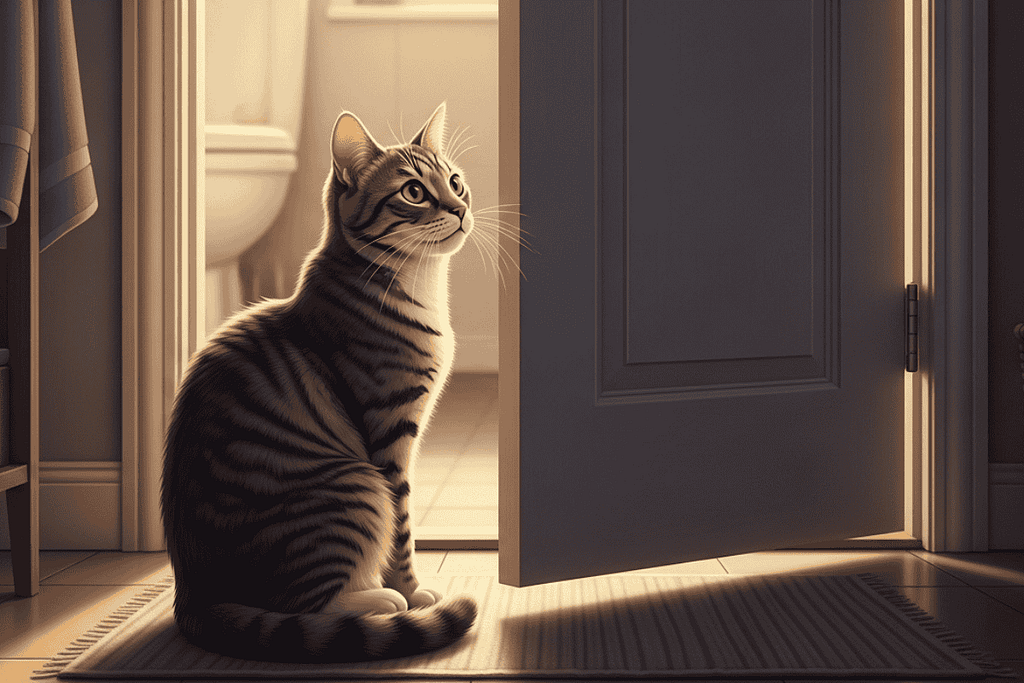
Cats often follow their humans to the bathroom because the space feels safe, the routine is predictable, and they want attention or closeness. If you’re wondering how is my cat following to the bathroom, the behavior usually reflects curiosity and bonding. Common reasons cats follow you to the bathroom:
- Curiosity about your routine
- Desire for attention or affection
- Strong bonding and trust
- Preference for the warm, quiet space
- Mild separation anxiety
? The Curious Case of Bathroom Bonding
You close the bathroom door, and there it is—the paw under the gap, the soft meow, or maybe even your cat sitting patiently outside like a furry sentinel. Sound familiar?
Cats have a reputation for being independent, but when it comes to bathroom time, many turn into clingy little shadows. Why?
Let’s explore the emotional, behavioral, and even symbolic reasons behind this quirky habit—and what it reveals about your relationship with your feline friend.
Continue reading to discover how your cat’s bathroom obsession might be a sign of something deeper.
?️ Cats and Their Need for Routine
Cats are creatures of habit. They thrive on predictability, and your daily bathroom visit is part of their internal schedule.
- Routine = Safety: When you disappear behind a closed door, it disrupts their sense of control.
- Curiosity: Bathrooms are full of interesting smells, sounds, and textures.
- Territorial Instincts: Your cat may feel the need to “supervise” every part of their domain—including the toilet.
? Example: “Every morning, Luna waits outside the bathroom door. If I take too long, she starts pawing at it like I’ve been gone for hours.”
? Emotional Attachment: More Than Just Clinginess
Your cat’s behavior might not be about the bathroom at all—it could be about you.
Cats form strong emotional bonds with their humans, and following you around is a way of expressing affection and trust.
- Separation Anxiety: Some cats feel distressed when left alone, even for a few minutes.
- Companionship: They simply enjoy being near you, no matter the room.
- Security: Your presence makes them feel safe, especially in quiet or enclosed spaces.
? Example: “When I had surgery, my cat didn’t leave my side—even in the bathroom. She’d curl up on the rug and just watch over me.”
? Vulnerability and Trust
Bathrooms are intimate spaces. You’re vulnerable, relaxed, and often alone. Cats pick up on that energy.
- Trust Signals: Your cat may interpret your calm state as an invitation to connect.
- Mirroring Behavior: Cats often mimic their humans’ routines and emotions.
- Bond Reinforcement: These quiet moments can strengthen your relationship.
? Example: “My cat only jumps on my lap when I’m in the bathroom. It’s like she knows I won’t move for a while.”
? Is It Normal? What Experts Say
Yes—this behavior is common and usually harmless. But it’s always good to understand the why behind it.
According to Dr. Sarah Wooten, a veterinary behaviorist:
“Cats follow their humans to the bathroom because it’s a moment of separation. For bonded cats, even short absences can trigger a need to reconnect.”
Other experts highlight the role of scent, routine, and social bonding in this behavior.
For more insights, the ASPCA’s guide to common cat behavior issues offers helpful explanations for clingy behavior and how to manage it.
? Example: “Dr. Smith explains that cats often associate the bathroom with quiet time and attention—two things they crave.”
If your cat’s clinginess seems excessive or is paired with other behavioral changes, the Cornell Feline Health Center provides expert resources on feline emotional health and behavior problems.
?️ How to Respond to Your Cat’s Bathroom Visits
If you enjoy the company—great! But if it becomes disruptive, here are a few tips:
- Leave the door slightly ajar to reduce anxiety
- Create a cozy spot nearby so they can wait comfortably
- Offer attention before and after your bathroom visit
- Use calming pheromones if your cat shows signs of stress
? Example: “Bella scratches the door frantically if I lock it. I started leaving it open a crack, and now she just sits quietly on the mat.”
⚠️ When to Be Concerned
While most clingy behavior is harmless, watch for signs of deeper issues:
- Excessive vocalization or scratching
- Destructive behavior when left alone
- Refusal to eat or play without you
These could indicate separation anxiety or other emotional imbalances. In such cases, consult a vet or feline behaviorist.
Discover science-backed cat behavior tips to understand your cat, strengthen your bond, and keep your feline happy and healthy.
❓ FAQ: Why Does My Cat Follow Me to the Bathroom?
Is it normal for cats to follow their owners everywhere?
Yes, especially if they’re strongly bonded or have separation anxiety.
Why does my cat meow outside the bathroom door?
They may be seeking attention, reassurance, or simply curious about what you’re doing.
Should I be worried if my cat won’t leave me alone?
Not necessarily. But if it’s obsessive or stressful, consider behavioral support.
Can I train my cat to stop following me?
You can redirect the behavior with positive reinforcement and environmental enrichment.
Do cats understand privacy?
Not in the human sense. To them, being with you is natural—even during bathroom time.
Why does my cat sit on my lap only in the bathroom?
It’s a quiet, undisturbed moment—perfect for bonding.
Is clingy behavior more common in certain breeds?
Yes. Ragdolls, Siamese, and Burmese cats are known for their affectionate nature.
Can bathroom behavior be linked to health issues?
Rarely, but sudden changes in behavior should be checked by a vet.
SissiEdit Profile
? Conclusion: It’s Not Just About the Bathroom
Your cat’s bathroom visits are more than quirky behavior—they’re a reflection of trust, affection, and emotional connection.
So next time you see those curious eyes peeking under the door, remember:
You’re not just a human. You’re their safe space.
? Want to learn more about feline behavior? Check out our post on Cat Anxiety Symptom and How to Build a Stronger Bond With Your Cat.
? Want Science-Backed Tips for a Happier Cat?
Small behavior adjustments can transform your cat’s daily comfort and well-being. Explore evidence-based guidance in Cat Behavior Tips Backed by Science for Happier Cats .
<

With the sensitivity of one who loves deeply, Sissi writes stories celebrating the animal world. Her felines Estrela and Safira illuminate her days, while Pete and Gabrich live eternally through her words. Every piece she writes is a love letter to the companions who make life truly meaningful.