
? Cat Body Language by Age: Why Age Changes Everything
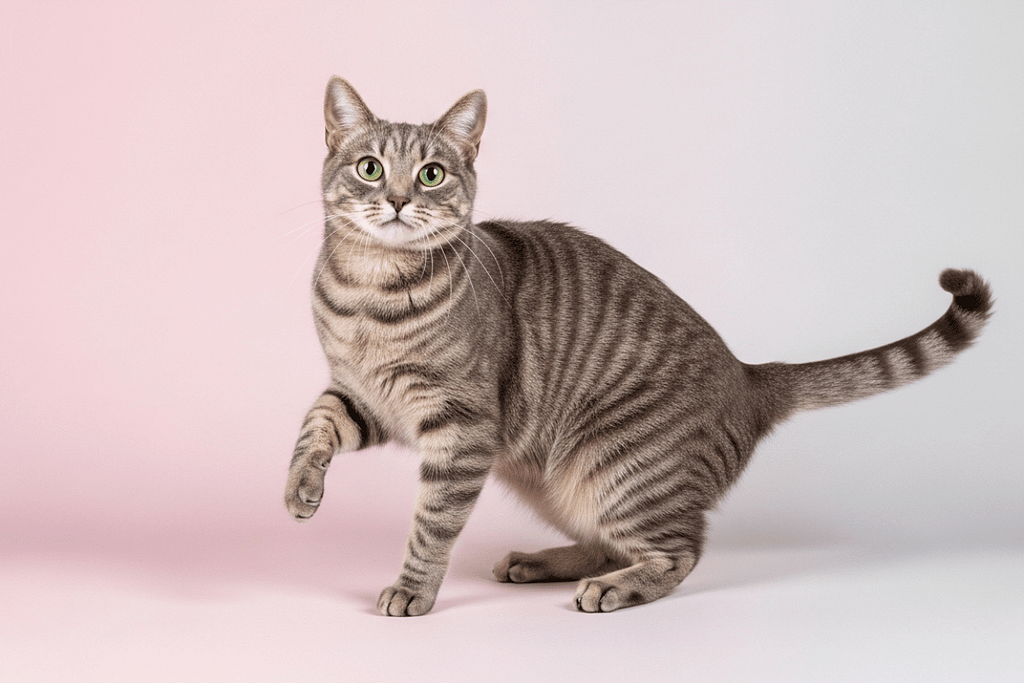
Cat body language by age changes dramatically across life stages. A tail-up posture, purring, hiding, or jumping hesitation can mean playfulness in kittens, confidence in adults, or pain in seniors.
Cat body language doesn’t mean the same thing at every age. A signal that’s playful in a kitten can indicate pain in a senior. This guide decodes body language across all six feline life stages so you can interpret your cat accurately — and catch red flags early.
? Cat Body Language by Age: The One Thing Most Owners Get Wrong
Most cat parents learn the basics of feline communication — tail posture, ear angles, pupil dilation, and overall body stance. But very few understand that cat body language by age changes dramatically, often with meanings reversed from one life stage to another.
A kitten’s tail swish is a playful invitation.
A senior’s tail swish is often a sign of discomfort.
A young adult’s dilated pupils mean curiosity.
A senior’s dilated pupils may be the first warning of hypertension.
Most body language guides ignore this reality.
They teach you the “dictionary,” but not how the language evolves.
This expanded guide corrects that mistake by explaining how to interpret cat body language by age, from clumsy kittens to fragile geriatrics. When you understand these age-based shifts, you can spot joy, stress, pain, confusion, and comfort with far more accuracy — and keep your cat safer throughout their life.
❤️? Why Cat Body Language by Age Matters More Than You Realize
Cat owners often react to what they see, not why it’s happening. But age is one of the most important contexts for interpretation.
Scenario 1:
Your 12-year-old cat is always purring.
You think, “He must be really happy right now.”
Reality: When seniors are in pain, they often purr to calm themselves down.
Truth: When seniors are in pain, they often purr to calm themselves down.
Scenario 2:
Your 7-month-old teen doesn’t listen to what you say and pushes the limits.
You think, “He’s acting up.”
This is completely normal: a teenage brain in a cat body.
Scenario 3: Your 8-year-old adult sleeps more often with their arms and legs stretched out.
You think, “She looks so cute.”
In reality, this could be a small sign of early arthritis.
It’s not just interesting to know how cats communicate with their bodies by age; it’s also important for their health, bonding, and finding medical problems early..
What You’ll Learn
- How each life stage dramatically shifts the meaning of common signals
- The most misinterpreted signs at each age
- Why adolescence is the most problematic stage for owners
- Which behaviors require urgent vet attention
- How to track your cat’s baseline through the years
Let’s start exploring the six life stages that define cat body language by age.
?⬛ Cat Body Language by Age: The 6 Life Stages Explained
Ao longo das próximas seções, vamos aprofundar mais, adicionar exemplos práticos e contextualizar sinais que antes eram apenas mencionados. Esta versão inclui muito mais nuance e histórias reais para enriquecer seu entendimento.
? Stage 1: Kitten (0–6 Months) — The Over-Communicators
Body Language Characteristics
Kittens are learning the very basics of communication. Their nervous system is still developing, their senses are rapidly maturing, and every experience shapes who they become.
That’s why cat body language by age starts explosively in kittens.
- Movements are exaggerated.
- Play mimics hunting in loud, clumsy ways.
- Signals are honest and unfiltered.
- Emotions shift rapidly.
Signature Kitten Signals
- Question-mark tail: A universal sign of friendliness and excitement.
- Sideways hops: A mixture of play, social bonding, and clumsy coordination.
- Belly-up displays: Trust + social curiosity, especially during 3–5 months.
- Over-dilated pupils: Normal — their vision is still refining.
What’s Different at This Age
Kittens don’t use subtlety. When they’re happy, you know. When scared, you definitely know. There’s no masking of pain, fear, or overstimulation yet.
Red Flag
If a kitten at 10–12 weeks hides constantly or avoids play, this can indicate fear imprinting or poor early socialization.
This is the most treatable stage — early intervention changes lives.
? Stage 2: Adolescent (6–24 Months) — The Missing Chapter in Cat Behavior
Adolescence is the least-documented stage in cat behavior — yet the most complained about. This is when many cats are surrendered to shelters, often due to misunderstood developmental behavior.
Body Language Characteristics
Here’s where cat body language by age becomes complex:
- Confidence spikes unpredictably.
- They test boundaries (and your patience).
- Hormones influence communication.
- Signals fluctuate from mature to kitten-like.
Signature Adolescent Signals
- The “swag walk”: a slow, confident stride to test social boundaries.
- The sideways ear position: part-attentive, part-defiant.
- Slow-motion mischief: reaching toward objects while staring at you.
- Tail quiver near walls: pre-spraying in intact cats.
What’s Different at This Age
Adolescent cats experiment with communication. Their body language becomes intentionally manipulative, playful, or provocative — much like a human teenager learning social rules.
Red Flag
If aggression escalates without learning inhibition, this requires intervention.
Without guidance, this stage can shape future behavioral issues — but with structure, adolescents become wonderfully confident adults.
? Stage 3: Prime Adult (2–7 Years) — The Baseline for Cat Body Language by Age
This is the most stable and predictable stage of a cat’s life. Whatever your cat learned during kittenhood and adolescence becomes fully integrated.
Body Language Characteristics
- Signals are consistent and intentional.
- Communication is nuanced and clear.
- Emotional stability peaks.
- Bonding is deeper and more expressive.
Key Adult Signals
- Slow blink: deep affection and trust.
- Vertical tail: confident greeting.
- Loaf position: relaxed vigilance.
- Smooth hunting sequence: focus → stalk → wiggle → pounce.
What’s Different at This Age
Any significant deviation from their known habits now becomes diagnostic.
This is why cat body language by age is so essential — adult behavior is the strongest indicator of medical or emotional shifts.
Red Flag
New hiding, aggression, or changes in tail carriage always require a vet visit.
? Stage 4: Mature Adult (7–10 Years) — Subtle Shifts Begin
This is when aging becomes visible to the trained eye — but invisible to most caretakers.
Body Language Characteristics
- Slight decline in energy
- Increased efficiency of movement
- Shorter play periods
- More cautious behavior
What to Watch
- Jump hesitation
- Tail carried slightly lower
- More stretching after sleep
- Sleeping stretched out for joint relief
- Grooming less flexible areas
Deeper Insight
This stage is often misunderstood as “laziness,” but in reality, it’s a subtle shift in comfort. Cats are masters of hiding pain — so cat body language by age plays a key role here.
Red Flag
Hesitation before jumping, even for a moment, is a common early sign of arthritis.
? Stage 5: Senior (10–14 Years) — A New Language Emerges
Senior cats don’t just slow down — their entire communication system changes.
Body Language Characteristics
- More vocal, especially at night
- Stiffer body posture
- Increased sleep but poor-quality rest
- Lower tail position
Critical Senior Signals
- Purring as pain relief
- Wall staring due to cognitive decline
- Litter box hesitation from painful squatting
- Hunched posture indicating abdominal pain
Cognitive Dysfunction Signs
- Getting lost in familiar rooms
- Nighttime restlessness
- Increased crying or yowling
- Confusion around routines
Red Flag
Any abrupt change is urgent — seniors decline quickly.
? Stage 6: Geriatric (15+ Years) — Listening to the Silent Signals
Geriatric cats communicate almost exclusively through quiet, subtle behaviors.
What to Monitor
- Difficulty rising
- Reduced grooming
- Increased hiding
- Restlessness
- Appetite fluctuations
- Weight loss
Quality of Life Indicators
Healthy: Still engages, responds to affection, settles comfortably
Declining: Avoids interaction, restless, difficulty walking
Critical: Crying, staggering, open-mouth breathing
This stage demands gentle observation and deep empathy.
? Cat Body Language by Age: Same Signal, Different Meaning

Here’s a clearer breakdown:
Purring
- Kitten → Comfort
- Adult → Affection
- Senior → Often pain
Tail Thrashing
- Kitten → Play
- Adult → Irritation
- Senior → Pain
Dilated Pupils
- Kitten → Normal
- Adult → Arousal
- Senior → Hypertension
Hiding
- Kitten → Exploration
- Adult → Illness
- Senior → Cognitive decline
Jump Avoidance
- Adolescent → Preference
- Mature → Arthritis
- Senior → Pain
? Vet Red Flags by Life Stage
Kittens
- No play
- Persistent hiding
- Tail always tucked
Adolescents
- Escalating aggression
- Painful elimination posture
Adults
- Sudden changes
Mature Adults
- Jump hesitation
- Vocalization with movement
Seniors
- Sudden disorientation
- New crying
? How to Apply Cat Body Language by Age in Daily Life
Kittens
- Socialize correctly
- Build trust early
Adolescents
- Provide structure
- Channel energy
Adults
- Track baseline
- Maintain routine
Mature
- Add joint supplements
- Prevent future issues
Seniors
- Increase wellness visits
- Adjust environment
The Cost of Misreading Your Cat’s Body Language
Without age-based interpretation:
? Arthritis goes untreated
? Pain-purring is mistaken for contentment
? Seniors suffer silently
? Illness goes unnoticed
? Adolescents get punished for normal behavior
With proper understanding:
? You catch issues early
? You prevent years of unnecessary pain
? You meet your cat’s needs respectfully
? You improve quality of life
? You build deeper communication
Your cat is communicating.
This guide helps you finally understand them.
? The Final Lesson: Age Is the Lens That Decodes Everything
Your cat has been communicating all along — but cat body language by age transforms your ability to understand what they’re truly saying.
A 6-month-old and a 16-year-old may use similar signals, but the meanings couldn’t be more different.
When you read your cat through the correct age lens, you don’t just understand them — you protect them.
Want to deepen your understanding of feline behavior?
Explore these trusted resources and discover how science supports positive reinforcement for strong-willed cats.
? Curious about what all those tiny kitten wiggles really mean?
From shaky first steps to confidence tail-up struts, your baby cat is speaking non-stop with their body.
Read the Full Kitten Body Language Guide (0–6 months)
With the sensitivity of one who loves deeply, Sissi writes stories celebrating the animal world. Her felines Estrela and Safira illuminate her days, while Pete and Gabrich live eternally through her words. Every piece she writes is a love letter to the companions who make life truly meaningful.