
? 7 Different Cat Play Styles: What Scientists Observe in Practice
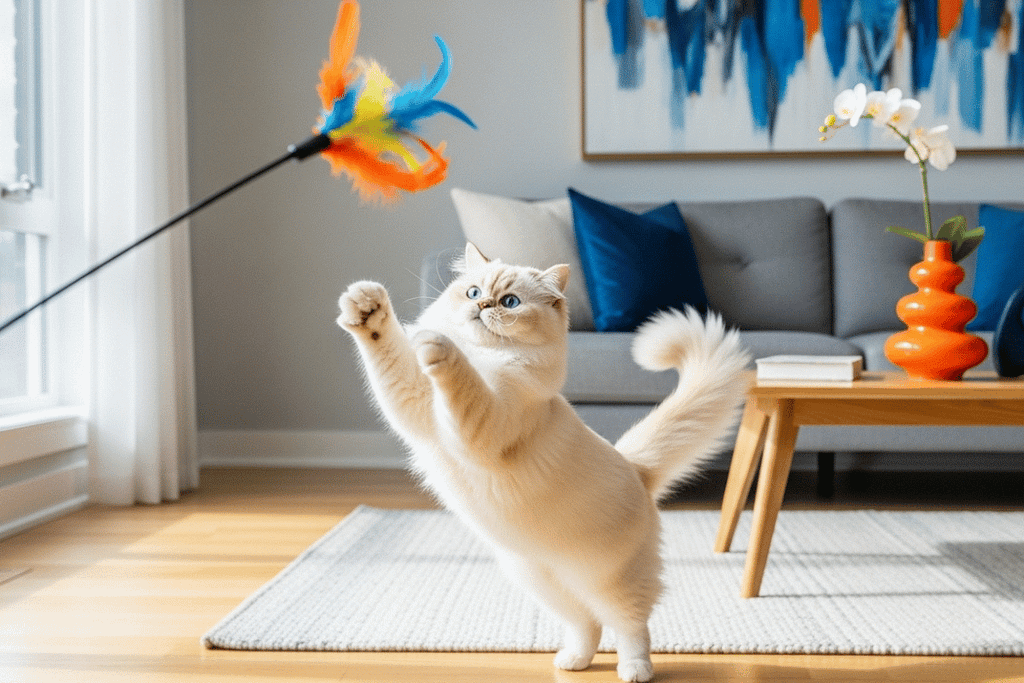
Have you ever noticed how your cat chooses toys, chases shadows, or creates rituals during playtime? These behaviors aren’t random — they’re play styles that reveal personality, health, and emotional well-being.
Scientists observe specific patterns in feline playful behavior, and understanding these variations helps you create more stimulating, safe environments aligned with your pet’s needs. When we ignore these signals, we miss valuable opportunities to strengthen bonds and prevent behavioral problems.
In this complete guide, you’ll discover the 7 most common play styles, how to measure your cat’s engagement, and practical strategies to enrich feline daily life based on scientific evidence. Keep reading to transform playful moments into powerful tools for physical health and happiness.
? What Are Play Styles in Cats?
Play styles are observable behavioral patterns that cats exhibit during playful activities. Unlike simple entertainment, each style reflects natural instincts, emotional state, and specific needs of the animal.
The science of feline behavior identifies that varied play functions as direct indicators of energy, curiosity, and mental balance. According to the International Society of Feline Medicine (ISFM), cats with access to multiple play styles show fewer destructive behaviors and better quality of life (ISFM, 2022).
Recognizing these patterns allows you to adjust toys, schedules, and environments to favor your cat’s natural expression. By observing carefully, you transform the play routine into a well-being ally, not just occasional entertainment.
? Why Is Identifying Cat Play Styles Important?
Identifying your cat’s predominant style brings concrete benefits. First, you avoid offering inadequate stimuli that cause frustration or disinterest. Second, you personalize activities according to the animal’s age, temperament, and physical condition.
Studies by the American Veterinary Medical Association (AVMA) show that cats with personalized enrichment maintain healthy weight and reduce anxiety (AVMA, 2023). In practice, this means fewer vet visits for obesity or chronic stress.
Additionally, observing styles helps detect subtle behavioral changes — a cat that always hunted and suddenly loses interest may be signaling discomfort or illness. Attention to playful patterns works as a thermometer for emotional and physical health.
? The 7 Cat Play Styles Observed by Scientists
? 1. Predatory Chase and Ambush
This is the most iconic and instinctive feline style. The cat chases moving objects, crouches, wiggles its rear, and pounces on the “prey.” This behavior simulates complete hunting sequences observed in wild felines.
Kittens display this pattern more intensely, but adult cats maintain interest throughout life. Daily, you’ll see your pet chasing feather wands, laser pointer dots, or even shadows on the wall.
The key is allowing hunt completion. Cats that never “capture” prey can develop frustration. Always end with a tactile reward — a toy they can hold or a hidden treat.
Practical tip: Sessions of 5-10 minutes, with rhythm variations (fast-slow-fast), maintain attention without causing excessive fatigue. Recent data indicates that activities with hunt finalization reduce destructive behaviors outside playtime (ISFM, 2022).
? 2. Object Play
Cats love interacting with small, mobile objects — balls, plush mice, rattling toys. This style channels curiosity toward safe and predictable items, reducing risks of accidental ingestion or furniture destruction.
Choosing appropriate materials is crucial. Avoid objects with small removable parts, long elastics, or toxic paints. Prefer certified feline-use toys with varied textures (plush, hard plastic, sisal).
The secret to maintaining interest is programmed rotation. Offer 3-4 toys at a time and switch them every 7-10 days. This strategy simulates constant novelty without needing to buy new items every week.
Scientific observation: Cats demonstrate greater engagement when toys imitate unpredictable movements — rolling in irregular trajectories or making unexpected sounds (AVMA, 2023).
? 3. Social Play with Humans
Interaction with guardians can be as captivating as solitary hunting. Social contact during play strengthens bond, trust, and emotional well-being — essential elements for cats living in domestic environments.
For many felines, the human functions as stimulus complement, as long as play is voluntary and positive. Forcing interaction generates aversion and damages long-term relationship.
Interest signs include dilated pupils, soft purring, voluntary approach, and relaxed body posture. Respect natural pauses — if the cat walks away, wait for them to return in their own time.
Effective strategy: Short sessions of 3-5 minutes, with quick response to the cat’s focus, generate more satisfaction for both. Avoid sudden movements or shouting, which can scare and interrupt playful flow.
? 4. Social Play with Other Cats
Playing with another feline can be enriching, but requires careful supervision. Coexistence between cats develops socialization, shared body language, and cooperation strategies — important skills for multi-pet households.
Watch for discomfort signs: tense postures, raised fur, backward ears, or deep vocalizations. These indicators suggest play is becoming competitive or aggressive.
Socialization quality during infancy strongly impacts adult behavior. Cats that played with siblings in the first weeks of life tend to be more tolerant and flexible in future interactions (ISFM/ISAE, 2021).
Recommended practice: Offer escape spaces, multiple identical toys, and parallel play schedules to reduce competition. Alternate joint sessions with safe separation periods for each cat to rest individually.
?️ 5. Exploratory and Environmental Play
Exploring the environment is a powerful form of intellectual and physical stimulation. Cats are naturally curious and benefit from exploration routes that include hiding spots, platforms, tunnels, and surfaces at different heights.
This style improves motor coordination, stimulates problem-solving, and reduces boredom — a common factor in apartment cats without adequate enrichment. Environmental monotony is associated with obesity, feline depression, and stereotyped behaviors.
Create simple circuits with non-slip mats, cardboard boxes, safe shelves, and interactive toys. Alternate the arrangement weekly to maintain challenge and renew the cat’s interest.
Practical example: Build a “hunting circuit” with treats hidden at different levels — inside boxes, under cushions, on top of scratchers. This stimulates simulated hunting and physical activity without constant supervision.
? 6. Ritualized Play and Return-to-Base
Some cats create specific play rituals that end with return to a safe base — a favorite bed, a box, or the guardian’s lap. This pattern reinforces sense of control and predictability, essential elements for anxiety reduction.
Clinical observation indicates that maintaining a “base” facilitates emotional recovery after intense sessions. Cats that know where to return show fewer post-play stress signs.
Respect these rituals instead of interrupting them. If your cat always runs under the bed after hunting, allow this complete sequence. Interfering can generate frustration and disorganize natural behavior.
Recommended practice: Always end each session with a calm reward or brief caress to associate play ending with positive sensations. This creates a smooth transition between excitement and relaxation.
? 7. Pouncing, Stalking, and Final Pause
In this style, the cat demonstrates the entire hunting sequence: body stretching, ear tilting, slow approach, strategic pause, and final pounce. The pause before attack is crucial — it allows the cat to calculate distance and adjust posture.
Observing energy during these phases helps identify when to end the session. Fatigue signs include accelerated breathing, reduced response speed, and attempts to move away from the toy.
The balance between simulated hunting and rest is crucial for well-being. Very long or intense sessions can cause exhaustion or muscle injuries, especially in older or overweight cats.
Useful observation: When fatigue signs appear, end the session with calmness. Offer fresh water and a quiet place to rest. Data suggests respecting physical limits prevents injuries and maintains playful interest over the years (AVMA, 2023).
? How to Measure Engagement During Play
Measuring engagement doesn’t need to be complex or technical. Start with simple observations: record which styles appear most frequently, how long the cat stays active, and how they respond to different toys.
Key indicators include duration of readiness to play, movement intensity, and focus quality during the session. An engaged cat maintains dilated pupils, ears turned toward the stimulus, and body in alert position.
? Play Diary: Practical Tool
Use a small play diary — it can be digital or paper. Note the toy used, time, duration, and post-play mood (relaxed, agitated, indifferent).
After 2-3 weeks of records, patterns begin to emerge. You’ll discover, for example, that your cat prefers playing in early morning, has greater interest in feather toys, and gets tired after 7 minutes of intense activity.
Practical result: Shorter sessions with variation tend to maintain interest longer and reduce stress. Studies indicate that measuring engagement patterns helps personalize enrichment more effectively (ISFM/AVMA, 2022).
? Combining Qualitative and Quantitative Data
To deepen measurement, combine qualitative observations (mood, body language) with simple data: average duration of each style, refusal of specific toys, and post-play behavior changes.
Include toys that require less physical force to avoid injuries, alternate objects with varied movements, and observe comfort signs like purring or seeking affection after the session.
Measurement helps compare the effect of different approaches over time, strengthening trust between guardian and feline. When you understand the animal’s preferences and respond sensitively, the human-cat connection deepens naturally.
? 6 Practical Enrichment Strategies
⏰ 1. Short and Frequent Routines
Daily sessions of 3-5 minutes, several times a day, maintain curiosity without overwhelming. Cats don’t need play marathons — they prefer multiple playful moments distributed throughout the day.
This strategy mimics the natural hunting pattern of wild felines, who make several short attempts instead of long, exhausting pursuits.
? 2. Varied Toys
Mix feather wands, rattling toys, rolling balls, and cardboard boxes to stimulate different styles. Offering only one type of toy limits the cat’s behavioral expression.
Build a “rotation kit” with 10-12 items and alternate 3-4 at a time. This creates constant novelty feeling with zero additional cost.
?️ 3. Strategic Observation Points
Place platforms, shelves, and tunnels at strategic heights to promote safe exploration. Cats are three-dimensional animals — they value vertical space as much as horizontal.
Make sure all structures are stable and support the animal’s weight. Accidental falls can cause serious injuries and permanent aversion to heights.
? 4. Food Enrichment
Hide treats in challenging locations to stimulate problem-solving and simulated hunting. Use interactive toys that gradually release food, prolonging mental activity time.
This strategy combines feeding with cognitive enrichment, making meals more interesting and less passive.
? 5. Controlled Interaction with Guardian
Combine playing with the guardian in short sessions to strengthen bond without causing excessive dependence. The goal is for the cat to learn to play alone too, developing playful autonomy.
Avoid the animal associating play exclusively with your presence — this generates separation anxiety and boredom when you’re absent.
? 6. Post-Play Rest Routine
Always end with a relaxation phase to consolidate well-being and reduce stress. Offer fresh water, a quiet place, and avoid additional stimuli in the following 15-20 minutes.
This transition helps the cat process the playful experience and return to emotional balance state without residual agitation.
⚠️ 5 Common Mistakes When Observing Play (and How to Avoid Them)
❌ Mistake #1: Interpreting Ambiguous Signs as Stress
Agitation doesn’t always indicate discomfort — it can be pure enthusiasm. Be cautious about associating active behavior with stress without confirming additional signs like panting, escape attempts, or discomfort vocalization.
Strategy: Observe natural pauses, breathing changes, and relaxation signals at session end. A stressed cat doesn’t voluntarily return to play minutes later.
❌ Mistake #2: Playing Without Cat’s Consent
Forcing interaction generates aversion to play and damages long-term relationship. Prioritize consent — offer the toy and wait for the cat to show spontaneous interest.
Practice: Offer pause options and stop immediately when the cat loses interest. Respecting limits strengthens trust and makes future sessions more productive.
❌ Mistake #3: Toy Monotony
Repetitive toys quickly reduce engagement. Cats adapt to constant stimuli and stop responding when there’s no novelty.
Solution: Rotate items and introduce novelties weekly to maintain curiosity. It’s not necessary to constantly buy — just alternating what’s available already works.
❌ Mistake #4: Lack of Environmental Safety
Toys with small parts or slippery surfaces can cause accidents. Always check item durability and supervise sessions near stairs or furniture.
Practical measure: Remove objects that could be swallowed, cause strangulation, or break easily. Immediately replace damaged toys.
❌ Mistake #5: Not Respecting Recovery Time
After intense sessions, the cat needs rest. Plan breaks between activities and don’t force new rounds immediately.
Guidance: Wait at least 30-60 minutes between intense play sessions. Cats need to process stimulus and recover physical energy.
? Applying Scientific Evidence in Daily Life
Playing isn’t just fun — it’s adaptive behavior that influences health, weight, and mood. Homes with adequate enrichment tend to have more active, less obese, and less anxious cats.
The practice of varying play styles facilitates innate trait expression and avoids stereotypies (repetitive behaviors without function). In practical context, use observations to adjust toy offerings, schedules, and available spaces, always aligning with your cat’s individual temperament.
Recent studies point out that combining cognitive, motor, and social stimuli maximizes long-term well-being (AVMA, 2023). This means enriching only one dimension — like offering many toys but no height to climb — doesn’t achieve full improvement potential.
? Strengthening the Human-Cat Connection
Engagement measurement helps compare the effect of different enrichment approaches over time. When you record what works and what doesn’t, you make decisions based on real data, not assumptions.
Human-cat connection is strengthened when the guardian understands the animal’s preferences and responds sensitively to their needs. Our practical experience at Cat with Story reinforces that personalization is the key to transforming play into healthy, lasting habits.
With only 1 year working in feline care and behavior study, we’ve learned that combining practical experience with scientific references allows you to identify patterns, recognize well-being signs, and personalize activities for different ages and temperaments.
? Strategic Next Steps
Convert observation into action with a simple plan: identify 2-3 predominant styles in your cat, introduce 2 new toys per month, and record total play duration per week.
Clear objective: Increase active time without increasing stress. Over time, adapt routine as the cat matures and needs change.
Kittens require more short and intense sessions, while older cats prefer gentle stimuli with less physical impact. Adaptation is essential to accompany development and maintain interest over the years.
Next step: Read related content to deepen enrichment techniques, like home play circuit guides or how to create a safe hunting area. Continue exploring resources that integrate science and affection in daily care.
? Explore More Cat Care Resources
Before we dive into your most common questions, check out these essential guides to enhance your cat’s well-being:
? Health and Wellness Guide — Comprehensive insights on nutrition, preventive care, and recognizing early health issues in your feline companion.
? Engaged Cat, Happy Cat — Discover advanced enrichment techniques, mental stimulation strategies, and how to create a thriving environment for your cat’s happiness.
❓ Frequently Asked Questions about Play Styles in Cats
What are the most common play styles in cats?
The most common styles include predatory hunting, object play, social interaction with humans, play with other cats, environmental exploration, rituals with return-to-base, and pouncing/stalking sequences. Each cat can exhibit a unique combination of these patterns, depending on personality, age, and past experiences.
How do I measure if my cat is engaged in play?
Observe active participation duration, attention quality (dilated pupils, ears turned to stimulus), quick response to toy changes, and post-play behavior. Use a simple diary to record times, toys used, and well-being signs. Clear patterns emerge after 2-3 weeks of observation.
Is it safe to use any toy for cats?
No. Prefer feline-specific toys without small parts that could be swallowed, long elastics, or toxic materials. Supervise sessions, especially with new toys, and immediately discard damaged items. Safety comes first — accidents can cause intestinal obstructions or serious injuries.
How often should I enrich my cat’s environment?
Daily routines with weekly variation usually maintain interest without overload. Alternate toys every 7-10 days, reorganize furniture monthly, and introduce new challenges (hiding spots, circuits) as the cat shows mastery of previous ones. Controlled repetition helps reduce boredom and unwanted behaviors.
How do I adjust enrichment for kittens versus senior cats?
Kittens require more short and intense sessions (5-10 minutes, 3-4 times daily), with toys that stimulate hunting and motor coordination. Senior cats prefer gentle stimuli, with less physical impact and more focus on cognitive activities (puzzles, treat searches). Adaptation is essential to accompany development and prevent injuries.
What signs indicate that the play style needs adjustment?
Persistent disinterest, stress signs during play (backward ears, tense body, escape attempts), reduced engagement time, or destructive behaviors outside sessions. If you notice these signs, adjust quickly: change the toy, reduce intensity, extend pauses, and observe the reaction over a week to confirm improvements.
How does play observation promote bonding and physical health?
Understanding play style allows creating enrichment routines aligned with your cat’s specific needs. Purposeful play increases physical activity, stimulates the mind, and strengthens emotional bond with you. Use rewards, variations, and respect for limits to maintain engagement without overwhelming. Cats that play regularly are healthier, less anxious, and show greater trust in their guardian.
What common pitfalls when interpreting play should I avoid?
Avoid confusing curiosity with aggression, anthropomorphizing behaviors (attributing human emotions to the cat), or concluding about the animal’s mood without observing consistent signs. Consider patterns over several days before drawing conclusions. An isolated behavior may be circumstantial — only repeated tendencies reveal true preference or discomfort patterns.
? Conclusion: Transform Play into a Well-Being Tool
By transforming observation into practice, you not only better understand your cat’s different play styles but also create a more stimulating, safe environment aligned with your feline’s needs.
Start today by recording 2 predominant styles of your cat, try 2 new toys, and observe how they react. Adjust as needed and maintain consistency — results appear over weeks, not days.
If you want to deepen your knowledge, follow our next content with step-by-step tips to enrich each play session, integrating science and affection in daily care. Share your learnings in the comments and inspire other cat lovers to adopt more personalized approaches.
The journey to understanding your cat begins with small daily observations. Dedicate 5 minutes per day to record patterns, test new strategies with patience, and celebrate each small discovery about your feline companion’s unique personality.

With the sensitivity of one who loves deeply, Sissi writes stories celebrating the animal world. Her felines Estrela and Safira illuminate her days, while Pete and Gabrich live eternally through her words. Every piece she writes is a love letter to the companions who make life truly meaningful.