
? Cats and Spirituality: Myths, Beliefs, and What Science Reveals
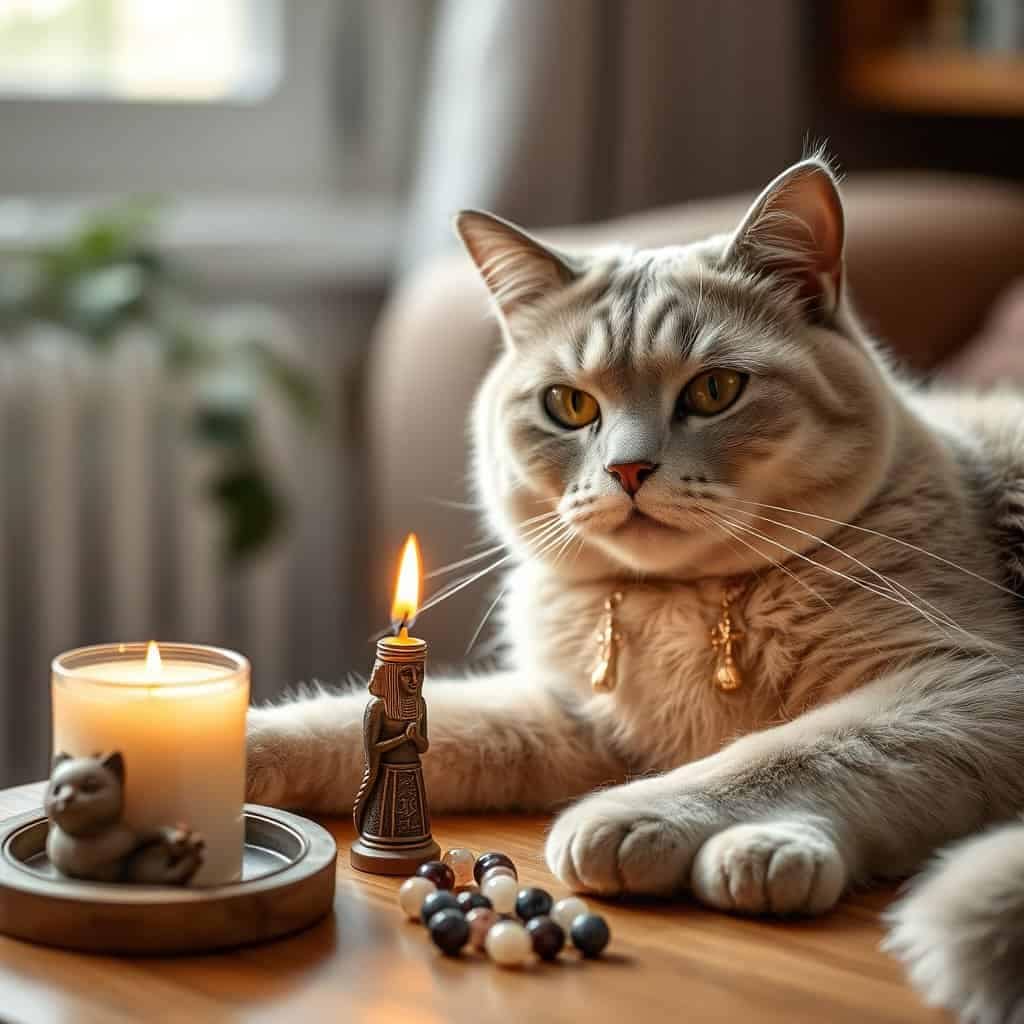
Cats and spirituality are deeply connected in cultures worldwide, blending myth, symbolism, and science. While many interpret feline behaviors as spiritual signs, much of their “mystique” comes from their heightened senses and instinctive behaviors. Common beliefs about cats and spirituality include:
- Cats as protectors against negative energy
- Black cats symbolizing luck or mystery
- Felines sensing emotions, vibrations, or unseen movement
- Cats appearing in temples, rituals, and cultural myths
- “Sixth sense” behaviors explained by superior hearing, vision, and whiskers
Understanding these beliefs alongside scientific explanations helps owners appreciate the mystery without ignoring biology, making the human–cat bond richer and more meaningful.
Cats have fascinated humans for centuries ?, often seen as mysterious, mystical, or magical companions. From ancient temples to modern living rooms, their behavior sparks questions about the unseen world. Are cats truly spiritual beings, or are we projecting our beliefs onto their enigmatic nature?
Many cat owners notice subtle behaviors—staring at empty corners, sudden purrs, or unusual postures—and wonder if there’s a deeper, spiritual meaning. While myths abound ?, science provides fascinating insights into their senses and behaviors.
In this guide, we explore cats and spirituality, separating fact from fiction, examining cultural beliefs, scientific research, and practical takeaways for your feline friend.
? Ancient Myths About Cats and Spirituality: From Temples to Tales
Cats have been revered and feared throughout history, often seen as messengers or protectors from the spiritual world.
? Egyptian Cats and Bastet
In ancient Egypt, cats were sacred, associated with Bastet, the goddess of home, fertility, and protection. ?
- Killing a cat, even accidentally, was punishable by law.
- Cats were believed to ward off evil spirits and bring blessings.
- Modern takeaway: cats may still feel like guardians in our homes.
? Japanese Lucky Cat (Maneki Neko)
The Maneki Neko, or “beckoning cat,” symbolizes luck, prosperity, and protection.
- Common in homes and businesses, believed to attract positive energy ✨
- Demonstrates cats’ symbolic role in spirituality across cultures
? Cats in European Folklore
Medieval Europe had a more ambivalent view:
- Black cats: often seen as witches’ companions or omens of bad luck
- Some folklore saw cats as protectors against evil spirits
- Modern takeaway: our fascination with cats as mystical beings is centuries old
Dive into a trusted historical overview from the Encyclopedia Britannica and discover how felines became symbols of protection, mystery, and spiritual power throughout human history.
?♀️ Cats and Spirituality Across Cultures: Do cats Sense energy?
Many spiritual traditions suggest cats can sense unseen energies. These beliefs often stem from observation and anecdotal experiences.
? Spiritual Beliefs in Modern Times
- Some people believe cats can perceive auras or detect negative energy
- Cats may sit in areas of emotional tension or near people needing comfort
- Practices like Reiki or energy healing sometimes include cats
? Popular Myths vs Reality
| Myth | Reality |
| Cats can see ghosts ? | Likely responding to subtle sounds, shadows, or vibrations humans can’t detect |
| Cats absorb negative energy ? | Cats are sensitive to environmental changes; behavior reflects comfort, stress, or scent cues |
| Cats bring luck ? | Cultural belief; no scientific proof |
| Cats predict events ⚡ | Keen senses detect env ironmental cues that precede events |
? Science Behind Cats’ Sixth Sense: What’s Really Happening
Cats’ extraordinary abilities can often be explained through biology and behavior, bridging the gap between myth and science.
Cats possess a sophisticated dual olfactory system that works approximately 40 times better than human smell. Beyond conventional nasal receptors, they have a secondary organ called the vomeronasal organ (Jacobson’s organ) located in the roof of their mouth. This second “nose” detects pheromone signatures crucial for social, reproductive, and territorial behaviors that ordinary receptors cannot capture.
Their exceptional night vision relies on remarkable physiological mechanisms. Cats have an unusually wide field of vision and exceptional movement detection abilities, making them proficient hunters. Even more impressive: they can see ultraviolet light—something impossible for human eyes—providing an entirely different perception of the world.
The famous feline whiskers function as a sophisticated tactile radar system. With around 24 whiskers arranged in four rows on each side of their nose, plus additional ones on their cheeks, eyes, and paws, these are far more than facial features. Their follicles are three times deeper than regular hairs and packed with nerve endings that detect temperature variations, textures, and subtle air movements, allowing cats to navigate perfectly in complete darkness.
What seemed like a mystical “sixth sense” is actually a refined sensory system shaped by evolution, making cats lethal predators with an incredibly efficient information-processing machine.Tentar novamente
? Cat Senses: Hearing, Vision, Vibrissae
- Hearing: Detects ultrasonic frequencies, noticing subtle movements
- Vision: Low-light vision allows them to perceive motion invisible to humans
- Whiskers: Sensitive to air currents, helping them map their environment
? Interpreting “Mystical” Behavior
- Staring, purring, or rubbing may seem spiritual but often have practical reasons
- Example: a cat staring at a blank wall may detect tiny movements or air vibrations imperceptible to us
- Many cat owners report their cats acting mysteriously in ways they interpret as spiritual
? Practical Takeaways for Cat Owners
Understanding both beliefs and science allows owners to appreciate their cats’ behaviors responsibly:
- Observe contextually: Sudden staring may be curiosity, not supernatural insight
- Respect personal space: Cats’ positions can indicate comfort or stress
- Enhance connection: Play, gentle touch, and mindfulness deepen bonds
- Reflect on symbolism: Use myths as inspiration for mindfulness ?♀️
❓ FAQ: Cats and Spirituality
u003cstrongu003eCan cats really sense energy?u003c/strongu003e
Cats are highly sensitive to environmental changes, sounds, and vibrations. Some interpret this as sensing energy, but science points to acute sensory perception.
u003cstrongu003eWhy do cats stare at empty spaces?u003c/strongu003e
Exceptional vision and hearing allow them to detect motion or light changes humans cannot see.
u003cstrongu003eAre black cats unlucky or spiritual?u003c/strongu003e
Cultural beliefs vary. In many cultures, black cats are protective or lucky, while some European folklore links them to bad omens.
u003cstrongu003eCan having a cat improve my energy or mindfulness?u003c/strongu003e
Spending time with cats can reduce stress, promote mindfulness, and improve emotional well-being.
u003cstrongu003eHow can I tell if my cat is trying to communicate spiritually?u003c/strongu003e
Observe behavior in context—staring, purring, rubbing may indicate curiosity or comfort, not necessarily supernatural messages.
u003cstrongu003eAre cats used in spiritual practices scientifically validated?u003c/strongu003e
No formal studies confirm mystical abilities, but cultural traditions highlight their symbolic importance.
✨ Conclusion: Embrace the Mystery
Cats continue to captivate human imagination, balancing myth, spirituality, and science. Read more:
How to strengthen the bond with your cat ?
How cats change home energy ?♀️

With the sensitivity of one who loves deeply, Sissi writes stories celebrating the animal world. Her felines Estrela and Safira illuminate her days, while Pete and Gabrich live eternally through her words. Every piece she writes is a love letter to the companions who make life truly meaningful.