
?✨ How Cats Change Home Energy: Science + Spirit Guide
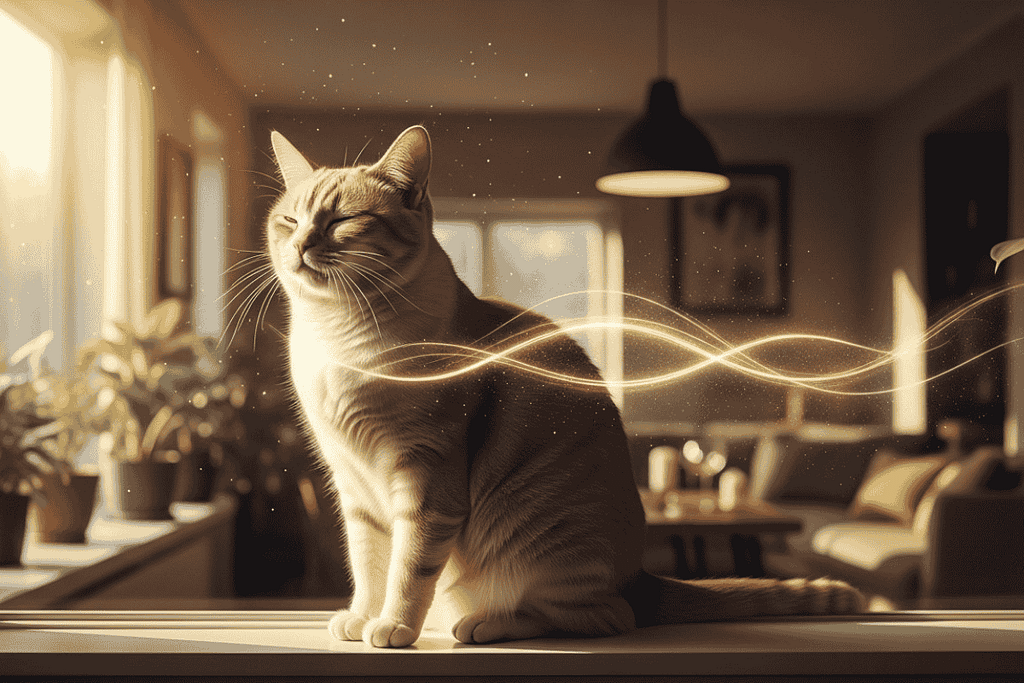
Cats can subtly change the atmosphere of a home through their purring frequencies, emotional attunement, and calming presence. These effects blend biology, physics, and ancient beliefs, creating what many describe as “cat energy.” How cats influence home energy:
- Purring frequencies (25–150 Hz) promote relaxation
- Emotional bonding reduces human stress
- Behavioral attunement shifts room atmosphere
- Quiet presence creates perceived energetic balance
Understanding these influences helps explain why living with a cat feels different—science and spirituality both reveal how deeply cats shape the environments they inhabit.
There’s something undeniably different about a home with a cat. The air feels calmer. The silence hums with a subtle presence. Whether you believe in energy fields or strictly trust science, cat owners worldwide report the same phenomenon: their feline companions somehow shift the atmosphere of their living spaces. But is this just perception, or is there something measurable happening when a cat enters your life? The answer lies at the fascinating intersection of biology, physics, and ancient wisdom—and understanding it might forever change how you see your whiskered companion.
? The Science Behind Cat Energy
Before dismissing feline energy as pure mysticism, consider what modern science reveals about these creatures. Cats aren’t just soft, purring companions—they’re biological mechanisms that interact with our bodies and environments in measurable ways.
? The Frequency of Purring (25–150 Hz)
One of the most remarkable scientific discoveries about cats centers on their purr. Research published in the shows that domestic cats purr at frequencies between 25 and 150 Hertz—a range that coincides precisely with therapeutic frequencies used in medical treatments. Other studies found that these vibrations promote bone density, facilitate healing of fractures, and may even reduce pain and swelling in humans.
Dr. Clinton Rubin, a biomedical engineering professor at Stony Brook University, conducted research demonstrating that exposure to frequencies in this range stimulates bone growth and repair. When you’re lying beside your purring cat, you’re essentially receiving a form of low-frequency sound therapy. This isn’t folklore—it’s physics. The vibrations physically travel through tissues, potentially triggering cellular repair mechanisms and releasing endorphins that create feelings of calm and wellbeing.
Beyond healing, purring affects the electromagnetic environment of your home. Though the effect is subtle, the rhythmic vibrations create patterns in air pressure that sensitive individuals may perceive as a shift in “energy.” You’re not imagining it when your space feels different with a purring cat present—you’re responding to actual changes in the acoustic environment.
? The Emotional Resonance Between Cats and Humans
The bond between cats and humans operates on multiple biological levels. Researchs found that just 10 minutes of petting a cat significantly reduces cortisol levels—the primary stress hormone in humans. But the connection runs deeper than simple stress relief.
Cats possess an extraordinary ability to read human emotional states. A 2020 study in Animal Cognition journal revealed that cats can distinguish between happy and angry human faces and voices, adjusting their behavior accordingly. This emotional intelligence creates a feedback loop: your cat responds to your mood, which then influences your emotional state, creating an ongoing cycle of mutual regulation.
Neuroscientist Dr. Paul Zak’s research on oxytocin—often called the “bonding hormone”—shows that positive interactions with cats trigger oxytocin release in both species. This biochemical response explains why cat owners often describe their pets as “emotionally grounding” or “calming presences.” The science confirms what intuition suggests: cats genuinely alter the emotional chemistry of their human companions, and by extension, the feeling of the spaces they inhabit together.
Tip: Discover 7 Signs Your Feline Is Emotionally Connected to You
? The Spiritual Side: Feline Guardians of Energy
While science provides compelling explanations for feline influence, spiritual traditions offer complementary perspectives that span millennia. Whether you view these as metaphor or truth, they reveal humanity’s enduring recognition of something special about cats.
? Ancient Beliefs and Modern Interpretations
Ancient Egyptians didn’t worship cats merely for pest control. They revered felines as sacred beings capable of traversing spiritual realms. The goddess Bastet represented protection, fertility, and domestic harmony—qualities directly associated with household cats. Egyptians believed cats could see and interact with entities invisible to human eyes, serving as guardians against negative spiritual forces.
This belief wasn’t isolated to Egypt. Japanese culture treasures the Maneki-neko (beckoning cat) as an attractor of good fortune and positive energy. In Islamic tradition, cats are considered ritually clean animals, and the Prophet Muhammad’s love for cats elevated their spiritual status. Celtic folklore described cats as mystical creatures with connections to the otherworld, able to shift between dimensions.
Modern practitioners of energy work continue these traditions with updated language. Reiki healers often report that cats gravitate toward areas of energy blockage in human bodies, sometimes lying precisely on injured or diseased areas. While skeptics attribute this to cats seeking warmth, the consistency of the behavior across cultures and contexts suggests something worth examining beyond coincidence.
Contemporary spiritual teachers describe cats as “empathic absorbers”—creatures naturally attuned to subtle energy shifts in their environment. Whether you interpret this through the lens of electromagnetic sensitivity, behavioral adaptation, or genuine spiritual perception, the practical result remains the same: cats respond to and potentially influence the ambient feeling of a space.
✨ Aura Cleansers or Energy Mirrors?
Two primary theories dominate spiritual discussions about cats and energy. The first positions cats as cleansers—actively absorbing negative energy and transmuting it through their presence. Proponents note that cats often sleep for extended periods after spending time with emotionally distressed humans, as if processing absorbed negativity.
The second theory suggests cats function as mirrors, reflecting back the energy present in a space without judgment. Under this interpretation, a cat’s behavior serves as a barometer for the home’s overall energy quality. A content, playful cat indicates balanced energy, while a hiding, anxious cat signals disharmony requiring attention.
Interestingly, these theories aren’t mutually exclusive. Cats might simultaneously reflect existing energy patterns while also influencing them through their physical presence, behaviors, and the emotional responses they evoke in humans. The purring, the grooming rituals, the quiet companionship—each element contributes to creating an atmosphere that many describe as “lighter” or “more peaceful.”
Dr. Rupert Sheldrake’s research on morphic resonance suggests that animals may indeed perceive and interact with fields of information not yet fully understood by conventional science. While controversial in scientific circles, his work provides a theoretical framework for understanding how cats might genuinely sense and respond to subtle environmental qualities humans perceive as “energy.”
? How to Enhance Cat Energy in Your Home
Understanding feline energy is one thing; actively cultivating it is another. These practical strategies honor both the scientific and spiritual aspects of living with cats, creating conditions where their positive influence can flourish.
?️ Create Calm Corners
Cats are masters of finding and creating sacred space. By designating specific areas as “cat sanctuaries,” you amplify their natural ability to generate calm. Choose quiet corners away from high-traffic zones, preferably near natural light sources. Add comfortable bedding, perhaps a window perch with a view of nature, and ensure these spots remain consistently peaceful.
These corners serve dual purposes: they give your cat space for energetic recharge, and they create focal points of tranquility in your home. Notice how the energy around these spaces feels different—calmer, more grounded. Your cat’s regular use of these areas concentrates their calming presence, making them retreat spots for humans too when stress levels rise.
Consider the positioning according to feng shui principles: east-facing spots promote health and family harmony, while southeast placements encourage prosperity and growth. Whether you believe in directional energy or simply appreciate good design, thoughtfully placed cat spaces enhance the overall flow of your living environment.
Want to deepen this practice? Start by observing where your cat naturally gravitates. Those spots already have something special—temperature, light, or energy—that attracts them. Enhance these natural choices rather than forcing artificial locations.
? Balance Your Energy with Daily Rituals
Consistency matters when building energy harmony with your cat. Establish daily rituals that create rhythmic connection points throughout your day. A morning greeting session where you sit quietly with your cat for five minutes sets a peaceful tone. Evening grooming time becomes a meditative practice for both species.
Pay attention during these moments. Place your hand on your cat while they purr and consciously tune into the vibration. This isn’t merely anthropomorphizing—you’re literally synchronizing with a therapeutic frequency. Breathe deeply, match your breathing rhythm to your cat’s, and notice how your nervous system responds.
These rituals create what psychologists call “anchors”—reliable touchpoints that signal safety and calm to your brain. Over time, simply seeing your cat in their special spot or hearing the familiar sound of purring can trigger relaxation responses, effectively training your home environment to support wellbeing.
Tip: Learn how to strengthen the bond with your cat using gentle, proven tips that build trust and affection—without forcing contact.
? Keep the Energy Flowing
Physical environment directly impacts energetic quality. Maintain cleanliness not just for hygiene but for energy flow—cluttered, dirty spaces feel heavy regardless of spiritual beliefs. Regular cleaning of litter boxes, food areas, and favorite lounging spots prevents stagnant energy accumulation.
Natural light and fresh air are essential. Open windows when weather permits, allowing circulation that benefits both physical air quality and what energy practitioners call “chi” or life force. Cats instinctively seek sunbeams; these solar-charged spots become power nodes in your home’s energy grid.
Consider aromatherapy thoughtfully. While essential oils can be toxic to cats, cat-safe alternatives like silver vine or valerian create pleasant atmospheres that some cats enjoy. Fresh herbs like cat grass or wheatgrass improve air quality while giving your cat something living to interact with—bringing additional vitality into your space.
Sound matters too. Soft classical music or nature sounds can create an ambient energy field that calms both humans and cats. Research from Louisiana State University found that classical music significantly reduces stress in shelter cats, suggesting that sound environment genuinely affects feline wellbeing and, by extension, their energetic presence.
? Science vs. Myth: What Really Happens
Distinguishing fact from fiction helps you appreciate cats realistically while remaining open to experiences that transcend current scientific understanding.
| Aspect | Scientific Explanation | Spiritual Interpretation | Practical Reality |
|---|---|---|---|
| Purring effects | Therapeutic frequencies (25-150 Hz) promote healing, reduce cortisol | Energy cleansing and chakra balancing | Both perspectives acknowledge genuine positive effects on human wellbeing |
| Behavioral changes | Cats respond to environmental cues, human body language, and routine disruptions | Sensing and reacting to energy shifts or spiritual presence | Cats definitely respond to subtle changes—the mechanism remains debated |
| “Absorbing negativity” | Cats seek warmth, may notice illness through heat/smell, provide comfort | Actively removing negative energy from people and spaces | Comfort and stress reduction are measurable; energy absorption remains unproven |
| Predicting events | Enhanced hearing/smell detect environmental changes before humans | Spiritual sensitivity to timeline shifts or dimensional changes | Cats possess superior sensory abilities that may appear prescient |
| Space preferences | Temperature, safety, comfort, and territorial behavior | Gravitating toward energetically clean or powerful areas | Location choices definitely matter; motivations are multifaceted |
The most honest position acknowledges that current science explains some feline phenomena while others remain mysterious. A cat repeatedly sleeping on a person’s injury site might seek warmth, but consistent pattern recognition across countless unrelated cases suggests something worth investigating further. Good science remains humble about the limits of current knowledge while rigorously testing new possibilities.
? Real Stories from Cat Owners
Theory becomes real through lived experience. These accounts from cat owners illustrate the tangible ways felines shift home energy:
Maria, 34, Seattle: “After my divorce, my apartment felt heavy with grief. My cat Luna started a routine—every evening at sunset, she’d sit in the living room window and purr loudly. I’d join her, and something about that daily ritual helped me process the pain. Six months later, the apartment felt completely different, lighter. I can’t prove Luna ‘cleaned the energy,’ but she definitely helped me transform it.”
James, 41, Toronto: “I work in emergency medicine, high stress. I’d come home wired, unable to unwind. My cat Whiskers would immediately jump on my chest when I lay down, purring intensely for 10-15 minutes. My heart rate and breathing would slow noticeably. Now I consider that purr session as essential as any medical intervention for my wellbeing.”
Aisha, 28, London: “My anxiety was crippling before I adopted Midnight. I swear she knows when I’m spiraling—she’ll suddenly appear, make deliberate eye contact, and slow-blink at me. That simple action breaks my anxiety loop. Whether it’s energy work or just behavioral conditioning, she’s changed the entire atmosphere of my mental health.”
These stories share common threads: observation, consistency, and genuine transformation. Whether the mechanism is biological, psychological, spiritual, or some combination, the outcome remains valuable and real to those experiencing it.
Does your cat do something similar? Pay attention this week to the patterns in your cat’s behavior, especially around your emotional states. You might discover your own energy-shifting ritual has been happening all along.
? Living in Harmony with Cat Energy
Your cat isn’t just a pet—they’re a dynamic presence that continuously interacts with and influences your living environment. By understanding both the scientific mechanisms and spiritual traditions surrounding feline energy, you can consciously cultivate a home that benefits both species.
Start simple. Create those calm corners. Establish daily rituals. Pay attention to how your space feels with and without your cat present. Notice the quality of silence when they’re sleeping nearby versus when they’re absent. These small observations build awareness of the subtle but genuine ways cats alter domestic energy.
Whether you approach this through the lens of biology, spirituality, or simple appreciation for animal companionship, the result is the same: a deeper, more intentional relationship with your feline friend and the space you share. Your cat has been influencing your home’s energy since arrival—now you’re simply becoming conscious of the process and learning to participate in it deliberately.
The most profound shift happens when you stop viewing your cat as a passive recipient of care and recognize them as an active contributor to your home’s wellbeing. That perspective change alone transforms energy—and that’s something both science and spirit can agree upon.
Ready to deepen your connection? Start tonight. Sit with your cat for five uninterrupted minutes. No phone, no distractions. Just breathe, observe, and feel. Notice what happens in your body, your mind, and your space. That’s where the real magic begins.
Tip: Discover heart-touching cat rescue stories that show love, compassion, and second chances. Read, feel, and join the movement for rescued cats.
❓ FAQ
Can cats really sense negative energy in a home?
Cats possess sensory abilities far exceeding human perception, including superior hearing, enhanced night vision, and acute sensitivity to vibrations and electromagnetic fields. While “negative energy” isn’t a scientifically defined term, cats definitely detect environmental changes invisible to humans—shifts in air pressure, ultrasonic sounds, subtle electromagnetic variations, and human emotional states through chemosignals. What spiritually-minded people call “sensing negative energy” may be cats responding to these measurable but subtle environmental cues. Research from Lincoln University shows cats can distinguish between human emotional states, suggesting genuine sensitivity to psychological atmosphere.
How does a cat’s purr frequency affect human health?
Purring occurs at frequencies between 25-150 Hz, a range clinically proven to promote bone density, accelerate healing, reduce inflammation, and alleviate pain. Studies by Dr. Clinton Rubin at Stony Brook University demonstrate that vibrations in this frequency range stimulate bone growth through mechanotransduction—the process by which cells convert mechanical signals into biochemical responses. When you’re near a purring cat, you’re exposed to therapeutic vibrations similar to those used in medical healing devices. Additionally, purring correlates with reduced cortisol and increased oxytocin in humans, creating measurable stress reduction and emotional bonding effects.
Why does my cat sleep in specific spots in my home?
Cats choose sleeping locations based on multiple factors: temperature regulation, safety, territorial positioning, and comfort. They prefer elevated positions that offer visibility and escape routes, warm areas (often where sunlight enters), and spots with familiar scents. Some energy practitioners suggest cats also gravitate toward geomagnetic spots or areas with specific energetic qualities, though this remains scientifically unverified. Interestingly, cats do appear sensitive to geomagnetic fields—research published in Frontiers in Zoology found that cats prefer to orient their bodies along North-South axes when resting, suggesting genuine sensitivity to Earth’s magnetic field.
Can having a cat improve mental health and reduce anxiety?
Yes, with substantial scientific support. Meta-analysis research published in BMC Psychiatry found that pet ownership, including cats, significantly reduces symptoms of depression, anxiety, and stress. The mechanisms include increased oxytocin production, decreased cortisol levels, provision of routine and purpose, non-judgmental companionship, and tactile comfort through petting. A study of 2,400 people published in the Journal of Vascular and Interventional Neurology found that cat owners had significantly lower risk of dying from cardiovascular disease, partially attributed to stress reduction. While cats aren’t replacements for professional mental health treatment, they serve as valuable complementary support for emotional wellbeing.
What’s the difference between how cats and dogs affect home energy?
Both species positively impact home atmosphere, but differently. Dogs are generally more interactive, demanding engagement and creating dynamic, active energy through play and exercise requirements. This extroverted energy style benefits people needing motivation and social interaction. Cats, conversely, create contemplative, calm energy through their independent, observational nature. Their purring provides therapeutic frequencies dogs don’t produce. Studies show cats adapt better to smaller spaces and require less constant attention, making them suitable for contemplative, quieter lifestyles. Energy workers often describe dogs as “yang” (active, protective, outward) and cats as “yin” (receptive, intuitive, inward). Neither is superior—the choice depends on which energetic quality complements your natural disposition and lifestyle needs.
? Want to understand why your cat chooses certain spots or seems to calm your home’s energy?
Explore the fascinating bridge between feline energy and spirituality in Cats and Spirituality: Myths, Beliefs, and What Science Reveals.

With the sensitivity of one who loves deeply, Sissi writes stories celebrating the animal world. Her felines Estrela and Safira illuminate her days, while Pete and Gabrich live eternally through her words. Every piece she writes is a love letter to the companions who make life truly meaningful.