
? 10 Enrichment Activities for Cats: Science-Backed Ideas for Happier, Healthier Felines
Enrichment Activities for Cats are science-backed ways to keep indoor felines mentally stimulated, physically active, and emotionally balanced. These activities include puzzle feeders, vertical exploration, scent games, slow-paced hunting play, and sensory experiences that boost well-being and reduce stress. Implementing even a few of these ideas can help cats live happier, healthier lives.
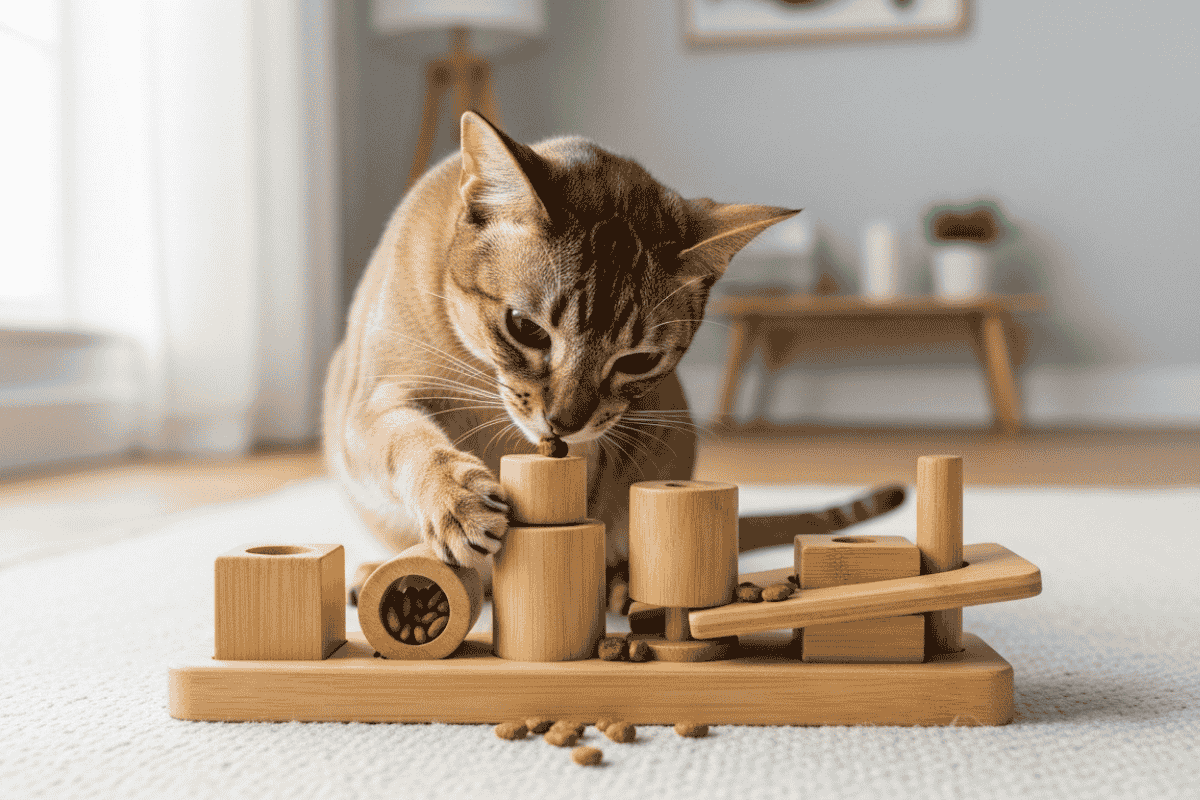
Cat enrichment isn’t just keeping cats busy — it’s about honoring instinct, curiosity, and emotional balance. These 10 evidence-based enrichment activities combine behavioral science and real-world observation to help your cat play, rest, and explore with confidence every day.
? What Is Cat Enrichment (And Why It Matters)
If you’ve ever watched your cat melt into a sunbeam, you’ve seen their rhythm of curiosity and calm.
Enrichment goes beyond toys — it nurtures physical health, emotional balance, and natural instincts.
At Cat with Story, years of observation show that thoughtful enrichment reduces stress, prevents boredom, and strengthens the human–feline bond.
? 1. Interactive Play Sessions: The Foundation of Cat Enrichment
Interactive play mirrors hunting and exploration — vital for both body and mind.
Use wand toys for 5–10 minute sessions, ending with a “capture” or treat. Alternate textures (feathers, ribbons, bristles) to maintain curiosity.
Tip: Cooperative play builds trust and prevents overstimulation.
Bonus: Always offer a calm post-play zone for cool-down.
? 2. Toy Rotation: Keeping Curiosity Alive
Cats love predictability, not monotony. Keep 8–12 toys and rotate 2–3 each day.
Include plush toys, puzzle feeders, and motion toys.
A steady rotation preserves novelty and mental sharpness.
➡️ Read about Interactive Toys: they are essential for your cat’s mental and physical health.
?️ 3. Puzzle Feeders and Food Games
Food-based play activates your cat’s foraging instinct.
Start simple with treat-dispensing balls, and increase difficulty as your cat learns.
Why it matters: Slow feeding supports digestion and turns meals into rewarding exploration.
? 4. Scent-Based Foraging Trails
Cats interpret the world through scent.
Sprinkle a few treats along a short trail or use cat-safe herbs like catnip or silver vine.
It encourages mindful exploration — especially soothing for shy cats.
? 5. Vertical Space and Climbing Freedom
Cats feel secure when they can see from above.
Add cat trees, wall shelves, or secure window perches.
Mix rough and soft textures and keep near light-filled spots for maximum use.
➡️ Discover creative cat wall playground ideas, DIY tips, and safe designs to enrich your cat’s life while enhancing your home decor.
?️ 6. Window Perches and Daylight Engagement
Watching birds or moving shadows offers hours of safe stimulation.
Install a soft, washable window perch and ensure cords or blinds are out of reach.
Benefit: Daylight engagement stabilizes feline mood and reduces boredom.
? 7. Catnip & Gentle Aromatic Play
Not every cat reacts the same, but for many, catnip inspires joyful movement or calm curiosity.
Use tiny amounts on a mat or toy — avoid overuse to prevent desensitization.
If your cat sneezes or becomes overstimulated, pause and offer a break.
? 8. Scent Trails and Exploration Challenges
Hide lightly scented fabrics or treats along a short “hunt” route.
Rotate scents weekly (mild herbs or safe essential oils in microdoses).
This maintains novelty while supporting calm focus and confidence.
? 9. Self-Play Stations for Independent Cats
Give your cat a personal corner for solo enrichment: a puzzle feeder, two toys, and a resting mat.
Rotate contents weekly to keep it fresh.
Self-play builds autonomy, confidence, and calm — even when you’re away.
? 10. Quiet Zones and Restful Recovery
Active play should balance with safe stillness.
Create a quiet sanctuary: soft blanket, perch, or covered nook.
Ideal for senior or shy cats, these zones help regulate arousal and stress.
? The Science Behind Sustainable Enrichment
Start small. Watch reactions. Adjust gently.
Research from the ASPCA (2023), Cornell Feline Health Center (2023), and International Cat Care (2020) confirms:
Structured enrichment improves emotional stability, reduces stress behaviors, and increases longevity in indoor cats.
Consistency builds security — and security builds joy.
❓ Frequently Asked Questions
? What Is Cat Enrichment?
Activities and environments that encourage natural feline behaviors like stalking, climbing, or exploring — reducing stress and boredom.
? How Often Should I Rotate Toys?
Every u003cstrongu003e5–7 daysu003c/strongu003e. Predictable novelty maintains curiosity without confusion.
? Can Enrichment Reduce Behavior Problems?
Yes — it redirects energy from scratching or pouncing toward positive play and exploration.
? How Do I Adapt Enrichment for Senior or Shy Cats?
Begin with quiet, familiar areas and gentle activities. Let them explore at their own pace.
? How Do I Know It’s Working?
A cat that engages curiously and rests peacefully afterward shows balanced stimulation.
? Final Takeaway
True enrichment celebrates your cat’s instincts, not just their energy.
By blending play, scent, height, and rest, you nurture mind, body, and heart.
A curious cat is a balanced cat — and that’s the heart of every story at Cat with Story. ?

With the sensitivity of one who loves deeply, Sissi writes stories celebrating the animal world. Her felines Estrela and Safira illuminate her days, while Pete and Gabrich live eternally through her words. Every piece she writes is a love letter to the companions who make life truly meaningful.