
? TNR for Community Cats: Why It Matters in the U.S.
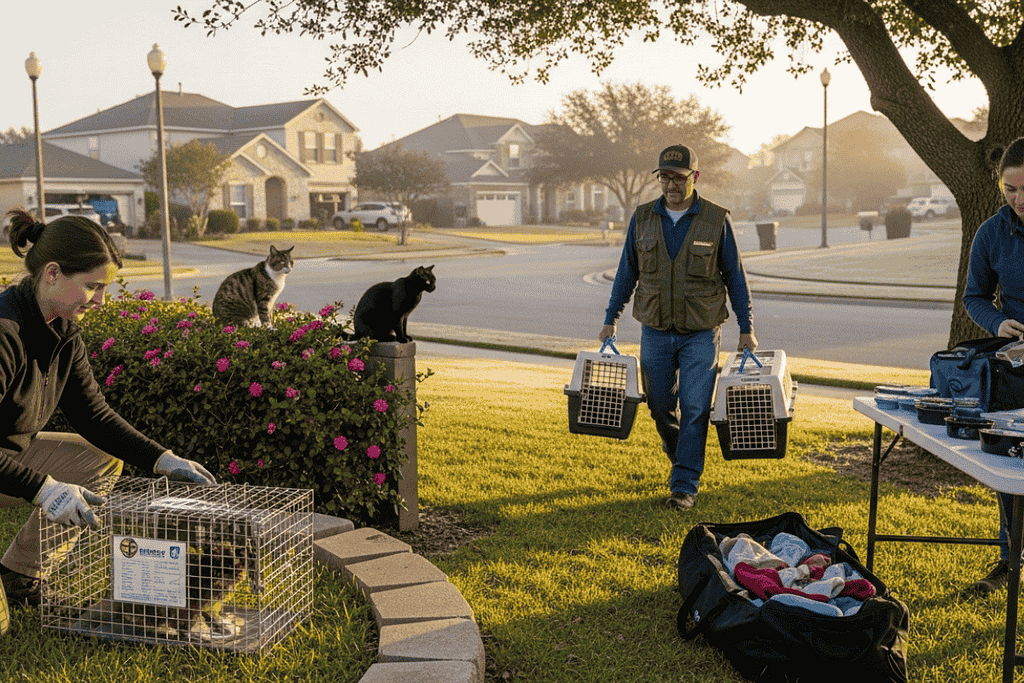
TNR (Trap–Neuter–Return) is a humane, science-backed method that helps community cats live safer and healthier lives. By trapping, sterilizing, vaccinating, and returning cats to their outdoor homes, TNR prevents overpopulation, reduces shelter crowding, and promotes peaceful coexistence across U.S. neighborhoods. Here’s what makes TNR so effective for community cats:
- ? Prevents endless breeding cycles and stabilizes colonies
- ? Improves feline health through sterilization and vaccinations
- ? Reduces shelter intake and euthanasia rates
- ? Encourages peaceful coexistence between cats and neighbors
- ✨ Supports compassionate, long-term community care
Have you ever noticed a quiet cat watching from the shadows of your neighborhood? That cat might be part of a invisible community struggling to survive—and you could be the one to change its life.
Across cities and small towns in the United States, millions of cats live outdoors without owners. Some were abandoned. Others were born free. They share our streets, parks, and backyards—often unnoticed, but never unloved.
A compassionate, science-supported solution called TNR (Trap–Neuter–Return) is giving these cats a second chance—helping them live longer, safer lives while reducing shelter overcrowding and creating more compassionate communities.
According to Alley Cat Allies, TNR remains one of the most effective and humane strategies for managing community cat populations.
? Understanding TNR for Community Cats: What It Really Means
Trap–Neuter–Return (TNR) for community cats is a compassionate, science-backed approach to managing outdoor cat populations. It helps stabilize colonies, improve feline health, and foster peaceful coexistence between cats and neighbors.
Trap–Neuter–Return (TNR) is a humane method of managing outdoor cat populations. It involves:
• Humanely trapping community cats;
• Spaying or neutering them;
• Vaccinating against common diseases;
• Returning them to their familiar outdoor home.
Endorsed by the ASPCA, Alley Cat Allies, and the Humane Society of the United States, TNR is the most ethical and effective way to stabilize cat colonies and break endless breeding cycles.
Unlike outdated “catch and kill” practices, TNR keeps healthy colonies in place, reduces fighting and spraying, and allows cats to coexist peacefully in their territories.
Learn more about community rescue initiatives:
? Street Angels: Community Cat Rescue Stories That Inspire Change
? Why TNR for Community Cats Is Changing Lives Across the U.S.
Across the United States, TNR for community cats is transforming how neighborhoods coexist with feline colonies. From large cities to small towns, this humane solution reduces shelter intake, saves resources, and creates safer, healthier environments for cats and people alike.
The numbers tell a powerful story:
• Between 60 and 100 million community cats live in the U.S.
• 3.2 million enter shelters each year—many are unsocialized ferals.
• 530,000 cats are euthanized annually due to lack of space or resources.
Where TNR is active, shelter intake drops by up to 66%, and euthanasia rates fall by over 80% (SaveACat.org, 2021).
TNR doesn’t just save cats—it saves lives, money, and time, creating balance and compassion in communities nationwide.
? Data Speaks: TNR’s Proven Impact in American Communities
Scientific evidence continues to prove that TNR for community cats is not only humane but also highly effective in reducing overpopulation and disease. These results show that when at least 75% of a colony is sterilized, population growth halts naturally—without relocation or harm.
• In Florida, neighborhoods with TNR saw a 66% drop in shelter intakes within two years (PubMed, 2014).
• In California, long-term TNR efforts cut kitten births by 72%, and by 2025, nearly half of colonies became stable or shrinking (Community Cats Podcast Survey).
When at least 75% of a colony is sterilized, population growth halts naturally—without relocation or harm.
Beyond the data, volunteers across the U.S. confirm the same truth: TNR for community cats brings balance, compassion, and lasting change to urban and rural ecosystems alike.
Explore emotional recovery stories of rescued cats:
? Healing Paws: Cats Who Overcame Trauma and Neglect
? After the Return: Life in a Managed Colony
What happens after a cat is returned?
Once a cat is returned after surgery, the story doesn’t end—it transforms. In a managed colony supported by TNR for community cats, the animals live healthier, calmer, and more connected lives.
Volunteers monitor them daily, ensuring they receive food, clean water, and medical attention when needed.
Over time, the entire dynamic changes: cats fight less, spray less, and begin to trust their caregivers. Neighbors notice the peace, children learn compassion, and local parks turn into examples of coexistence.
This quiet balance is what makes TNR for community cats more than a rescue strategy—it’s a philosophy of shared kindness and respect between species.
As volunteer Karen Lee from Tampa shares:
“Before TNR, nights were filled with fights and yowls. Now it’s peaceful. The cats are calm, healthy, and neighbors even help feed them.”
This quiet coexistence is the true success of TNR: respect between humans and felines.
? Regional Realities: Different Challenges, One Mission
TNR success looks different across the U.S.:
• Southern states like Florida and Texas face rapid breeding cycles due to warm climates.
• Northern regions need insulated shelters and food support during harsh winters.
• Urban programs rely on partnerships with apartment complexes and city councils.
• Rural volunteers often build trust among farming communities to protect cats from culling.
Despite these variations, the mission is the same: compassion over control.
? The Human Impact: Changing Communities, Not Just Cats
TNR isn’t only about cats—it transforms neighborhoods. Reduced noise and odor, healthier cats, and compassionate collaboration improve relationships among residents.
When neighbors unite to help a colony, empathy grows. Conflicts decrease. Kids learn kindness. Seniors find joy in daily visits from the same cats they once ignored.
“I used to complain about the cats,” says Joe Ramirez from Austin. “Now I help feed them. They’re part of the neighborhood family.”
That’s the hidden power of TNR—it heals both species.
? 5 Steps to Start TNR in Your Neighborhood
1️⃣ Observe & identify cats in your area—note their number and health.
2️⃣ Connect with local groups via Alley Cat Allies or ASPCA.
3️⃣ Plan feeding and trapping dates; recruit volunteers.
4️⃣ Provide post-surgery care—warm bedding, hydration, monitoring.
5️⃣ Return & maintain—feed regularly and record colony progress.
Small, consistent actions create lasting impact.
? Every Spay Saves Lives: How You Can Help
You don’t need to be a vet to make a difference:
• Find a local TNR group or clinic;
• Learn safe trapping and release methods;
• Donate to cover vet care or food;
• Share TNR stories to inspire others.
Each trap, spay, and return is a heartbeat of hope.
? Final Thoughts: A Humane Future Starts with You
TNR is more than population control—it’s a statement of empathy and coexistence. Each cat returned to its home is a symbol of respect for life.
Start today. One trap, one spay, one return.
Because compassion, once released, always finds its way back.
? Want to Explore More Heartwarming Rescue Stories?
Discover powerful tales of survival, compassion, and second chances in our main collection: Cat Rescue Stories: Real Tales of Hope, Compassion and Second Chances .
?Written in collaboration with TNR volunteers, veterinarians, and feline welfare experts featured on acatwithstory.com. Data sources include ASPCA, Alley Cat Allies, Humane Society, and community-led studies.

With the sensitivity of one who loves deeply, Sissi writes stories celebrating the animal world. Her felines Estrela and Safira illuminate her days, while Pete and Gabrich live eternally through her words. Every piece she writes is a love letter to the companions who make life truly meaningful.