
?? Toys vs Foraging: Building the Ultimate Cat Enrichment Routine
A healthy cat enrichment routine blends play and foraging. Toys build movement and trust, while foraging feeds curiosity and focus. Together, they create a routine that supports emotional balance, natural hunting instincts, and a calmer, happier indoor life.
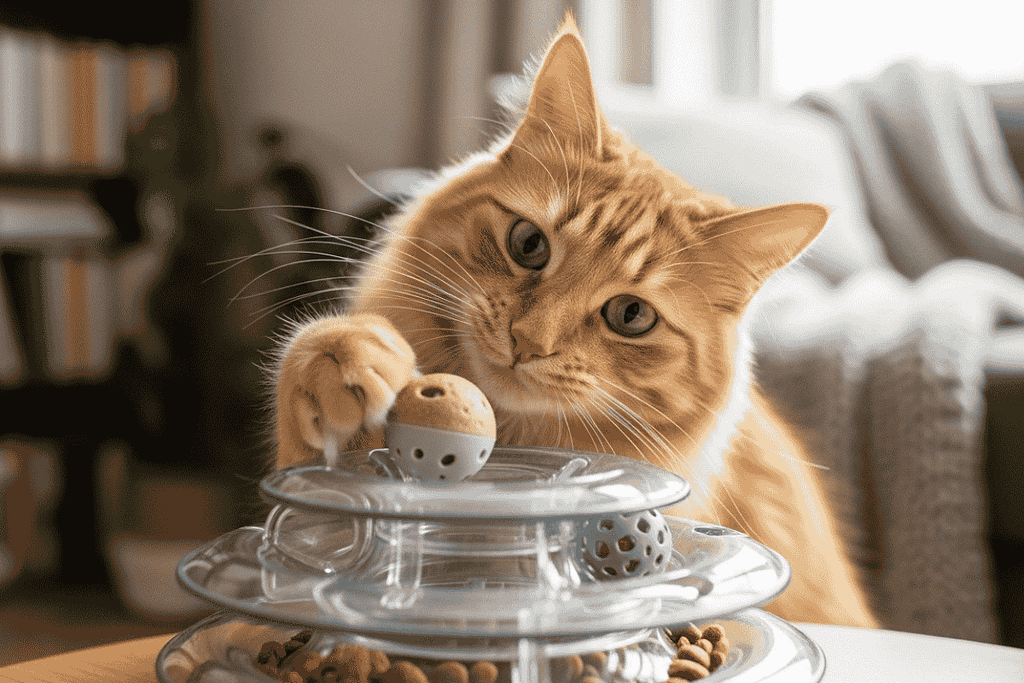
? Understanding Cat Enrichment Routines
For cats, enrichment isn’t entertainment — it’s instinct management.
A well-designed cat enrichment routine recreates the natural hunt-rest cycle: stalking, chasing, catching, eating, grooming, sleeping.
By mimicking these behaviors indoors, we help our cats express their wild roots safely and reduce stress-driven habits.
Enrichment routines also deepen trust. A cat who plays, explores, and forages daily is less likely to show anxiety or boredom behaviors — like over-grooming, night zoomies, or destructive scratching.
? Toys — The Foundation of an Active Cat Enrichment Routine
Toys are the heartbeat of any enrichment plan. They ignite movement, confidence, and curiosity.
Feather wands, teaser toys, and balls simulate prey movement, fulfilling the chase instinct and releasing dopamine — the pleasure chemical.
Pros
- Builds physical fitness and agility
- Strengthens your bond
- Relieves stress and prevents boredom
Cons
- Requires human participation
- Loses novelty quickly
- Can overstimulate without rest cycles
? Routine tip: Rotate toys every 3–4 days. Novelty triggers new engagement, even with old objects.
?️ Foraging — The Mindful Core of a Cat Enrichment Routine
Foraging is the mental workout your cat craves.
It transforms eating into a puzzle-solving experience, stimulating both brain and body. Instead of an easy bowl, food is “hunted” — found, pawed, and earned.
Benefits of foraging:
- Slows eating and aids digestion
- Promotes focus and problem-solving
- Builds confidence in shy cats
- Provides mental stimulation during quiet hours
Routine tip: Start with simple puzzles (like egg cartons or toilet rolls) before moving to advanced feeders.
⚖️ Toys vs Foraging — Which Should Lead Your Cat Enrichment Routine?
The truth: neither wins alone — they’re partners.
Toys energize and connect. Foraging calms and empowers.
Studies (Delgado & Heath, 2021) show foraging lowers stress hormones by adding predictability and control. Play, meanwhile, strengthens physical health and the human–feline bond.
? Balanced routine example:
- Morning — 10 minutes of toy play
- Evening — 10 minutes of foraging time
This mirrors a cat’s natural rhythm: hunt → eat → rest.
?♀️ Matching Enrichment Routines to Cat Personality
Each cat has a unique rhythm — the secret is listening.
| Cat Type | Best Routine | Why |
|---|---|---|
| ? The Hunter | Active play + moving toys | Burns energy, channels prey drive |
| ? The Thinker | Foraging puzzles + slow feeders | Loves mental challenges |
| ? The Cautious | Scent trails + soft textures | Builds trust gently |
| ? The Senior | Short sessions + low-intensity puzzles | Keeps mobility, reduces stiffness |
? Watch tail and ear cues — they tell you whether your cat feels safe, bored, or overwhelmed.
? Creating a Daily Cat Enrichment Routine
- ? Rotate toys — switch textures, sounds, and shapes.
- ? Introduce foraging gradually.
- ?️ Establish timing: morning play, evening foraging.
- ? Define zones: play corner, feeding puzzle area, resting space.
- ? Observe reactions: track which activities calm vs excite your cat.
A cat enrichment routine doesn’t need fancy tools — only consistency, curiosity, and care.
⚠️ Common Mistakes in Cat Enrichment Routines
- ? Too many toys, not enough focus
- ? Ignoring sensory enrichment (smell, sound, touch)
- ?️ Overfeeding during foraging
- ? Pushing play on tired or anxious cats
A great routine follows the cat’s pace — not the clock.
? The Science Behind a Happy Cat Routine
Enrichment routines activate dopamine and serotonin — the brain’s “harmony hormones.”
They lower cortisol, improve sleep, and reduce stress-induced aggression.
Experts like Dr. Mikel Delgado and Jackson Galaxy note that structured enrichment transforms behavior: cats become more confident, affectionate, and emotionally balanced.
Routine is comfort — and comfort is trust.
? Ready to level up your cat’s daily fun? Explore our guide to Interactive Cat Toys and turn playtime into braintime.
? Final Thoughts — Designing a Cat Enrichment Routine That Lasts
Enrichment isn’t about the toys you buy — it’s about the rhythm you build.
? Toys spark motion. ?️ Foraging sparks mindfulness.
Together, they form a living dialogue between cat and human — a shared ritual of curiosity, safety, and connection.
Try one small change today: rotate a toy, hide a treat, create a moment.
Your cat will teach you the rest. ?
? Looking for the behavioral science behind enrichment routines?
Check Dr. Mikel Delgado’s research on foraging and feline behavior for data-driven insights that support smarter play and feeding habits.

With the sensitivity of one who loves deeply, Sissi writes stories celebrating the animal world. Her felines Estrela and Safira illuminate her days, while Pete and Gabrich live eternally through her words. Every piece she writes is a love letter to the companions who make life truly meaningful.