
Cat Litter Texture Guide: Grain Size, Stability & Comfort Explained
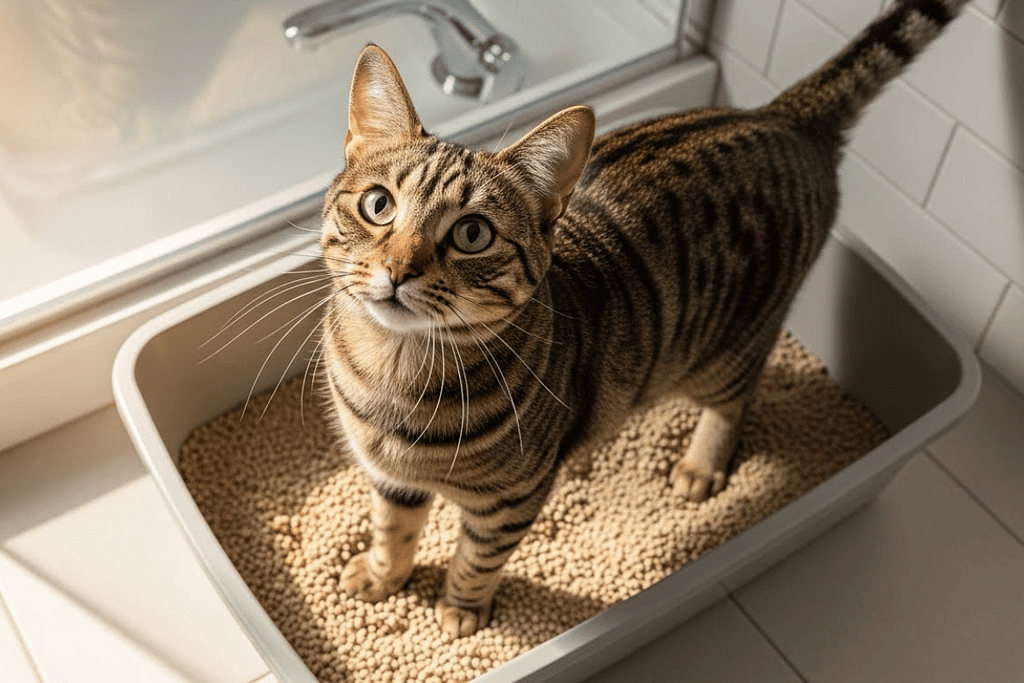
Cat litter texture affects your cat’s tactile perception, stability under paw, and confidence while digging or squatting. Grain size, particle movement, and pressure distribution shape avoidance behaviors and micro-signals like rim-walking and hesitation. This guide shows how to diagnose texture issues and use practical tests to find your cat’s ideal substrate.
Most guides focus on litter “types.”
But your cat experiences the litter box as a tactile environment — a combination of substrate texture, surface predictability, acoustic feedback, and paw-load stability.
Every time your cat steps inside, they quickly evaluate:
- tactile sensory cues
- pressure distribution
- particle movement
- substrate depth and yield
- sound profile underpaw
If any of these elements feel unpredictable, your cat may develop avoidance behaviors, even in a clean box.
? Subtle Signs Your Cat Dislikes the Current Substrate Texture
- Tiptoe gait (reduced paw pressure)
- Shallow, hesitant scratching (surface testing)
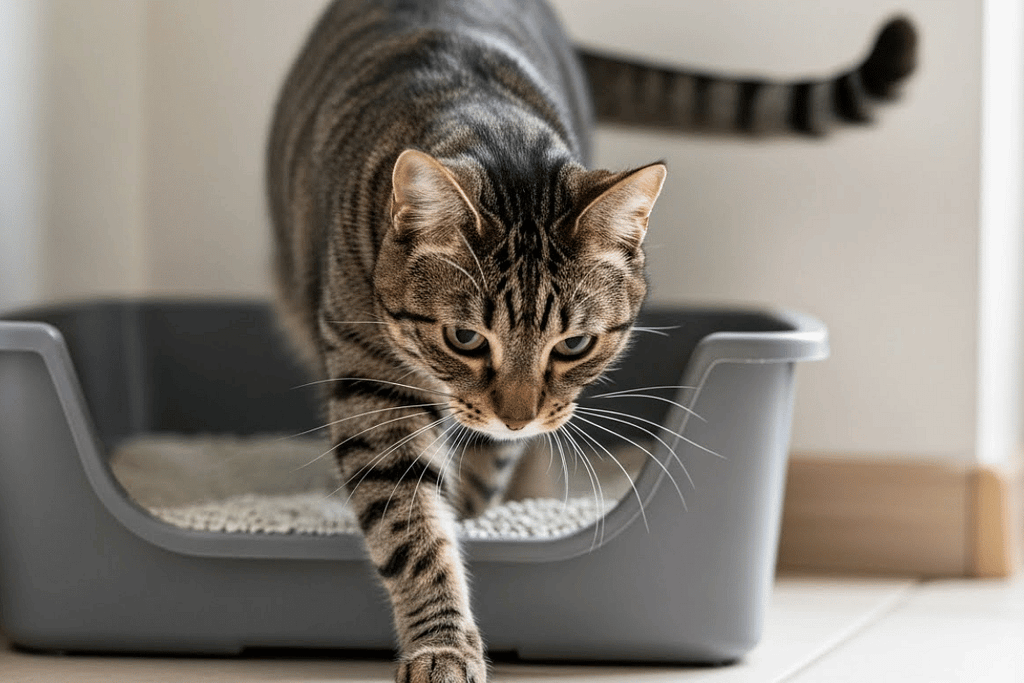
- Rim-walking (avoiding unstable substrate)
- Rapid paw switching (pressure-point discomfort)
- Favoring compacted corners (searching for stability)
These are tactile feedback, not quirks.
? What Litter Texture Really Is: Grain Size + Particle Shape + Surface Feel + Movement
Texture isn’t just “soft or hard.” It’s a multi-layered sensory property:
✔ Grain size – affects pressure distribution and paw immersion
✔ Particle shape – influences friction and interlocking
✔ Surface feel – determines tactile comfort
✔ Substrate movement – sinking, rolling, or interlocking behaviors
Your cat is constantly evaluating whether the “floor” can support squatting, turning, digging, and weight-shifting.
? Cat Litter Texture & Grain Size: How Fine, Medium & Coarse Options Affect Paw Sensitivity
? Fine-Grain (soft, sand-like substrates)
Tactile profile:
- High conformity to paw pads
- Soft tactile input, minimal abrasion
- Quiet “shhh” sound
Behavioral benefits:
- Encourages full digging cycles
- Predictable yield
- Preferred by sensitive or rescue cats
Possible issues:
- Too deep → excessive sinking
- Low traction
- High tracking
Avoidance signs:
- Only surface-level digging
- Avoids soft center
- Repeated surface testing
⚖️ Medium-Grain (balanced substrate stability)
Tactile profile:
- Clear contact points
- Good interlocking
- Balanced load-bearing support
Why it works:
- Predictable behavior
- Good traction
- Less tracking
- Stable digging platform
Ideal for:
- Multi-cat homes
- Cats who dislike soft or hard extremes
? Coarse Grain & Pellets (structured, high-impact substrates)
Tactile profile:
- High pressure points
- More rolling
- Loud clicking sound
Strengths:
- Low dust
- Stable when deep enough
- Eco-friendly options
Problems:
- Harsh on sensitive paws
- Poor traction
- Instability when shallow
Avoidance signs:
- Rim-walking
- Minimal digging
- Fast in–fast out behavior
? Cat Litter Texture Stability: The Hidden Pillar of Litter Acceptance
Most avoidance issues are caused by stability failures, not scent or material.
✔ Stable substrate =
- controlled yield
- predictable interlock
- even pressure distribution
- secure load-bearing
❌ Unstable substrate =
- sinking (fine too deep)
- rolling (pellets too shallow)
- collapsing under weight
A simple 1–2 cm depth change can fix the problem.
? Behavioral cues of instability
- Standing only on edges
- Awkward squatting angles
- Rushed elimination
- Using only one compacted corner
✋? Cat Litter Texture Evaluation: The Hand & Ear Test Method
- Back-of-hand test — checks abrasiveness
- Pressure depth test — identifies sinking
- Rotation test — rolling vs interlocking
- Acoustic test — noisy substrates stress anxious cats
If it feels unpredictable to you, it feels unpredictable to your cat.
? 3-Box Cat Litter Texture Preference Test: Let Your Cat Choose
✔ Setup
Three identical boxes:
- fine-grain
- medium-grain
- plant-based or pellets
Same depth, location, and cleanliness.
✔ Observe for 48–72 hours:
- First-choice entry
- Digging confidence
- Coverage quality
- Return behavior
This creates a behavioral preference profile.
?️ Simple Cat Litter Texture Fixes Before Switching Brands
If fine litter feels too sinking:
- Reduce depth 1–2 cm
- Level or compact surface lightly
If pellets feel unstable:
- Increase depth
- Avoid shallow layers
If you want more stability:
- Add 10–20% medium-grain
If you want more softness:
- Add a thin fine-grain layer
Always keep a second box with the original texture.
? Safe 7-Day Cat Litter Texture Transition (and When to Stop)
- Days 1–2 → 75% old / 25% new
- Days 3–4 → 50/50
- Days 5–6 → 25/75
- Day 7 → 100% new
❌ Stop if you see:
- elimination outside the box
- distress vocalization
- complete refusal
This is a texture rejection response.
? Texture Profiles (No Brands)
? Sensitive Paw Profile
Fine-grain, soft, unscented → rescues, seniors, declawed cats
⚖️ Balanced Universal Profile
Medium-grain → most cats, multi-cat homes
? Eco Pellet Profile
Pellets ≥ 4–5 cm deep → stable & sustainable
? Quick Diagnostic Checklist (6 Steps)
- Observe micro-behaviors
- Perform Hand & Ear Test
- Run 3-box test
- Adjust depth ±1–2 cm
- Transition gradually
- Seek professional help if needed
❓ Cat Litter Texture FAQ: Common Questions Answered
What texture do cats prefer?
Fine to medium textures with stable footing.
Does grain size influence avoidance?
Yes — coarse or rolling textures trigger avoidance.
How do I know my cat dislikes the texture?
Signs include rim-walking, tiptoe gait, shallow digging, hesitation.
? When to Seek Professional Help
If avoidance persists after adjustments or if your cat shows pain, posture changes, or vocalization, consult your veterinarian or a feline behaviorist.
❤️ Final Thoughts: Your Cat’s Paws Know the Truth
Texture is the part of litter cats experience most intensely.
By observing subtle tactile cues and adjusting stability, you create a safer, more predictable elimination environment.
A few centimeters of depth — or a shift in grain size — can transform your cat’s entire experience.
Looking for more reliable information? These two external guides are excellent places to dive deeper:
- International Cat Care: Best practices for litter boxes
- Cornell Feline Health Center: Feline toileting behavior and health
? Ready to Go Deeper? Explore the Full Cat Litter Guide 2026
If this texture guide helped you read your cat’s paws a little better, you’ll love our Cat Litter Guide 2026. It brings together everything — box setup, placement, depth, multisensory comfort, and behavioral signals — so you can build a litter box environment your cat truly trusts.
?️ Next in This Series: Cat Litter Dust Guide
Texture shapes how the floor feels.
Dust shapes what your cat breathes.
Our next guide takes you into the world of micro-dust, air quality, ventilation, and respiratory comfort so you can choose a substrate that feels good and keeps the air safe.

With the sensitivity of one who loves deeply, Sissi writes stories celebrating the animal world. Her felines Estrela and Safira illuminate her days, while Pete and Gabrich live eternally through her words. Every piece she writes is a love letter to the companions who make life truly meaningful.