
? Cat Pheromones Stress Reduction: Do They Really Work?
Cat pheromones stress reduction uses synthetic calming pheromones to help cats feel safer and reduce mild anxiety, especially during routine changes or environmental stress. Benefits may include:
- Less hiding and nervous behavior
- Calmer reactions to changes
- Reduced multi-cat tension
- More relaxed exploration
- Easier travel or vet visits
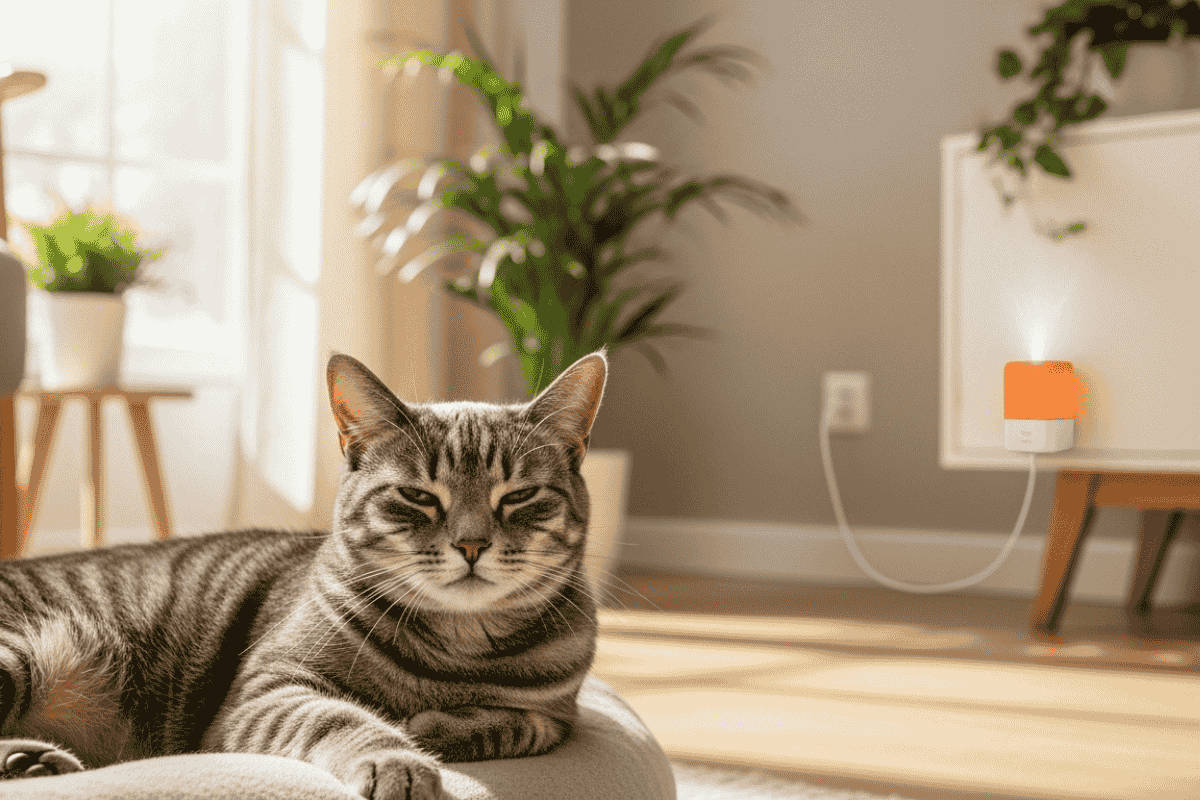
A calm domestic cat in a peaceful home environment with a pheromone diffuser in the background.
If your cat has been hiding under the bed, refusing to eat, or showing sudden aggression, you’re not alone. Many cat owners struggle with stress-related behaviors — and cat pheromones stress reduction products promise an easy fix. But do they truly work, or are they just clever marketing?
This guide explains what pheromones are, how they function, how effective they really are, and when to use them as part of a broader stress-management plan for your cat.
? What Is Cat Pheromones Stress Reduction?
Cat pheromones stress reduction refers to using synthetic versions of calming cat pheromones (especially the F3 facial pheromone) to help cats feel safer and reduce mild anxiety. These products aim to recreate the “friendly” scent signals cats deposit when rubbing their cheeks on familiar objects — signals that communicate safety and territorial confidence.
Because pheromones work through instinctive pathways, many cat parents wonder if synthetic versions can truly calm stressed cats. Let’s explore the science.
? What Are Cat Pheromones and How Do They Work?
Cats produce pheromones from facial glands, paw pads, and other areas of the body. These invisible chemical messages communicate comfort, territory, emotional state, and safety.
The F3 facial pheromone fraction — the one most studied — is associated with calmness and familiarity. When cats head-bump or rub objects, they leave behind F3 to mark “this is safe.”
Synthetic pheromone products try to mimic that same calming signal.
? The Science Behind Synthetic Calming Pheromones
Synthetic pheromones (used in diffusers, sprays, and collars) aim to activate the same neurological responses as natural F3 pheromone signals. Manufacturers claim these help reduce:
- hiding
- mild aggression
- tension in multi-cat homes
- stress during travel or environmental changes
But the scientific evidence is mixed. Some studies show modest benefits, while others show little to no measurable improvement. Most experts agree: pheromones are supplements, not magic cures.
? Why Stress in Cats Requires More Than Pheromones
Cats are highly sensitive creatures. Even minor changes — new furniture, guests, noise, routine shifts — can trigger stress. Common signs include:
- hiding
- over-grooming
- reduced appetite
- aggression
- litter box avoidance
Because stress comes from environmental, social, and behavioral factors, cat pheromones stress reduction products alone are rarely enough. They work best when combined with:
- environmental enrichment
- predictable routines
- safe spaces
- proper introductions between cats
- medical evaluation when needed
? Types of Synthetic Cat Pheromone Products
? Diffusers
Most popular. Release pheromones continuously into the air. Best for rooms where the cat spends most of its time.
? Sprays
Ideal for travel, carriers, new furniture, doorways, or stressful zones. Effects are short-term.
? Collars
Provide continuous release around the cat’s head. Useful for roaming cats or multi-room homes.
? Scientific Evidence for Cat Pheromones Stress Reduction
Research suggests:
✔ Some cats show modest improvement in mild stress
✔ Useful for environmental changes, travel, and mild multi-cat tension
✔ Most effective when combined with enrichment and behavior modification
But also:
✘ Many studies rely on subjective owner reports
✘ Results vary widely between cats
✘ Pheromones rarely help severe anxiety or medical-related stress
Bottom line: potentially helpful, but not guaranteed.
? How to Use Pheromone Diffusers for Best Results
To maximize cat pheromones stress reduction effectiveness:
- Place diffusers in central areas your cat uses frequently
- Avoid vents, windows, or hidden corners
- Let them run for 4–6 weeks to evaluate results
- Track stress behaviors weekly
- If no improvement after 6 weeks, discontinue
? How to Tell If Pheromones Are Working
✅ Signs of improvement:
- less hiding
- calmer vocalization
- more grooming and play
- better appetite
- increased social interaction
❌ Signs they’re not helping:
- no behavioral change
- worsening stress behaviors
- new anxiety symptoms
- inconsistent patterns
? When Cat Pheromones Are Not Enough
Seek veterinary help immediately if your cat shows:
- no eating for 24+ hours
- severe aggression
- straining in the litter box
- excessive hiding with lethargy
- self-inflicted grooming injuries
These signs often indicate medical issues, not behavioral stress.
⚖️ A Balanced Approach to Cat Pheromones Stress Reduction
Pheromones = support tools, not solutions.
They work best when paired with:
- environmental enrichment (shelves, hiding spots, scratching posts)
- predictable daily routines
- interactive play
- safe introduction methods in multi-cat homes
- medical screening
Invest first in environment + routine — these have the strongest scientific support.
? Final Thoughts on Cat Pheromones Stress Reduction
Synthetic pheromones can help some cats feel calmer, especially during mild stress or environmental transitions. But results vary widely, and evidence shows that comprehensive stress management consistently outperforms pheromones alone.
If you choose to try pheromones:
- Set realistic expectations
- Track changes for 4–6 weeks
- Combine with enrichment and routine stability
- Consult a vet if symptoms worsen
Used thoughtfully, pheromones can be a helpful tool — but they’re only one piece of the puzzle.
? Explore More Cat Care Resources
Before we address your most common questions, check out these essential guides to support your cat’s overall well-being:
? Health and Wellness Guide — Comprehensive insights on recognizing illness signs, preventive care strategies, and maintaining optimal feline health throughout life stages.
? Engaged Cat, Happy Cat — Discover evidence-based enrichment techniques, mental stimulation strategies, and how to create thriving environments that prevent stress before it starts.
If you want deeper, science-backed information on feline stress and the role of pheromones, the American Association of Feline Practitioners (AAFP) offers one of the most comprehensive resources available.
❓ Frequently Asked Questions About Pheromones and Stress Reduction
What are cat pheromones and how do they help reduce stress?
Pheromones are chemical signals cats use to communicate territorial, social, and emotional information. Synthetic pheromone products mimic these signals, theoretically creating a familiar environment that reduces stress-related behaviors like hiding, aggression, or excessive vocalization. The most common synthetic version replicates the F3 facial pheromone that cats deposit when marking safe, comfortable spaces.
Do commercial pheromones work for all cats and stress situations?
No. Effectiveness varies significantly between individual cats and different stress situations. Some cats show no response at all, while others demonstrate modest behavioral improvements. Pheromones appear least effective for severe anxiety, medical-related stress, or aggressive conflicts. They should be used as supplements to comprehensive stress management strategies, not standalone solutions.
What are the most common types of pheromone products (diffusers, sprays, collars)?
The three main delivery systems are electric diffusers, sprays, and collars. Diffusers continuously release pheromones in a 500-700 square foot area and require monthly refills. Sprays allow targeted application to specific objects or areas but need reapplication every 4-6 hours. Collars provide localized release around the cat’s head for approximately 30 days.
How do I use pheromone diffusers correctly for best results?
Place diffusers in central locations within rooms where your cat spends at least 3-4 hours daily. Keep them away from air vents, windows, or strong drafts that disperse pheromones too quickly. Run diffusers continuously for 4-6 weeks before evaluating effectiveness. Follow manufacturer instructions for refill schedules and maintain safety distance from water sources and curious pets.
What signs indicate whether pheromones are helping or not?
Improvement signs include reduced hiding, calmer vocalizations, resumed normal activities like play and grooming, increased social interaction, and better appetite. These changes should appear gradually over 4-6 weeks. If stress behaviors continue unchanged, worsen, or show inconsistent patterns after 6 weeks, pheromones likely aren’t helping your specific situation.
Is there reliable scientific evidence about pheromone effectiveness for stress reduction?
Scientific evidence is mixed and inconclusive. Some studies suggest modest benefits for specific situations like environmental changes or multi-cat household tensions. However, many studies have methodological limitations including small sample sizes and reliance on subjective owner reports. Current research supports viewing pheromones as potentially helpful supplements rather than proven solutions with guaranteed effectiveness.
When should I seek veterinary guidance instead of relying on pheromones?
Seek professional help immediately for severe aggression causing injuries, complete appetite loss, litterbox avoidance with straining (potential urinary blockage), excessive hiding with lethargy, or self-mutilation. Pheromones don’t address underlying medical conditions or severe behavioral disorders. A veterinarian or board-certified behaviorist can identify physical causes and recommend appropriate treatments beyond pheromone supplementation.
Are there risks or side effects from using synthetic pheromones?
Synthetic pheromones are generally safe and well-tolerated by most cats. Rare side effects include mild skin irritation at collar contact points, respiratory sensitivity near diffusers, or allergic reactions to carrier ingredients. If any adverse signs appear, discontinue use immediately and consult your veterinarian. Always follow safety instructions regarding placement, ventilation, and monitoring.
? Conclusion: Making Informed Decisions About Pheromone Products
Pheromone products offer an appealing promise—reducing feline stress through simple, non-invasive chemical signals. However, the reality is more nuanced than marketing materials suggest.
Current scientific evidence supports viewing pheromones as potentially helpful supplements within comprehensive stress management approaches, not miracle solutions or replacements for addressing underlying problems. Some cats may benefit modestly in specific situations, while others show no response.
Before investing in pheromone products, ensure you’ve implemented proven stress-reduction strategies: environmental enrichment, routine consistency, appropriate play opportunities, and management of social dynamics. These evidence-based interventions provide reliable benefits regardless of individual pheromone response.
If you choose to try pheromones, approach them as experiments with clear evaluation criteria. Track specific behavioral changes over 4-6 weeks using objective measurements, not wishful thinking. Be prepared to discontinue use if improvements don’t materialize—the money saved can fund more effective interventions.
Most importantly, never delay professional veterinary consultation while waiting for pheromones to work. Stress-related behaviors sometimes indicate serious medical conditions requiring prompt diagnosis and treatment.
Share your experiences with pheromone products in the comments below. Did they help your cat? What strategies worked better? Your real-world insights help other cat parents make informed decisions about stress management approaches.
? Want Science-Backed Tips for a Happier Cat?
Small behavior adjustments can transform your cat’s daily comfort and well-being. Explore evidence-based guidance in Cat Behavior Tips Backed by Science for Happier Cats .

With the sensitivity of one who loves deeply, Sissi writes stories celebrating the animal world. Her felines Estrela and Safira illuminate her days, while Pete and Gabrich live eternally through her words. Every piece she writes is a love letter to the companions who make life truly meaningful.