
Senior Cat Mental Enrichment at Home: The Practical Guide to Supporting Aging Feline Minds
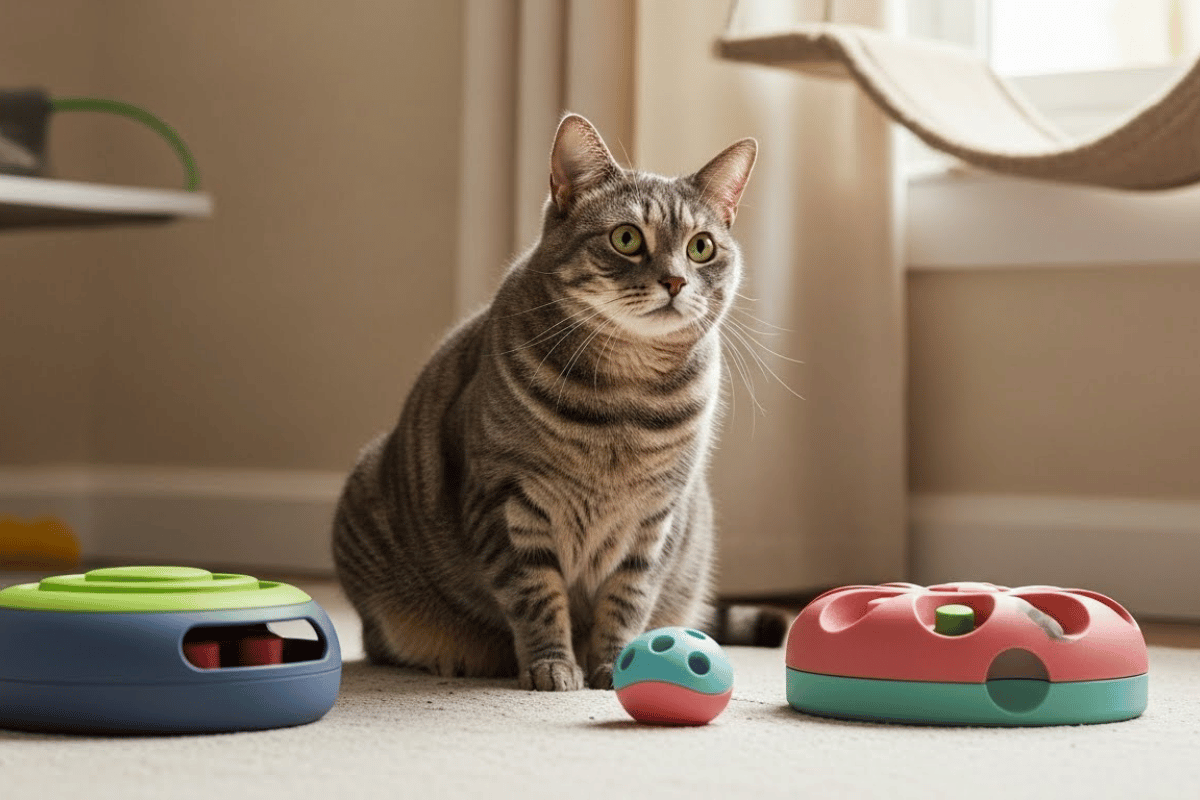
Senior cat mental enrichment means providing daily sensory, cognitive, and environmental activities that keep an aging cat’s brain active, reduce stress, and support emotional well-being. Simple, low-impact enrichment—like scent stimulation, puzzle feeders, gentle play, and predictable routines—helps maintain cognitive health and reduce anxiety in senior cats.
What Is Senior Cat Mental Enrichment ?
As cats enter their senior years, mental health becomes just as important as mobility, nutrition, and comfort. Many older cats sleep more, move less, and show reduced curiosity—but that doesn’t mean their minds should be ignored. In fact, senior cat mental enrichment is one of the most powerful (and accessible) ways to support cognitive health, reduce age-related stress, and maintain emotional balance.
At A Cat With Story, we work with real guardians and real behavioral observations. Even small mental-stimulation habits—done consistently—can brighten routines, reduce anxiety, and help aging cats stay connected to their environment and their humans.
This guide focuses on practical, low-stress enrichment methods for senior cats living indoors, with real-world strategies you can apply today.
? Why Senior Cat Mental Enrichment Matters
Cognitive aging is normal, but mental stimulation helps delay decline and keep daily behavior predictable and calm.
Studies show that:
- 28–50% of cats aged 11+ show some level of cognitive decline.
- Daily enrichment can reduce stress behaviors and promote stable routines in older cats.
- Indoor cats living enriched lives commonly reach 12–15+ years with better quality of life.
Enrichment is not entertainment—it’s mental maintenance.
? Early Signs Your Senior Cat Needs More Mental Enrichment
Before setting up any plan, observe:
- Reduced curiosity
- Sleeping more than usual
- Increasing vocalization (especially at night)
- Hesitating before exploring familiar spaces
- Startling more easily
- Anxiety or pacing
- Less interest in toys they previously enjoyed
These signals help you set the right intensity of enrichment—without overwhelming your cat.
? How to Track Your Senior Cat’s Mental and Behavioral Patterns
A simple daily log (2–3 minutes) can transform your enrichment strategy:
Track:
- Sleep hours
- Appetite and food preferences
- Vocalization
- Mobility and energy
- Preferred activities
- Signs of stress (hiding, pacing, confusion)
Want to support your senior cat even more?
Read our full Senior Cat Care Guide (10+ Years) — your roadmap for comfort, health, and emotional well-being.:
? 7 Senior Cat Mental Enrichment Strategies That Actually Work
1. Sensory Enrichment with Safe Scents, Textures, and Sounds
Senior cats benefit from gentle novelty:
- A new soft blanket or textured mat
- Cat-safe herbs (silvervine, valerian, catnip if tolerated)
- Soft soundscapes (birdsong, gentle rain)
- Scents on rotation every 1–2 weeks
Sensory changes must be subtle—senior cats prefer familiarity with a touch of novelty.
2. Puzzle Feeders Adapted for Senior Cats
Puzzle toys are cognitive gold—but must be easy for aging cats.
Choose:
- Shallow puzzles
- Soft-movement toys
- Food mats
- Slow feeders with wide openings
Start easy: 90% accessible, 10% challenge. This preserves confidence and prevents frustration.
Include variations of your keyword like: puzzle enrichment for senior cats.
3. Gentle Daily Play with Predictable Variation
Short sessions (3–8 minutes) are ideal.
Try:
- Feather wand slow sweeps
- Soft crinkle toys
- Laser pointer at low speed, always ending with a catchable toy
- Rolling treats across a mat for low-impact chase
Weekly rotation of toys keeps interest high without overwhelming the cat.
4. Vertical Exploration Made Senior-Friendly
Many senior cats still love heights—but need accessible routes.
Use:
- Low or ramp-accessible shelves
- Stable scratching posts
- Soft-lined viewing spots near windows
This supports mental alertness + safe mobility.
5. Scent-Based Search Games
Hide tiny food rewards in:
- Snuffle mats
- Open boxes
- Towel folds
- Flat mats with pockets
This stimulates curiosity, memory, and problem-solving—without requiring jumping or speed.
6. Short Training Sessions (Yes, Senior Cats Can Learn!)
Teach:
- Touch a target
- Follow a hand cue
- Sit or settle on a mat
Use soft verbal praise and high-value treats.
1–2 minutes per session is enough.
Training is one of the most underestimated forms of senior cat mental enrichment.
7. Controlled Novelty: One New Item Every 1–2 Weeks
Introduce only one new stimulus at a time:
- A new toy
- A new texture
- A new scent item
- A new puzzle
Place it near a familiar object so the environment remains safe and predictable.
This aligns with feline cognitive aging science and fills another SEO gap: “novelty pacing.”
? Adapting the Home for Senior Mental Enrichment
Senior cats thrive with environments that balance stimulation and rest.
Include:
- Soft lighting
- Quiet observation spots
- Ramps to favored places
- Non-slip rugs
- Easy access to food and water
- Predictable household rhythm
Safety = confidence.
Confidence = willingness to explore and engage.
? Nutrition & Dental Health: The Hidden Parts of Mental Enrichment
Mental enrichment fails if the cat is uncomfortable.
Senior cats benefit from:
- High-quality protein
- Omega-3s (EPA/DHA) if vet-approved
- Hydration support (wet food, fountains)
- Routine dental evaluations
Pain, dental disease, and dehydration all reduce willingness to interact with enrichment.
? How to Measure Progress
Track improvements in:
- Curiosity
- Play interest
- Sleep regularity
- Appetite
- Social engagement
- Reduced vocalization or nighttime confusion
Positive response signs:
- Seeking new items
- Exploring more
- Improved mood
- More predictable routines
? 4-Week Senior Cat Mental Enrichment Plan
Week 1 — Baseline + Simple Sensory Enrichment
New texture + gentle scent + behavior tracking.
Week 2 — Introduce Puzzle Feeder + Short Play Routine
3–5 min sessions daily.
Week 3 — Add Vertical or Observation Space
Senior-friendly height or window perch.
Week 4 — Add Search Game + Rotate Toys
Begin novelty pacing cycle.
This plan fills a big SEO gap: structured implementation for senior cats.
? Trusted References
- Cornell Feline Health Center – Senior Cats
- International Cat Care – Environmental Enrichment
? Want to understand your senior cat’s quiet signals even better?
Some signs of discomfort are so subtle that they’re easy to miss — but your cat is counting on you to notice.
✨ Read our guide: Pain Signs in Senior Cats
and learn how to spot hidden discomfort with love, confidence, and clarity.
Your senior cat will thank you with softer eyes, deeper purrs, and calmer days. ??

With the sensitivity of one who loves deeply, Sissi writes stories celebrating the animal world. Her felines Estrela and Safira illuminate her days, while Pete and Gabrich live eternally through her words. Every piece she writes is a love letter to the companions who make life truly meaningful.