
? Why Is My Cat Biting Me? 7 Surprising Reasons Explained

Understanding why is my cat biting helps you identify whether the behavior comes from play, fear, stress, pain, or overstimulation. Cats bite for several instinctive and emotional reasons, and recognizing the cause is the first step to preventing it. The most common reasons why is my cat biting me include:
- Overstimulation during petting
- Play aggression and hunting instinct
- Fear, anxiety, or feeling cornered
- Poor kitten socialization
- Pain or underlying medical issues
- Attention-seeking behaviors
- Redirected aggression
You’re cuddling with your cat, everything seems perfect, and then—ouch! Your furry friend just bit you. Sound familiar?
If you’re wondering “why is my cat biting me,” you’re not alone. Cat bites are one of the most common behavioral concerns among pet parents.
The good news? Understanding why cats bite is the first step to stopping it. This is especially important if you have kids at home who love playing with your feline friend. Let’s dive into the reasons behind those surprising nips and what you can do about them.
? Understanding Cat Biting Behavior
First things first—cat biting is actually a pretty normal behavior. Cats use their mouths to explore the world, just like human babies do.
But here’s the thing: not all bites are created equal. Some are gentle love nips, while others are serious warnings.
The key is learning to read your cat’s signals. Once you understand what triggers the biting, you can prevent it before it happens.
And trust me, your kids will thank you for it! Creating a safe environment where children and cats coexist peacefully starts with education.
? The Difference Between Playful and Aggressive Biting
Playful biting usually happens during interactive games. Your cat’s body language is relaxed, ears are forward, and the bite is gentle.
Aggressive biting looks totally different. You’ll notice flattened ears, dilated pupils, a twitching tail, and the bite is much harder.
Understanding this difference helps you respond appropriately. Playful biting needs redirection, while aggressive biting requires space and safety.
Watch your cat’s entire body, not just their mouth. Their posture tells you everything you need to know about their mood.
Why Is My Cat Biting Me? 7 Surprising Reasons Explained
Now let’s get into the nitty-gritty. Here are the seven most common reasons why is my cat biting me, and what each one means.
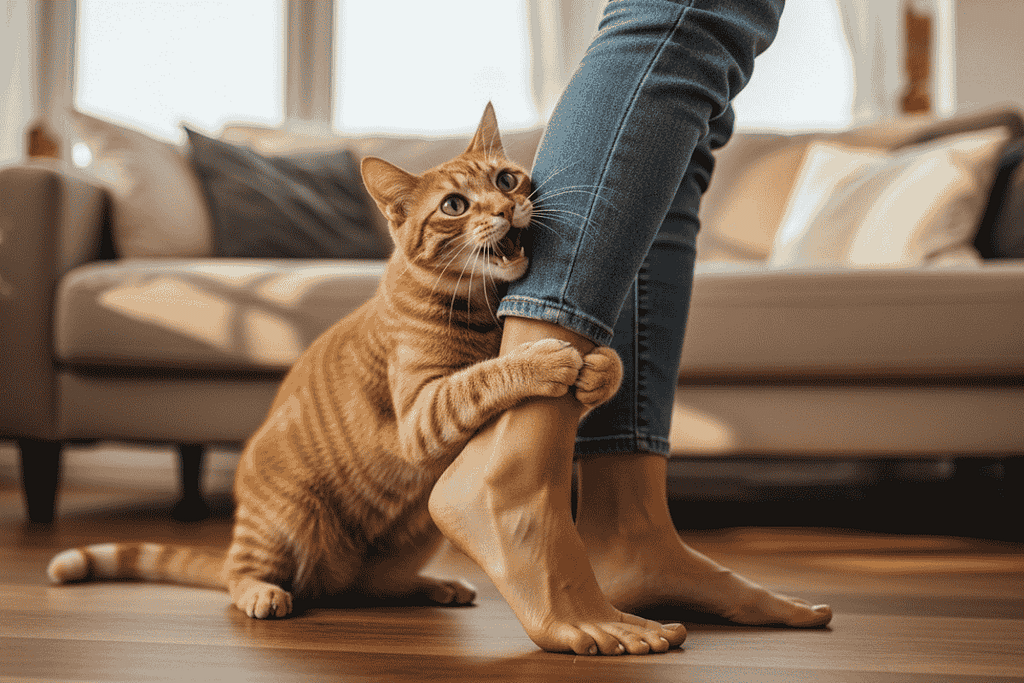
1️⃣ Overstimulation During Petting
Ever had your cat purring contentedly one minute, then suddenly attacking your hand the next? That’s overstimulation.
Cats have sensitive nerve endings, especially along their back and belly. Too much petting in these areas can actually become uncomfortable or irritating.
Think of it like someone tickling you—fun at first, but quickly becomes too much. Your cat experiences the same thing.
Signs of overstimulation include skin rippling, tail twitching, ears going back, and restless movements. When you see these, it’s time to stop petting.
Most cats have a petting threshold. Learn your cat’s limits and respect them, especially when teaching kids how to interact safely.
2️⃣ Play Aggression and Hunting Instincts
Cats are natural-born hunters. Even your indoor kitty has those predatory instincts hardwired into their brain.
During play, especially with hands or feet, cats can get carried away. They’re not trying to hurt you—they’re just practicing their hunting skills.
This is super common with kittens and young cats who have tons of energy. They see movement and their instinct kicks in automatically.
The problem? They treat your hands like prey. This becomes dangerous when kids have small, quick-moving fingers that trigger chase responses.
Play aggression usually includes stalking, pouncing, biting, and bunny-kicking with back legs. It looks intense but it’s actually natural behavior.
3️⃣ Fear or Anxiety
A scared cat is a biting cat. When cats feel threatened or cornered, they’ll defend themselves with teeth and claws.
Common fear triggers include loud noises, unfamiliar people, new pets, or being grabbed suddenly. Kids often move unpredictably, which can startle cats.
Fearful cats show specific body language: crouching low, ears flat, pupils wide, hissing, or trying to escape. If you ignore these warnings, biting follows.
Never force interaction with a scared cat. Give them space, let them come to you, and create safe hiding spots throughout your home.
Teaching children to recognize fear signals in cats prevents most fear-based biting incidents. Education is your best protection tool.
4️⃣ Lack of Socialization as a Kitten
The first few weeks of a kitten’s life are critical for social development. Kittens who miss proper socialization often struggle with bite inhibition.
Bite inhibition is what kittens learn when they play with littermates. When one kitten bites too hard, the other yelps and stops playing.
Without this early lesson, adult cats don’t know their own strength. They bite harder than they intend because nobody taught them otherwise.
Cats who were separated from their mother too early (before 8 weeks) commonly have this issue. They simply didn’t complete their education.
You can’t change your cat’s past, but you can work on teaching bite inhibition now. It takes patience but it’s absolutely possible.
5️⃣ Pain or Medical Issues
Sometimes the answer to “why is my cat biting me” is actually physical pain. Cats are experts at hiding discomfort and illness.
Arthritis, dental disease, infections, or injuries can make cats irritable and defensive. Touching a painful area might trigger a bite response.
If your cat suddenly starts biting when they never did before, schedule a vet visit immediately. Behavior changes often signal health problems.
Older cats especially might develop conditions that cause chronic pain. What looks like aggression could actually be them saying “that hurts, please stop.”
Never assume biting is purely behavioral without ruling out medical causes first. Your vet can do a thorough examination.
6️⃣ Attention-Seeking Behavior
Believe it or not, some cats bite because it works. If biting gets your attention—even negative attention—they’ll keep doing it.
Maybe your cat nips your leg when their food bowl is empty. Or bites your hand when they want to play and you’re ignoring them.
From your cat’s perspective, biting equals results. You react, you move, you do something—mission accomplished in their mind.
This is especially common in cats who spend a lot of time alone. They’re desperate for interaction and use whatever works.
The solution? Ignore attention-seeking bites completely and reward good behavior instead. Change what gets your response.
7️⃣ Redirected Aggression
Redirected aggression is tricky because the bite seems random. Your cat sees something that frustrates them—like a bird outside—but can’t reach it.
So they redirect that aggressive energy toward the nearest target: you, your child, or another pet in the home.
This type of biting can be intense and scary because your cat is genuinely agitated. Their arousal level is sky-high.
Common triggers include outdoor cats visible through windows, sounds of other animals, or being interrupted during focused activities like bird watching.
Redirected aggression requires immediate separation. Give your cat space to calm down before attempting any interaction again.
?️ How to Stop Your Cat From
Understanding why is my cat biting me is step one. Now let’s talk about practical solutions that actually work.
? Recognize Warning Signs
Prevention beats correction every single time. Learning to read your cat’s body language helps you avoid bites altogether.
Watch for these pre-bite signals: tail lashing, ears rotating backward, dilated pupils, tense body posture, or sudden stillness.
Vocalizations count too—growling, hissing, or aggressive meowing all mean “back off right now.” Don’t ignore these warnings.
Teach your children these warning signs using pictures or videos. Make it a fun learning game so they remember.
When you spot these signals, immediately stop what you’re doing. Give your cat space and the situation won’t escalate.
? Redirect to Appropriate Toys
Never use your hands or feet as toys during play. This teaches cats that human body parts are fair game for biting.
Instead, use interactive toys like feather wands, laser pointers, or toy mice. Keep these toys moving to engage your cat’s hunting instincts.
Schedule at least two dedicated play sessions daily, 15 minutes each. Tired cats are well-behaved cats—exercise burns off excess energy.
For kids, provide them with long-distance toys so their hands stay safely away from teeth. Wand toys work perfectly for this.
When your cat tries to bite you during play, immediately stop and ignore them. Walk away and refuse to engage until they calm down.
? Never Use Punishment
Here’s what doesn’t work: yelling, hitting, spraying with water, or scruffing your cat. Punishment makes biting worse, not better.
Physical punishment damages your relationship with your cat. It creates fear and anxiety, which actually increases aggressive behavior.
Cats don’t understand punishment the way dogs do. They won’t connect your reaction to their biting—they’ll just learn to fear you.
Especially avoid punishment if children witness it. Kids might copy your behavior, creating an unsafe environment for everyone.
Positive reinforcement is the only effective training method for cats. Reward good behavior and ignore bad behavior consistently.
? Create a Safe Environment for Kids and Cats
If you have children, establishing clear rules protects both kids and cats from injury. Supervision is absolutely essential.
Teach children to never grab, chase, or corner the cat. Respect the cat’s personal space and let the cat approach them.
Create high-up escape routes where your cat can retreat when overwhelmed. Cat trees, shelves, or designated rooms work great.
Establish “no-touch zones” when the cat is eating, using the litter box, or sleeping. These times are sacred for cats.
Consider baby gates to separate spaces when you can’t supervise. Physical barriers prevent incidents before they happen.
? When to Consult a Veterinarian
Some biting problems require professional help. Don’t hesitate to reach out when you’re in over your head.
Schedule a vet visit if biting appears suddenly, happens frequently, causes injuries, or escalates despite your best efforts.
Your vet can rule out medical causes and may refer you to a veterinary behaviorist. These specialists handle complex behavioral issues.
Breaking skin with bites is serious—infection risk exists with all cat bites. Clean wounds immediately and watch for swelling or redness.
If your cat bites your child, always get medical attention even if it seems minor. Cat bite infections can develop quickly.
Learn to recognize the symptoms of anxiety in your cat. Read the following post to understand how to help your anxious cat.
Want an extra dose of gentle, science-based guidance?
Check out this trusted resource to understand even more about why cats bite and how to help them feel safe.
Your cat (and your fingers!) will thank you. ?
? Conclusion
So, why is my cat biting me? As we’ve discovered, there are multiple reasons—from overstimulation and play aggression to fear and medical issues.
The most important takeaway? Cat biting is communication. Your cat is telling you something important through their behavior.
By learning to read your cat’s signals, redirecting play appropriately, and creating a safe environment, you can dramatically reduce biting incidents.
Remember that patience is key. Changing behavior takes time, especially with cats who’ve been biting for a while.
Start today by observing your cat more closely. Notice what happens right before they bite and adjust your interactions accordingly.
Your family—especially your kids—will enjoy a much happier relationship with your cat when everyone feels safe and understood.
Have you figured out why your cat is biting? Try these strategies and watch the transformation happen. Your peaceful, bite-free home is waiting!
? Want Science-Backed Tips for a Happier Cat?
Small behavior adjustments can transform your cat’s daily comfort and well-being. Explore evidence-based guidance in Cat Behavior Tips Backed by Science for Happier Cats .
Learn to recognize the symptoms of anxiety in your cat. Read the following post to understand how to help your anxious cat.

With the sensitivity of one who loves deeply, Sissi writes stories celebrating the animal world. Her felines Estrela and Safira illuminate her days, while Pete and Gabrich live eternally through her words. Every piece she writes is a love letter to the companions who make life truly meaningful.