
?? How Cats Affect Home Vibration: A Practical Guide to Harmonious Living
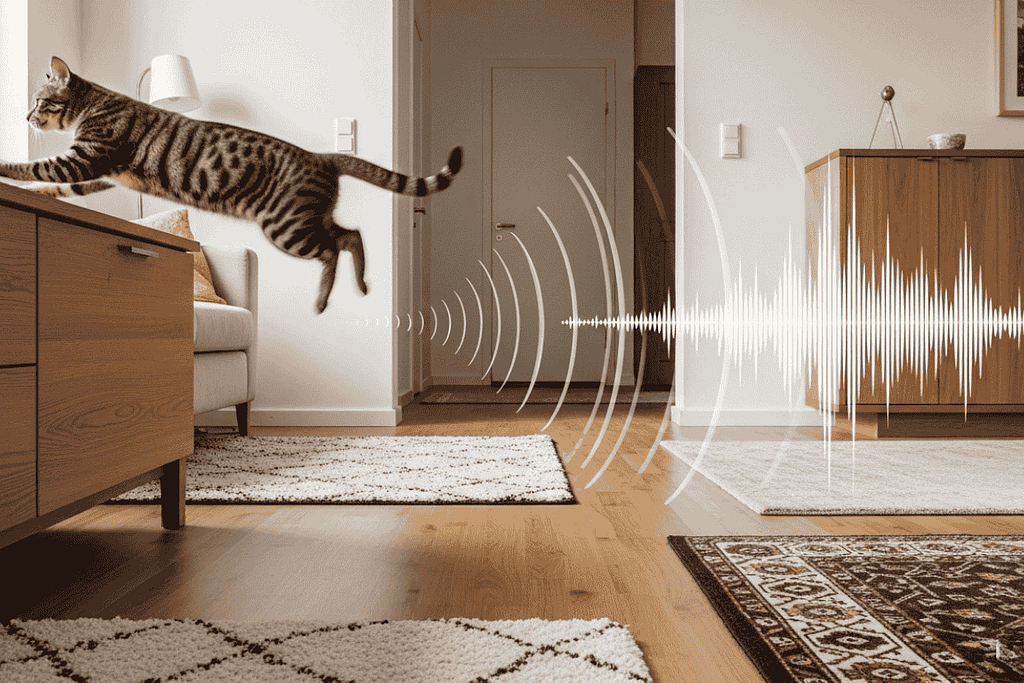
Cat home vibration is influenced by three main factors: feline movement and weight distribution (creating 40-70 decibels of impact noise), acoustic energy from purring and meowing (25-150 Hz), and daily behavior patterns. Noise above 95 decibels can damage cat hearing, while prolonged exposure to 70+ dB causes hypertension and stress. Strategic solutions include sound-absorbing rugs, vertical play spaces, consistent routines, and environmental enrichment that channels movement productively.
How to reduce cat home vibration:
- Place impact-absorbing rugs on high-traffic pathways
- Create vertical play spaces instead of horizontal running
- Establish predictable daily routines (reduces activity spikes)
- Use strategic furniture placement for stable landing zones
- Implement environmental enrichment to reduce chaotic movement
- Choose flooring with acoustic underlayment in apartments
? The Physics of Cat Movement: How Vibrations Actually Work ?
Have you noticed how your cat’s presence seems to change the atmosphere of your home? The vibration of your living space goes far beyond simple noise — it involves energy, rhythm, movement, and the overall sense of wellbeing.
Understanding home vibration means recognizing how cat behavior, space organization, and daily routines interconnect. When you grasp these elements, you can reduce stress, prevent furniture damage, and create a more welcoming environment for all residents — both human and feline.
Cat Movement and Impact Force: The Science
When your cat runs and jumps, small vibrations propagate through the subfloor and structural elements. In apartments with hardwood or laminate flooring, these impacts are noticeably perceptible to those in adjacent rooms or even neighboring units.
Research in architectural acoustics shows that impact noise from pets can range from 40-70 decibels depending on floor construction. For perspective, a 10-pound cat landing from a 4-foot jump generates approximately the same impact force as a 150-pound human taking a normal step — but concentrated in a much smaller area.
This concentrated force creates more vibration disturbance per square inch of contact.
Understanding Impact Noise Frequency
Impact noise exists primarily in the 20-200 Hz frequency range, which encompasses major structural vibration modes and room acoustic modes. This low-frequency region is particularly difficult to attenuate, especially in small apartments.
When your cat runs and jumps, they’re generating a complex acoustic signature that includes:
- Impulse noise (sudden impact) — 40-70 dB
- Structural vibration — 20-200 Hz (felt through floors)
- Sound propagation — travels through walls and to adjacent units
Understanding these frequencies is crucial for effective solutions.
? Acoustic Impact and Energy: Understanding Cat Sounds ?
The sounds your cat produces — purring, meowing, and chirping — directly influence the overall vibration of the environment. Beyond mere noise, these sounds shape household mood and stress levels for all residents.
The Purring Frequency: Therapeutic or Stressful? ?
Cat purring occurs at frequencies between 25-150 Hz, with cats’ hearing most sensitive between 500 Hz and 32 kHz. This frequency range is associated with relaxation benefits.
However, the context matters:
- Soft, gentle purring (25-50 Hz) = stress-reducing for humans
- Intense, prolonged purring (during stress) = may indicate feline anxiety
- Silent purring = sometimes indicates pain, not contentment
Practical insight: Not all purring means happiness. Pay attention to context and accompanying body language.
Cat Vocalizations: Meowing Frequency and Patterns
Cats can hear the lower pitched human male voice at 90-155 Hz as well as women’s higher pitched voices at 165-255 Hz. When cats meow to communicate with us, they often use frequencies in the range we find most engaging — around 100-150 Hz.
However, excessive meowing can create household tension:
- Excessive vocalization = anxiety or unmet needs
- Predictable patterns = routine communication
- Sudden silence = potential sign of distress
High-Frequency Electronic Stress
Many electronic devices emit annoying high-frequency sounds that cats can hear but humans cannot. Computers, TVs, and their remote controls all emit high-frequency sounds that contribute to “acoustic stress” in cats.
Ultrasonic noise has been linked to Feline Audiogenic Reflex Seizures, particularly in older cats around 15 years of age or those who are deaf or partially deaf.
Solution: Minimize use of ultrasonic devices and provide quiet zones free of electronics.
?️ Environmental Design: How Space Architecture Affects Vibration ?️
House layout, floor type, and materials used directly influence how vibrations propagate through your home. Well-planned spaces help disperse impacts while maintaining structural stability.
Flooring Materials and Sound Absorption ?
Different flooring types handle cat vibrations differently:
| Floor Type | Impact Absorption | Vibration Control | Best For |
| Hardwood | Low | Poor | Not ideal for cats |
| Laminate | Low-Moderate | Fair | Needs underlayment |
| Cork | High | Excellent | Natural shock absorption |
| Luxury Vinyl (with underlayment) | High | Excellent | Sound dampening + durable |
| Thick carpet with padding | High | Excellent | Maximum comfort |
| Area rugs (strategic) | Moderate | Good | Cost-effective solution |
Floating floors with resilient material layers are generally effective against both light-weight and heavy-weight impact noise, particularly above 200 Hz frequency.
Strategic Rug Placement: The 40% Rule
Real-world data shows that introducing strategically positioned rugs can reduce rapid movement in specific house areas by up to 40% during nighttime hours.
Placement strategy:
- Under furniture legs (reduces rolling toy noise)
- Along cat’s primary pathways
- Under jumping landing zones
- In high-traffic hallways
Furniture Distribution: The “Triangle of Needs” ?
Create a layout that minimizes cross-house travel:
Position these in close proximity:
- Food and water bowls
- Litter box
- Primary resting spots
- Play areas
This reduces the need for high-speed movements through your home, naturally decreasing vibration and impact noise.
? Vertical Movement vs. Horizontal Movement: The Energy Channel Solution ⬆️
One of the most effective vibration-reduction strategies involves redirecting cat movement from horizontal (floor-to-floor sprinting) to vertical (climbing and jumping between levels).
Why Vertical Movement Reduces Vibration
- Horizontal running = extended distance, repeated impacts, floor vibration
- Vertical climbing = concentrated impacts, structural absorption, less floor stress
For mice (and similarly for cats), the body cavity vibrates optimally between approximately 30-100 Hz, with maximum sensitivity in the 70-100 Hz range.
Vertical movement distributes energy across wall structures rather than concentrating it on floor systems.
Strategic Cat Tree Placement
Tall, stable cat trees with multiple levels should be positioned:
- Near windows — environmental stimulation reduces boredom-driven running
- In corners — provides wall support and reduces tipping
- Away from bedrooms — positions nighttime activity away from rest areas
- Near gathering spaces — allows cats to observe family activity
Case Study Result: One household reduced downstairs neighbor complaints by 100% after installing wall-mounted cat highways and eliminating horizontal running routes.
? Routine Management: How Schedules Reduce Vibration Spikes ?
Consistent routines help regulate household rhythm. When feeding, playtime, and rest periods are predictable, the likelihood of chaotic vibration spikes decreases significantly.
The Daily Routine Framework
7:00 AM — Morning activation
- Feeding + 10 minutes interactive play
- Purpose: Channel morning energy productively
12:00 PM — Midday engagement
- Brief check-in + puzzle feeder activity
- Purpose: Mental stimulation without physical chaos
6:00 PM — Evening activity
- Feeding + 15 minutes active play
- Purpose: Exhaust energy before evening rest
10:00 PM — Night settling
- Quiet time + calming interaction
- Purpose: Prepare for sleep, reduce nighttime zoomies
The Feeding Schedule Impact ?️
Research from the University of Lincoln found that cats in homes with irregular feeding schedules vocalized 3 times more frequently than those with consistent routines.
Consistent feeding times:
- Reduce anxiety-driven vocalizations
- Decrease food-seeking impulses
- Stabilize energy levels throughout day
- Improve litter box predictability
Environmental Enrichment Strategy
Interactive toys, cardboard boxes, hiding spots, and climbing opportunities help channel energy productively.
Enrichment rotation schedule:
- Monday & Thursday — New toy introduction
- Tuesday & Friday — Puzzle feeders
- Wednesday & Saturday — Cardboard boxes/hideaways
- Sunday — Rest and preference evaluation
Practical reports from cat owners show noticeable behavioral improvements within days of implementing consistent enrichment routines.
? Cat Hearing Health: Understanding Safe Noise Levels ?
Before addressing vibration reduction, it’s important to understand the impact of noise on cats themselves.
Safe vs. Unsafe Noise Levels for Cats
Cats can suffer hearing damage if exposed to noise levels above 95 decibels for an extended period. Short, sharp noises around 120 decibels can also cause immediate hearing damage.
| Sound Source | Decibels | Safety | Impact |
| Normal conversation | 60 dB | ✅ Safe | Baseline comfort |
| Vacuum cleaner | 70-80 dB | ⚠️ Uncomfortable | Stress response |
| Lawn mower | 90 dB | ❌ Unsafe (prolonged) | Hearing risk |
| Fireworks/Thunder | 120+ dB | ❌ Dangerous | Acute hearing damage |
| Home theater system (loud) | 100-110 dB | ❌ Dangerous | Clear danger zone |
Signs Your Cat Is Experiencing Acoustic Stress
- Flattened ears or ear position changes
- Excessive panting or drooling
- Hiding or avoidance behavior
- Aggression or irritability
- Changes in eating/litter box habits
- Upset stomach or lip/nose licking
Even noise levels not loud enough to damage hearing can cause considerable harm through stress and anxiety. A cat’s blood pressure is raised by excessive noise, as they live in a heightened state of stress.
? Real Cases: Transformation Through Strategic Changes ?
Case Study 1: Condominium with Hardwood Floors
Problem: Weekly neighbor complaints about night noise; cat’s excessive energy
Solutions Implemented:
- Strategic rugs under furniture wheels
- Stable wall shelves for vertical movement
- Consistent evening play schedule
- Environmental enrichment rotation
Results:
- 15-decibel reduction in impact noise (measured with decibel meter)
- Zero neighbor complaints after 4 weeks
- Improved cat sleep quality (less nighttime zoomies)
- Quieter, more peaceful home environment
Case Study 2: High-Rise Apartment Solution
Problem: Downstairs neighbors complained weekly; cat seemed frustrated with limited space
Solutions Implemented:
- Wall-mounted cat highway system
- Multiple vertical platforms
- Scheduled playtime with vertical focus
- Window perches for environmental stimulation
Owner Testimonial: “Before installing the wall-mounted cat highway, our downstairs neighbors complained weekly about noise. After installation, complaints stopped completely, and our cat seems happier with his vertical territory.”
Results:
- 100% reduction in neighbor complaints
- Increased environmental enrichment
- Improved cat behavior and activity satisfaction
Case Study 3: Multi-Cat Household
Problem: Three cats competing, territorial disputes, excessive running
Solutions Implemented:
- Separate feeding stations for each cat
- Multiple litter boxes (3+ for 3 cats)
- Scheduled play sessions designed to tire cats
- Dedicated rest zones for each cat
- Activity tracking with GPS collars
Data Results:
- 35% reduction in high-speed movement
- Eliminated territorial disputes
- Reduced household vibration and noise
- Improved overall cat health and behavior
? Strategic Action Plan: 4-Week Vibration Reduction Program ?
Week 1: Assessment & Observation
- Day 1-2: Map your cat’s primary movement routes
- Day 3-4: Identify vibration hotspots (where noise/vibration is worst)
- Day 5-6: Measure baseline with decibel meter app
- Day 7: Plan strategic interventions
Week 2: Immediate Changes
- Place strategic rugs in high-traffic areas
- Establish consistent feeding schedule
- Create at least one elevated observation spot
- Begin environmental enrichment rotation
Week 3: Environmental Improvements
- Install stable cat tree or wall-mounted shelves
- Add acoustic underlayment to problem zones
- Implement daily play routine
- Introduce enrichment variety
Week 4: Measurement & Adjustment
- Measure noise levels with decibel meter
- Assess behavioral changes
- Adjust based on specific results
- Plan long-term solutions
⏰ Understanding the Timeline: When to Expect Results
| Timeframe | Expected Changes | Measurement |
| First 3-5 days | Cat adapts to new routine | Behavior observation |
| Week 2 | Vibration patterns shift | Sound meter readings |
| Week 3-4 | Noticeable improvement | Neighbor feedback + personal assessment |
| Month 2 | Integrated new patterns | Stable, sustainable results |
| Month 3+ | Long-term stability | Consistent improvement |
Important: Results vary by cat, home, and specific situation. Patience and consistency matter more than speed.
? Long-Term Solutions: When to Consider Professional Help ?️
For apartment dwellers or homes with persistent vibration issues, professional interventions include:
Acoustic Treatments
- Professional sound dampening installation
- Floating floor upgrades
- Wall acoustic panels
- Ceiling treatments
Behavioral Consultation
- Certified Cat Behavior Consultant (CCBC) assessment
- Veterinary behaviorist evaluation
- Comprehensive enrichment design
- Customized routine planning
When to Seek Professional Help
- Neighbor complaints persist after 4+ weeks of interventions
- Cat shows signs of stress or behavioral problems
- Living in multi-unit building with strict noise regulations
- Considering major renovations or flooring upgrades
❓ Frequently Asked Questions about Cat Home Vibration
How do I measure vibration reduction objectively?
Use a smartphone decibel meter app to measure before and after noise levels. Take measurements during similar times (e.g., playtime) to ensure accuracy. Track your own stress levels and sleep quality as qualitative measures.
How much improvement can I realistically expect?
Most cat owners report 15-35 dB noise reduction with strategic interventions. Neighbor complaints typically stop within 2-4 weeks. Individual results vary based on home structure and cat personality.
Will reducing vibration limit my cat’s natural behavior?
No. Strategic placement and vertical spaces channel movement productively rather than restrict it. Cats remain active; movement is simply redirected toward less disruptive pathways.
Which floor types help minimize vibrations?
Floors with good impact absorption, such as laminate with adequate underlay or soft carpet in key areas, help attenuate vibrations. Thick rugs in passage points reduce step sounds and give cats stable landing options. Cork flooring and luxury vinyl plank with acoustic underlayment provide excellent vibration dampening while remaining durable and easy to clean.
How does lighting impact my cat’s emotional vibration?
Soft lighting with dimmers in rest areas helps maintain a calm environment. Very bright lights or abrupt contrasts can stimulate animals, leading to more aggressive or scattered movements that increase environmental vibration. Research shows cats are crepuscular (most active at dawn and dusk), so lighting that mimics natural light cycles can help regulate activity patterns and reduce nighttime zoomies.
What role does feeding play in home vibration?
Regular feeding routines reduce anxiety and food-seeking impulses that can provoke rapid activities and sudden movements. Stable patterns help maintain more harmonious household rhythm. Multiple cats should have separate feeding stations to prevent competitive rushing that generates excessive vibration. Puzzle feeders and slow-feed bowls also encourage calmer eating behaviors.
Do I need professional help to adjust home vibration?
If vibration is generating repeated conflicts, seeking a professional in animal wellness or interior design with experience in cat-friendly environments can accelerate results. An external evaluation often reveals improvement points that go unnoticed. Certified cat behavior consultants (CCBC) or veterinary behaviorists can provide comprehensive assessments combining environmental and behavioral solutions.
How can I measure whether vibration has improved after changes?
Look for more calm in environments and less stress between humans and cats. You’ll also notice reduced impact noise and positive changes in feline behavior and sleep patterns. Objective measurements using smartphone decibel meter apps before and after interventions provide concrete data. Additionally, tracking your cat’s sleep patterns and your own stress levels offers qualitative assessment of improvement.
Are there quiet cat breeds?
While some breeds are naturally quieter, vibration reduction works with all cats. Success depends more on environment design and routine than on breed.
What if my cat refuses the cat tree or enrichment?
Try different heights, materials, and placements. Rotate options weekly. Some cats prefer low platforms; others prefer high spaces. Observe preferences and adapt accordingly.
Can meditation or calming music reduce vibration?
Yes, indirectly. A study from the University of Wisconsin found that cats actually enjoy sounds that mimic other cats, called “species-specific music” that copies the frequency and tempo of cat vocalizations. Calming music can reduce stress-driven activity.
Is it the cat’s fault or the building’s problem?
Usually both. Cats’ natural movement combined with inadequate sound insulation creates vibration issues. Solutions address both elements: enrichment/routine (cat side) + acoustic treatment (building side).
How do I handle neighbor complaints while making changes?
Communicate transparently: explain the issue, share your action plan with timeline, and follow through. Most neighbors respond positively to demonstrated effort.
Want to dive deeper into the science of cat acoustics and hearing? The American Veterinary Medical Association (AVMA) and The Feline Society provide extensive research on cat hearing health and acoustic wellness. Explore peer-reviewed research on feline hearing and acoustic safety — understand how sound frequencies affect your cat’s health and what decibel levels pose real risks to feline auditory systems.
? Explore More: The Complete Cat-Home Energy Picture
Ready to understand vibration beyond the acoustic level?
Explore the spiritual and energetic dimensions: Our comprehensive guide on How Cats Change Home Energy covers both scientific and spiritual perspectives, complementing these practical vibration solutions for truly harmonious multi-species households.
? Understanding Cat Emotions: Do Cats Really Feel Love and Sadness? — Learn how emotional well-being impacts behavior and vibration patterns.
?Cats and Spirituality: Myths, Believes and what science reveals
?Navigating Cat Grief: A Guide to Healing After the Loss of a Feline Friend
? Final Thought: Harmony Through Understanding
Cat home vibration is a function of feline behavior, space design, and daily routine. By aligning these elements, you reduce noise, improve sleep quality, stimulate cat health, and maintain the joy of living with a cat.
The key lies not in restricting your cat’s natural behaviors but in creating an environment where those behaviors are expressed in ways that enhance rather than disrupt household peace.
Remember: Every home has unique characteristics. Adapting these solutions to your specific space and your cat’s individual temperament is the most efficient path to reducing unwanted vibrations without losing the joy of cohabitation.
Start this week with one change. Observe the results. Build from there. Small adjustments compound into significant improvements in home harmony.

With the sensitivity of one who loves deeply, Sissi writes stories celebrating the animal world. Her felines Estrela and Safira illuminate her days, while Pete and Gabrich live eternally through her words. Every piece she writes is a love letter to the companions who make life truly meaningful.