
Why Do Cats Bring Dead Animals Home? What It Means
| Why cats bring dead animals home is explained by instinctive hunting behavior shaped by evolution. Cats may carry prey to a safe place, share it, or complete their natural hunting cycle—behaviors that remain deeply embedded even in domestic cats. |
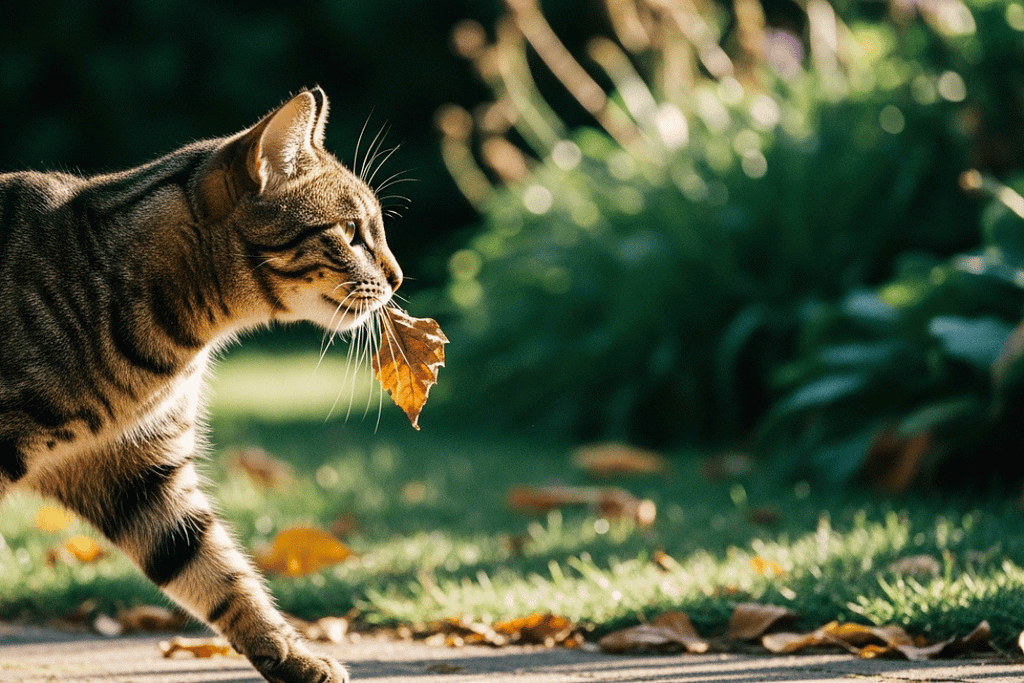
Many cat owners have experienced an unexpected surprise.
A cat walks through the door carrying a small animal in its mouth — sometimes a mouse, a bird, or an insect.
To humans, this behavior can seem strange, even disturbing. But from the cat’s perspective, it is completely natural.
Understanding why cats bring dead animals home starts with instinct — not intention.
🧬 The Evolution Behind Why Cats Bring Dead Animals Home
Domestic cats descend from solitary hunters that relied on catching small prey to survive.
After capturing prey, wildcats often carried it to a safe location before eating it.
This behavior reduced the risk of losing food to other predators.
Today, this instinct still exists.
When your cat brings prey home, it is following an ancient survival pattern shaped by evolution.
🏠 Cat Territorial Behavior and Bringing Prey Home
Cats are deeply territorial animals.
Your home is not just a living space — it is part of your cat’s territory.
This is why cat territorial behavior plays a role in prey delivery.
Bringing prey home may simply mean:
👉 “This is my safe place.”
From the cat’s perspective, it is securing its catch where it feels protected.
🐾 Prey Sharing Behavior in Cats: Are They Teaching You?
Another possible explanation is prey sharing behavior in cats.
Mother cats often bring injured prey to their kittens to teach hunting skills.
Some researchers suggest that domestic cats may extend this instinct toward humans.
I’ve seen this behavior in my own cats — they bring objects and drop them nearby, almost as if presenting them.
Of course, humans do not need hunting lessons.
But instinct does not adapt to logic — it follows patterns shaped by evolution.
🎯 Cat Hunting Instincts and the Predation Sequence
Bringing prey home is part of a broader behavioral system.
It connects directly with cat hunting instincts and the cat predation sequence.
This sequence includes:
- detecting movement
- stalking
- chasing
- capturing
- securing prey
Even after capture, the instinct continues.
Transporting prey is simply the final stage of this natural cycle.
🐱 Why Some Cats Bring Dead Animals Home More Often
Not all cats display this behavior equally.
Several factors influence it:
- access to outdoor environments
- individual personality
- hunting experience
- local availability of prey
Cats that spend more time outside are far more likely to bring prey home.
Indoor cats rarely do this — but their instincts remain the same.
🎮 Why Cats Bring Toys Instead of Animals
Indoor cats often carry toys and drop them near their owners.
This behavior mirrors hunting patterns.
In this case, the toy becomes a substitute for prey.
Understanding why cats bring toys helps reveal the same instinct at work.
If you want to explore this further, Why Do Cats Play Like They Are Hunting? explains how play mimics real hunting behavior.
🔗 How This Behavior Connects to Cat Behavior Evolution
Bringing prey home is just one expression of a larger system.
It connects with:
- hunting instincts
- territorial awareness
- neurological reward systems
If you want to understand how all these behaviors fit together, Cat Behavior Evolution: Why Instinct Still Rules explores the full framework.
Even though it may feel unpleasant, this behavior is not a sign of aggression or cruelty.
It is a natural expression of instinct.
Cats are not trying to upset their owners.
They are simply acting according to behavioral systems shaped over thousands of years.
And once you understand why cats bring dead animals home, the behavior becomes far less mysterious.
This article combines Sissi’s lifelong experience living with cats with insights informed by regular consultations with licensed veterinarians. For any medical concerns, seek advice from a qualified veterinary professional.
❓ FAQ
Why do cats bring dead animals home?
Because of instinct. Cats carry prey to safe places, share it, or complete their hunting cycle.
Do cats bring dead animals as gifts?
Not exactly. It may resemble gift-giving, but it is more likely linked to instinct or teaching behavior.
Why does my cat drop animals at my feet?
This may be a form of prey-sharing or territorial behavior, not intentional gifting.
Do indoor cats do this too?
Indoor cats rarely bring prey, but they may carry toys to mimic the same behavior.

With the sensitivity of one who loves deeply, Sissi writes stories celebrating the animal world. Her felines Estrela and Safira illuminate her days, while Pete and Gabrich live eternally through her words. Every piece she writes is a love letter to the companions who make life truly meaningful.