
Mature Cat Mobility & Jump Changes (7–10 Years): Early Clues of Joint Pain Through Body Language
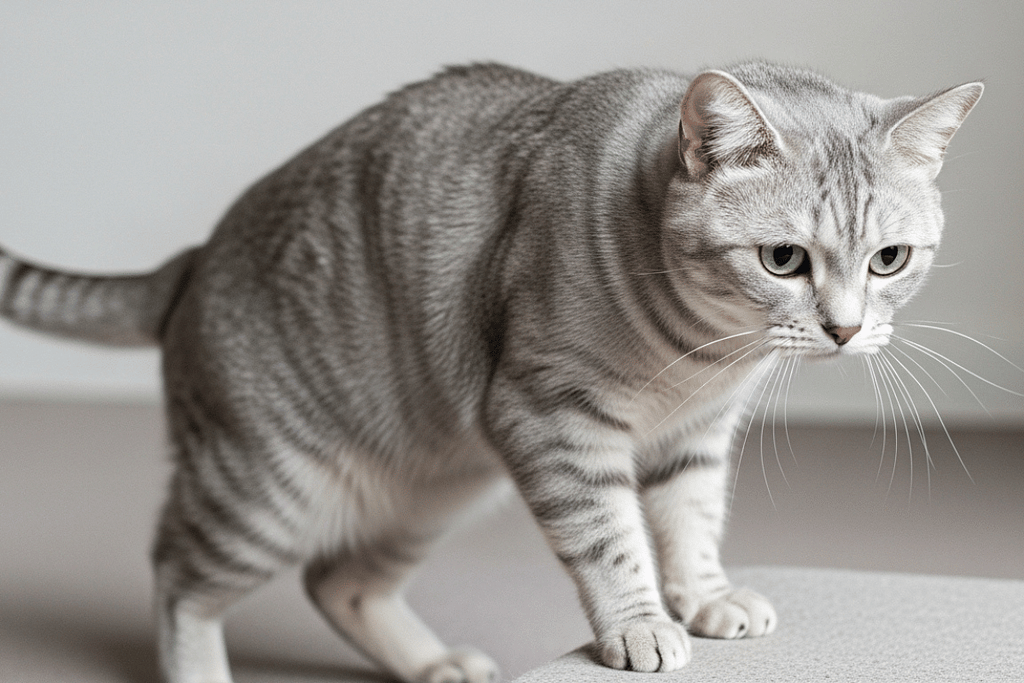
Mature cat jump changes (ages 7–10) are subtle mobility shifts—like hesitation before jumping, multi-step routes, or careful descents—that reveal early joint pain or arthritis. Understanding these mature cat jump changes helps detect discomfort early and preserve your cat’s mobility.
By learning to interpret mature cat jump changes as body language, cat guardians can detect arthritis early, adapt the environment, and help their feline companions maintain comfort, confidence, and freedom of movement for years to come.
? Mature Cat Jump Changes (7–10 Years): Early Clues of Joint Pain Through Body Language
Your mature cat still jumps, climbs, and explores—but the way she jumps is changing. These mature cat jump changes—tiny shifts in height, timing, or hesitation—are often the earliest and most reliable signs of joint discomfort in cats aged 7–10.
This guide helps you interpret those subtle signals with clarity and compassion.
You can also read the Guide to Mature Cat Grooming Changes (7-10 years) to explore this topic further.
? Why Mature Cat Jump Changes Matter More Than Any Other Mobility Sign
Cats instinctively hide pain. But jumping reveals the truth.
Jumping requires:
- joint flexibility
- hind-leg strength
- spinal comfort
- balance and confidence
- pain-free landings
So when discomfort begins, the first behavioral shift is often in mature cat jump patterns.
?⬛ 1. Multi-Step Jump Routes — The #1 Mature Cat Jump Change
?➡️? “Floor → Chair → Counter” instead of “Floor → Counter.”
Your cat still reaches the destination—but changes how she gets there.
Meaning: Your cat reduces joint impact by dividing one big jump into smaller, less painful steps.
Why it’s missed: The goal (reaching the counter) still happens, so guardians don’t notice the route change.
How to track: Record your cat’s preferred routes monthly. If the path gets longer, joints may be signaling discomfort.
⏸️ 2. Micro-Hesitation Before Jumping
Before leaping, a mature cat may:
- pause briefly
- shift weight
- lower the head slightly
- look up and down repeatedly
This “thinking pause” isn’t indecision—it’s biomechanical caution. A key mature cat jump change indicating mild joint pain or stiffness.
? Red flag: hesitation combined with a slightly lowered tail.
⬇️ 3. Controlled Descent — The Hidden Pain Signal
Jumping down is harder than jumping up. Watch for these mature cat jump changes:
- backing down slowly
- reaching with one paw first
- searching for lower surfaces
- landing stiffly
If your cat no longer jumps down in a single motion, this often reflects early spinal or hip discomfort.
? 4. Reduced Vertical Play — A Classic Mature Cat Jump Change
Your cat may still chase wand toys—but notice how high she jumps.
Prime adult play: explosive leaps and mid-air twists.
Mature cat play: more batting, fewer vertical jumps.
If horizontal play remains normal while vertical play declines, that’s a textbook sign of early arthritis or joint discomfort.
? 5. Landing Style Shifts — The Body’s Honest Moment
Landing tells you more than jumping. Key indicators of mature cat jump changes include:
? Painful landings:
- stiff, front-heavy impact
- ears flicking back
- tail dropping sharply
- avoidance of jumping down
Softer or hesitant landings are your cat’s way of protecting aching joints.
? 6. Morning Movement & Jump Readiness
Joint pain becomes most visible after rest.
After sleep, a mature cat may:
- stretch longer than usual
- move stiffly before jumping
- avoid high jumps right away
This stiffness improving with movement indicates early inflammation. If it persists, arthritis is likely progressing.
? 7. Jump Height Decline — Small Yet Significant
Many mature cats abandon their tallest perches for mid-level spots.
Examples:
- avoiding fridge tops or tall trees
- choosing couch backs or windowsills
- preferring gradual climbs
These mature cat jump changes are biomechanical adaptations, not behavioral choices.
? The Home Jump Assessment (Monthly Monitoring)
1. Treat-on-Perch Test: Place a treat on a moderate surface; observe hesitation, landing, descent.
2. Wand Toy Vertical Test: Will your cat jump for it or stay grounded?
3. Sleep-to-Jump Test: Offer a jump opportunity right after rest.
4. Route Mapping Test: Draw your cat’s path to favorite perches—changes reveal pain patterns.
?️ Environmental Adjustments for Mature Cat Jump Changes
- Add ramps and steps: reduce jump strain.
- Use orthopedic beds: support joint comfort.
- Start joint supplements at age 7: glucosamine, chondroitin, omega-3s, green-lipped mussel.
- Warm sleeping spots: improve flexibility.
- Use traction mats: prevent slips before jumps.
? Jump-Related Red Flags — Vet Visit Needed
- refusal to jump
- crying or misjudging distances
- trembling legs or collapse
- avoiding high areas entirely
- sudden change in sleeping spots
- limping for over 48 hours
For males: straining + inability to jump may signal a urinary emergency.
❓ People Also Ask
why does My mature cat hesitate before jumping ?
Hesitation often signals early joint discomfort or stiffness in cats aged 7-10.
why is my mature cat using furniture as steps ?
It’s classic compensation behavior to reduce impact on sore joints.
why wont my cat jump down anymore ?
jumping down strains joints more than up. Avoidance signals discomfort.
are jump changes normal in mature cats ?
Minor slowing is normal; repeated route changes or hesitations sognal early arthritis.
? Final Thought
Your cat’s jumps tell a story—about balance, confidence, and comfort.
When mature cat jump changes appear, your cat isn’t aging; she’s communicating.
Listen early, act early, and you’ll help preserve years of pain-free movement.
? Around age 7, your cat’s body language quietly changes.
They may still look the same, but their signals start to whisper about aging, early pain, and new needs.
Learn the 7-Year Shift: Mature Cat Body Language (7–10 years)✨ Has your 7–10 year old cat’s coat started to look a little less tidy?
Subtle grooming changes at this age can be early body language signs of pain, dental issues, or mobility decline—often long before your cat cries out or limps.
Read the Guide to Mature Cat Grooming Changes (Ages 7–10)
With the sensitivity of one who loves deeply, Sissi writes stories celebrating the animal world. Her felines Estrela and Safira illuminate her days, while Pete and Gabrich live eternally through her words. Every piece she writes is a love letter to the companions who make life truly meaningful.