
Are Cats Truly Domesticated? Understanding Feline Domestication
Cats are domesticated animals, but feline domestication followed a unique evolutionary path. While domestic cats adapted to living alongside humans thousands of years ago, they retain many behavioral systems that evolved long before modern homes existed.
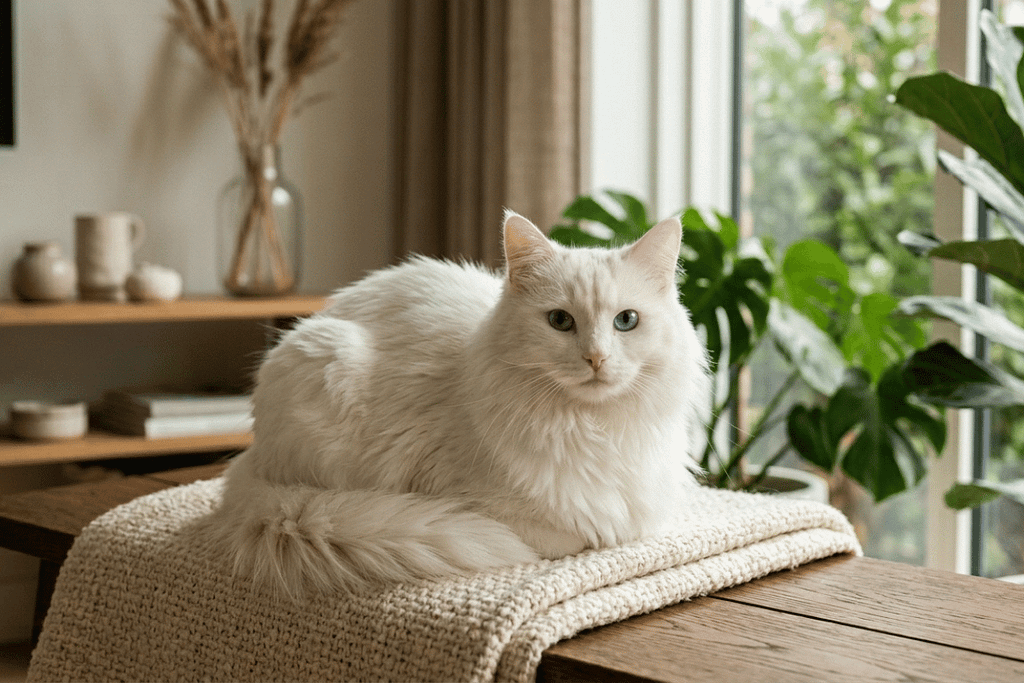
Cats sleep on our beds.
Eat food we provide.
Live entirely inside our homes.
They are one of the world’s most familiar companion animals.
And yet many cat owners eventually encounter a surprising question:
Are cats truly domesticated?
The question often emerges after observing behaviors that seem unexpectedly wild.
A cat stalking a toy as if it were prey.
Patrolling the same rooms every day.
Reacting intensely to unfamiliar sounds.
Watching birds for hours through a window.
These observations create an apparent contradiction.
Cats clearly live with humans.
Yet many of their behaviors seem connected to a much older evolutionary history.
Understanding feline domestication begins with recognizing that domestication is not a single process. Different species became domesticated in different ways, and cats followed a path unlike almost any other domestic animal.
🧠 What Does It Mean To Be Domesticated?
Domestication is a long-term evolutionary process in which animals adapt to living alongside humans.
Over many generations, domesticated species often develop changes in:
- behavior,
- physiology,
- reproduction,
- social interactions,
- tolerance of human presence.
Many people assume domestication completely transforms an animal.
In reality, domestication exists on a spectrum.
Different species experience different degrees and types of change.
Some become highly dependent on humans.
Others retain a greater degree of behavioral independence.
This distinction is particularly important when discussing cats.
🐾 Are Cats Truly Domesticated?
The short answer is yes.
Cats are fully domesticated animals.
Archaeological, genetic, and historical evidence clearly supports this conclusion.
Modern domestic cats have lived alongside humans for thousands of years and differ genetically from their wild ancestors in ways associated with behavior, learning, and adaptation to human environments.
However, the more interesting question is not whether cats are domesticated.
It is how domestication shaped them.
Compared to many domestic species, cats remain relatively similar to their wild ancestors in certain aspects of behavior.
Modern cats still display:
- hunting behavior,
- territorial behavior,
- scent communication,
- environmental monitoring,
- exploratory behavior.
Many of these behaviors continue appearing even when survival no longer depends on them.
This does not make cats less domesticated.
A domesticated animal does not need to be obedient, dependent, or behaviorally identical to humans’ expectations.
Cats are domesticated.
They simply followed a different domestication pathway than many other species.
🌿 Why Feline Domestication Was Different
Many domestic species were intentionally selected for specific human purposes.
Dogs were bred for hunting, guarding, herding, and companionship.
Livestock were selected for production traits.
Cats experienced far less direct human control.
Instead, their relationship with humans developed gradually.
Early agricultural settlements created ideal conditions for rodents.
Rodents attracted wild cats.
Cats benefited from abundant prey.
Humans benefited from natural pest control.
This relationship developed largely through mutual advantage rather than intensive human-directed breeding.
Over time, cats that tolerated human presence gained access to reliable resources.
Humans, in turn, increasingly tolerated cats.
Because this process involved relatively limited artificial selection, many behavioral systems remained largely intact.
This unique evolutionary history helps explain why cats often appear more behaviorally independent than other domestic animals.
This distinction becomes even clearer in Feline Domestication: Why Cats Are Different From Dogs.
👁️ Why Domestic Cats Still Behave Like Predators
One reason people question whether cats are truly domesticated is that predatory behavior remains highly visible.
A well-fed indoor cat may still:
- stalk toys,
- chase moving objects,
- pounce unexpectedly,
- track birds through windows.
These behaviors often appear unnecessary.
Yet they are driven by neural and behavioral systems that evolved long before domestication.
Domestication reduced the need to hunt for survival.
It did not eliminate the biological machinery that supports hunting behavior.
As a result, many predatory patterns remain active even when food is readily available.
🏠 Why Ancient Behavioral Systems Still Matter
Predation is only one example.
Many other ancestral behavioral systems continue influencing everyday feline behavior.
These include:
- territorial organization,
- environmental monitoring,
- exploration,
- resource tracking,
- scent communication.
These systems help cats navigate and interpret their surroundings.
Even inside modern homes, cats continue organizing space, monitoring changes, and responding to environmental information in ways that reflect their evolutionary history.
As a result, many domestic behaviors make more sense when viewed through the lens of adaptation rather than simple habit.
This helps explain one of the biggest contradictions of modern cat ownership: domestic cats live comfortably indoors, yet many of their behaviors are still guided by ancient biological systems. To explore how these instincts continue shaping everyday life inside the home, read Indoor Cat Instincts: Why Ancient Behaviors Persist in Modern Homes.
⚡ Why Cats Seem Less Domesticated Than Dogs
Dogs often serve as the comparison point.
And compared to dogs, cats can appear less domesticated.
This perception exists for several reasons.
Dogs generally experienced:
- stronger artificial selection,
- greater behavioral specialization,
- closer cooperation with humans.
Cats evolved under different circumstances.
They remained more independent.
They relied less on direct human guidance.
And they retained greater flexibility in how they interacted with their environment.
The result is a species that often appears more self-directed.
But independence should not be confused with a lack of domestication.
It is simply part of how feline domestication unfolded.
🚶 What Feline Domestication Changed
Although many ancestral systems remain active, domestication still influenced cats in important ways.
Domestic cats generally show:
- increased tolerance of humans,
- greater social flexibility,
- reduced fear of human environments,
- adaptations to living near people,
- increased ability to coexist at high population densities.
These changes were significant enough to allow cats to become one of the most successful companion animals in history.
Without domestication, modern indoor life would not be possible.
The key point is that domestication modified existing behavioral systems rather than replacing them entirely.
⚖️ Are Cats Truly Domesticated? The Answer Is More Complex Than It Seems
Cats are unquestionably domesticated animals.
Yet feline domestication did not produce the same degree of behavioral transformation seen in some other species.
Instead, cats represent a fascinating combination of adaptation and continuity.
They live comfortably with humans.
They thrive in domestic environments.
Yet they continue expressing behaviors shaped by millions of years of evolution.
Understanding this balance helps explain why cats often seem both familiar and mysterious at the same time.
🌱 Understanding Cats Through Their Evolutionary History
The question is not whether cats are domesticated.
They are.
The more interesting question is how domestication shaped the animal we know today.
Understanding feline domestication helps explain why so many behaviors continue appearing in modern homes.
The hunter.
The explorer.
The territory manager.
The observer.
These roles did not disappear.
They adapted.
And that adaptation helps explain why cats remain one of the most unique domestic species on Earth.
To explore why many ancestral behaviors remain active despite domestication, continue with Wild Cat Behaviors Indoors: Why Domestic Cats Still Act Like Hunters.
❓ FAQ
Are cats truly domesticated?
Yes. Cats are domesticated animals, although their domestication history differs from that of many other species.
Why do cats still behave like wild animals?
Many ancestral behavioral systems remain active because domestication modified cats without completely eliminating instincts related to hunting, territory, and exploration.
Are cats less domesticated than dogs?
No. Cats are fully domesticated, but they experienced a different domestication process that preserved more behavioral independence.
When did cats become domesticated?
Most evidence suggests cats began associating with human settlements approximately 9,000–10,000 years ago during the rise of agriculture.
Sissi is the creator of A Cat With Story, a feline behavior website that explores how instinct, evolution, domestication, and everyday experiences shape the lives of modern cats. Drawing from years of observation, research, and life alongside cats, she translates complex behavioral concepts into practical insights that help owners better understand the animals they share their homes with.

With the sensitivity of one who loves deeply, Sissi writes stories celebrating the animal world. Her felines Estrela and Safira illuminate her days, while Pete and Gabrich live eternally through her words. Every piece she writes is a love letter to the companions who make life truly meaningful.