
Can Cats Sense Stress Through Smell, Voice, or Body Language?
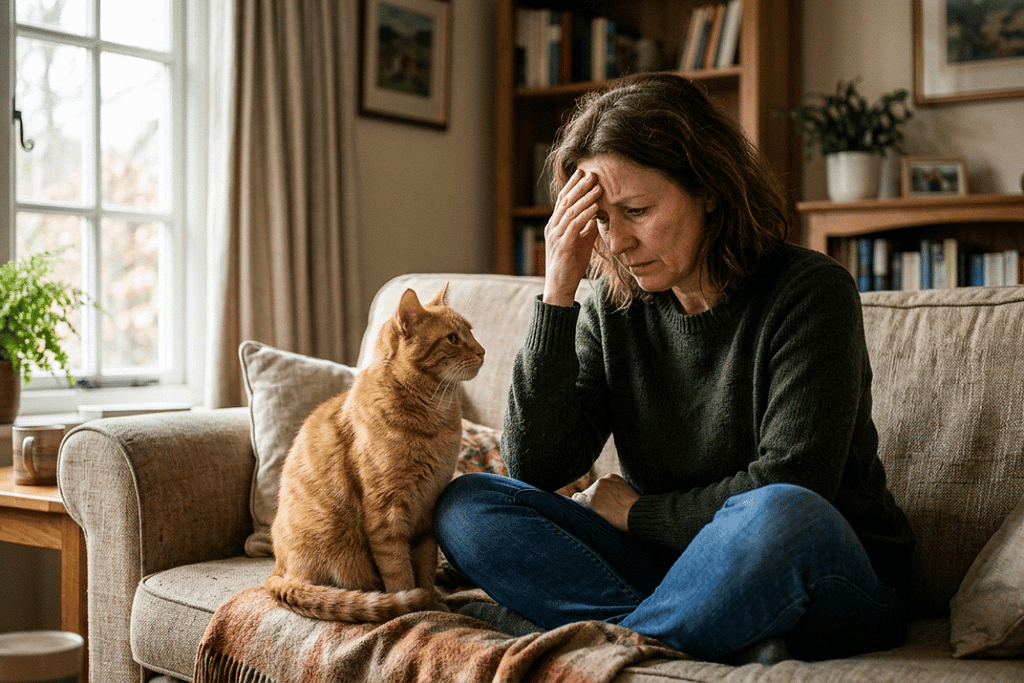
Cats don’t sense stress as an emotion, but they do notice physical changes that often come with it. Shifts in scent, tone of voice, and body language give cats real information about what’s different in their environment — and they respond to those sensory signals, not to stress itself.
Many cat guardians notice a familiar pattern.
On tense days, their cat seems more alert.
Sometimes closer.
Sometimes distant.
Sometimes simply watching.
This often leads to the question:
Can cats actually sense stress — or are they responding to something else?
The short answer is simple:
Cats don’t detect stress as a feeling.
They detect sensory changes that stress creates.
? Smell: What Changes Before You Notice
A cat’s sense of smell is far more sensitive than a human’s.
When a person is stressed, the body can release subtle chemical changes through:
- sweat
- breath
- skin oils
Cats don’t interpret these changes as “stress.”
They simply register that something smells different.
To a cat, a familiar person suddenly carrying a new scent can signal:
- change
- unpredictability
- the need for closer observation
This is one reason some cats become more watchful or cautious during stressful periods.
? Scientific curiosity: why cats notice so much
Cats experience the world through their senses in far greater detail than humans do.
A cat’s sense of smell is extremely sensitive, allowing them to detect tiny chemical changes in the environment long before a human notices anything different. Subtle shifts in body scent, breath, or skin can already register as “new information” to a cat.
Their hearing is also more finely tuned. Cats can pick up higher frequencies and small variations in tone, which makes even slight changes in a human voice stand out clearly to them.
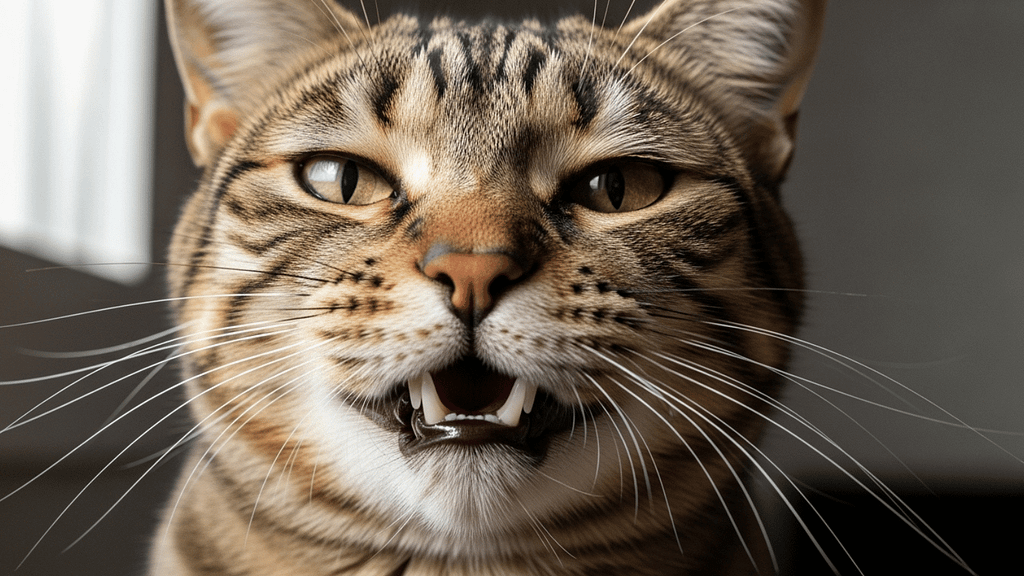
In addition, cats have a specialized sensory system called the vomeronasal organ, used to analyze scents more deeply.
When a cat slightly opens its mouth after smelling something — a reaction known as the Flehmen response — it’s processing that scent with extra precision, almost like collecting additional data.
This doesn’t mean cats are identifying emotions as feelings.
It means they have access to much more sensory information than humans do — and they react to changes happening at that level.
? Voice: Tone Often Matters More Than Words
Humans tend to focus on what they say.
Cats pay more attention to how it sounds.
During stress, voice changes may include:
- tighter tone
- quicker speech
- uneven rhythm
- quieter or sharper delivery
Even when you’re trying to sound calm, small shifts in tone can signal that your state is different from usual.
Cats don’t process language — but they do respond to sound patterns.
A changed voice alone can be enough to make a cat pause, observe, or adjust distance.
? Body Language: The Most Immediate Signal
Before stress shows on the face, it often appears in the body.
Cats are highly attuned to physical cues such as:
- stiff posture
- restless movement
- pacing
- reduced predictability
These signals matter because cats rely on body language to assess safety in their environment.
When movement patterns change, cats adjust — not emotionally, but practically.
Sometimes that adjustment looks like closeness.
Other times, it looks like space.
? Why Cats React to Sensory Change, Not Stress
It’s tempting to assume cats “sense stress” because their behavior shifts during emotional moments.
But what’s actually happening is simpler.
Stress alters:
- scent
- sound
- movement
Cats notice those alterations and respond to what becomes different around them.
This response isn’t empathy in the human sense.
It’s environmental awareness.
Understanding this helps prevent misreading a cat’s reaction as judgment, rejection, or emotional mirroring.
? When Sensory Signals Repeat, Patterns Form
If the same sensory changes appear again and again during stressful moments, cats may begin to anticipate them.
Over time, this can look like:
- approaching sooner
- creating distance more quickly
- becoming alert before anything obvious happens
This isn’t intuition — it’s learning through repetition.
How that learning develops over time is explored further in
Do Cats Learn Emotional Patterns Through Repetition and Routine?
? How This Fits Into the Bigger Picture
Sensory signals are only one part of how cats respond to human emotional shifts.
They work alongside:
- learned patterns
- routine changes
- overall environmental stability
That broader framework is mapped out in
How Can Cats Detect Changes in Human Emotions?
? What This Understanding Offers
Knowing that cats respond to sensory cues — not stress as an emotion — can be surprisingly comforting.
It means:
- your cat isn’t judging you
- your cat isn’t absorbing your feelings
- your cat is simply responding to change
Those responses are real interactions, grounded in how cats experience the world.
And once you understand what your cat is actually picking up, their behavior often feels less mysterious — and far less personal.

With the sensitivity of one who loves deeply, Sissi writes stories celebrating the animal world. Her felines Estrela and Safira illuminate her days, while Pete and Gabrich live eternally through her words. Every piece she writes is a love letter to the companions who make life truly meaningful.