
Cat Safe Zones: How Indoor Cats Define Secure Spaces
Cat safe zones are areas within a territory where cats feel secure, comfortable, and protected from disturbance. These locations help indoor cats rest, recover from stress, observe their surroundings, and maintain a sense of control over their environment.
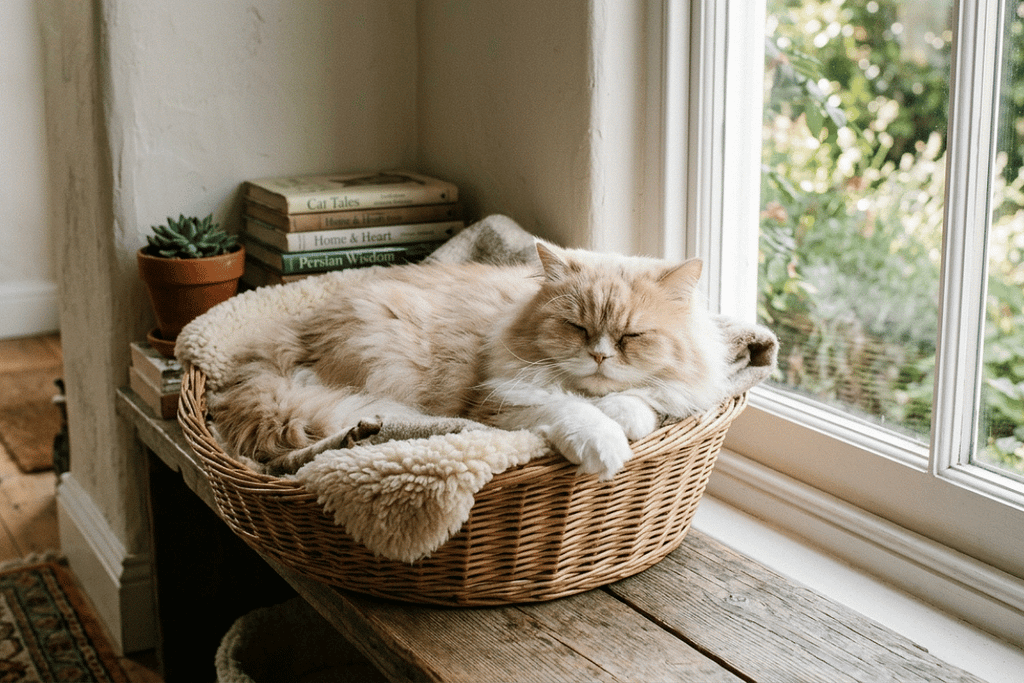
Most cats have a place.
Sometimes several.
A favorite shelf.
A quiet bedroom.
The corner of a couch.
A hidden space beneath furniture.
These locations often become part of a cat’s daily routine.
When something unexpected happens, the cat goes there.
When the house becomes busy, the cat returns there.
When it’s time to rest, the same location appears again.
At first, these choices seem like preferences.
But they often serve a deeper purpose.
They function as safe zones.
Understanding cat safe zones helps explain why certain locations become so important and why many cats return to them repeatedly throughout their lives.
🧠 What Are Cat Safe Zones?
Cat safe zones are locations where a cat feels secure enough to relax, observe, and recover from environmental demands.
These areas often provide:
- predictability,
- reduced disturbance,
- environmental control,
- comfort,
- familiarity.
A safe zone does not need to be hidden.
Nor does it need to be enclosed.
What matters is how the cat experiences the location.
A windowsill may function as a safe zone.
So may the top of a bookshelf.
A quiet guest room.
Or a favorite chair.
The specific location varies.
The purpose remains similar.
🏠 Why Indoor Cats Create Safe Zones
In natural environments, cats constantly balance two needs:
- awareness,
- security.
They need information about what is happening around them.
But they also need places where they can rest without interruption.
This balance remains important indoors.
Even in safe homes, cats continue seeking locations that provide stability and predictability.
These locations help reduce uncertainty.
And reducing uncertainty helps support emotional comfort.
This is one reason cats often appear strongly attached to certain areas of the home.
The location becomes part of their territorial structure.
👁️ Safe Zones Help Cats Feel in Control
One reason cat safe zones are so important is that they allow cats to regulate their level of engagement with the environment.
From a safe zone, a cat can:
- observe activity,
- decide whether to participate,
- monitor changes,
- withdraw when necessary.
This ability to choose matters.
Cats generally feel more comfortable when they can control how and when interactions occur.
The safe zone provides that option.
It creates distance without complete isolation.
And that balance often contributes to a stronger sense of security.
🌳 Why Elevated Safe Zones Are So Popular
Many safe zones are located above ground level.
Cats frequently choose:
- shelves,
- cat trees,
- bookcases,
- window perches,
- furniture tops.
These locations combine two important advantages:
- visibility,
- security.
The cat can observe the environment while remaining removed from direct activity.
This relationship between height and comfort is explored further in Why Cats Need Vertical Space.
🚶 Safe Zones Are Part of Territory
Safe zones do not exist independently.
They function within a larger territorial system.
A cat may move between:
- feeding areas,
- observation points,
- travel routes,
- resting locations,
- safe zones.
Each location serves a different purpose.
Together, they create a structured territory.
The safe zone acts as a reliable anchor within that system.
A place where the cat can return whenever recovery, observation, or rest is needed.
This is one reason cats often revisit the same locations day after day.
🛡️ Why Cats Retreat to Safe Zones During Stress
One of the clearest examples of safe zone behavior appears during periods of stress.
Visitors arrive.
Furniture is moved.
Unexpected sounds occur.
A new pet enters the home.
In many situations, cats immediately return to familiar secure locations.
This response is not avoidance in a negative sense.
It is a normal strategy for restoring predictability.
The safe zone provides a location where environmental demands become easier to manage.
And because the area is familiar, it often supports faster emotional recovery.
🐾 Why Every Cat Chooses Different Safe Zones
No two cats organize territory in exactly the same way.
One cat may prefer:
- elevated locations,
- open observation points,
- window perches.
Another may choose:
- enclosed areas,
- quiet rooms,
- hidden retreats.
These differences reflect variations in:
- personality,
- confidence,
- previous experiences,
- environmental preferences.
The important point is not where the safe zone is.
It is that the cat has one.
And often several.
⚖️ Cat Safe Zones Are About Security, Not Isolation
People sometimes worry when a cat spends time in a favorite retreat.
But safe zones are not necessarily signs of fear or withdrawal.
Most healthy cats use safe zones regularly.
They provide opportunities for:
- rest,
- observation,
- emotional regulation,
- environmental control.
A cat that has access to secure spaces often feels more confident navigating the rest of the territory.
The safe zone becomes a foundation for exploration rather than a place of permanent retreat.
🌿 Understanding Why Safe Spaces Matter
When viewed through a territorial lens, many location preferences begin to make sense.
The favorite shelf.
The quiet room.
The corner of the couch.
These places are not random choices.
They are functional parts of a territory organized around safety, familiarity, and comfort.
Cat safe zones help transform a house into an environment that feels predictable and manageable.
And for a species that values environmental awareness, that predictability is often one of the most important resources of all.
To understand how cats communicate familiarity within those spaces, continue with Why Cats Rub Their Face on Furniture and Walls.
❓ FAQ
What are cat safe zones?
Cat safe zones are locations where cats feel secure, comfortable, and able to rest or observe their environment without disturbance.
Why does my cat always return to the same place?
Cats often return to familiar safe zones because those locations provide predictability, comfort, and a sense of security.
Do indoor cats need safe spaces?
Yes. Safe spaces help indoor cats regulate stress, rest comfortably, and maintain confidence within their territory.
Are hiding places always a sign of fear?
No. Many cats use retreats and safe zones as a normal part of territorial organization, even when they feel completely comfortable.
About the Author
This article reflects Sissi’s lifelong experience living with cats, informed by years of observation and behavior-focused research. Through A Cat With Story, she explores how instinct, territorial behavior, environmental organization, and feline cognition shape everyday life with cats.

With the sensitivity of one who loves deeply, Sissi writes stories celebrating the animal world. Her felines Estrela and Safira illuminate her days, while Pete and Gabrich live eternally through her words. Every piece she writes is a love letter to the companions who make life truly meaningful.