
? Himalayan Cat: Persian Sweetness with Sapphire Siamese Eyes ?
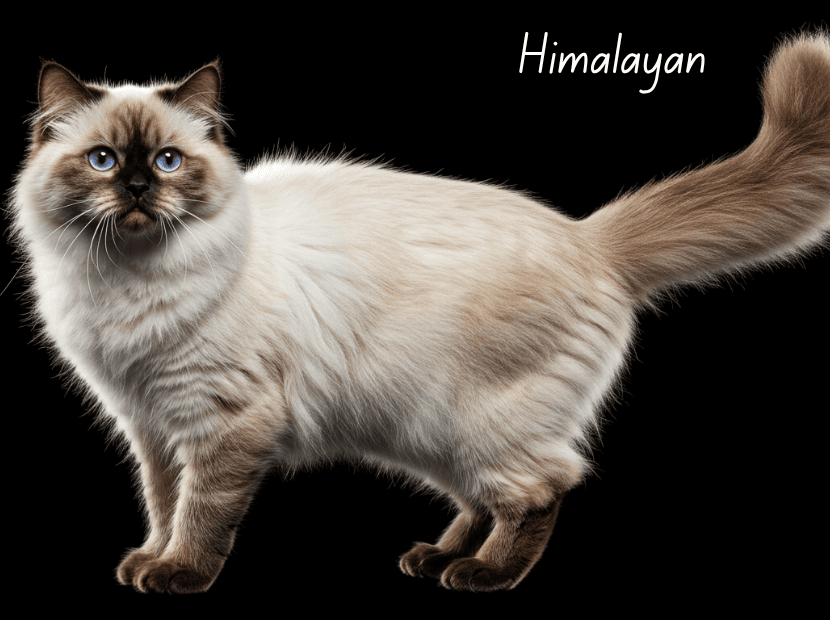
The Himalayan Cat is a medium-to-large hybrid breed intentionally created in the 1930s by crossing Persian and Siamese cats. Known for its luxurious long coat, striking sapphire blue eyes, and distinctive colorpoint pattern (light body with dark extremities), the Himalayan is an extremely affectionate and devoted lap cat. With a calm, docile temperament and low-to-moderate activity level, this breed is ideal for indoor living. Himalayans require daily brushing, facial care due to their flat muzzle, and live 9-15 years on average.
Himalayan Cat key characteristics:
- Medium-to-large breed: 5-8 kg males, 3.5-5.5 kg females
- Long, dense, luxurious coat with colorpoint pattern
- Extremely affectionate, devoted lap cat temperament
- Brush daily to prevent mats; clean eyes/face daily
- Prone to respiratory issues, eye problems, and polycystic kidney disease (PKD)
- Lifespan: 9-15 years
The Himalayan Cat, often considered a color variation of the Persian Cat (Colorpoint Persian), is a hybrid breed intentionally created in the 1930s by crossing the Persian (for its long coat and robust body) with the Siamese (for its color points and vibrant blue eyes).
Known for its luxurious appearance and calm temperament, the Himalayan is the ideal companion for those seeking an affectionate lap cat adaptable to indoor life. This guide details the temperament, special care, and physical traits that define this feline of incomparable beauty.
? I. Behavioral Characteristics of the Himalayan Cat ?️
- Vocalization Tendency: The Himalayan is generally a quiet and peaceful cat, inheriting the calm temperament of the Persian. They vocalize, but in a melodious and soft manner, much less intense and demanding than the Siamese’s meow. They prefer to communicate with their gaze and presence.
- Intelligence and Memory: They are intelligent cats, but with a lower energy level. Their intelligence is displayed through observation and learning routines, but they are not vertical explorers like other breeds. They love interactive games involving toys on the floor.
- Affection Towards Humans: The Himalayan is an extremely affectionate and devoted cat, known as a true “lap cat.” They bond deeply with their human family, seeking proximity and physical contact. Though reserved with strangers, they are loyal companions.
- Activity Level: The energy level is low to moderate. The Himalayan is a placid cat who enjoys naps and long periods of rest, but who can have sudden “bursts” of activity, running and rolling like a kitten. Due to their robust body and short legs, they prefer playing on the ground and are not great climbers or jumpers.
- Patience with Children and Other Pets: Due to their docile and gentle temperament, they get along very well with children and generally coexist well with other calm cats and dogs.
? II. Physical Characteristics of the Himalayan Cat ?
The Himalayan Cat is a medium-to-large breed, featuring a cobby (short and robust) body, strong musculature, and short, thick legs.
| Characteristic | Detail |
|---|---|
| Size | Medium to large, with a cobby (short and robust) body type. Strong musculature, broad chest, and thick, short legs with heavy boning. |
| Weight | Males: 5–8 kg (11–18 lbs) Females: 3.5–5.5 kg (8–12 lbs) Their dense coat often makes them appear larger. |
| Height | 25–36 cm (10–14 in). |
| Coat | Long, dense, silky, and luxurious. Thick undercoat, similar to the Persian. Requires regular grooming to prevent matting. |
| Color Pattern | Always **colorpoint**. Light body (white or cream) with darker color on ears, face, paws, and tail. |
| Point Colors | Seal, blue, chocolate, lilac, flame (red), cream, tortie, and lynx patterns. |
| Eyes | Large, round, open expression. Always **deep sapphire blue**, a Siamese trait. |
| Head | Round head with full cheeks, rounded forehead, and short/flat muzzle (brachycephalic). Sweet, doll-like expression. |
| Ears | Small, rounded, widely spaced, and positioned low on the skull. Dense internal fur. |
| Tail | Short, straight, thick at the base, and well plumed. Proportional to the cobby body structure. |
| Life Expectancy | Approximately 9–15 years. |
Himalayan cats require frequent grooming, tear-stain cleaning, and careful respiratory monitoring due to their brachycephalic features. Their sweet, gentle temperament makes them ideal indoor companions.
? III. Essential Care and Health of the Himalayan ?
Essential Care Tips
Due to their long coat and flat muzzle, the Himalayan requires specific daily care:
- Coat Hygiene: Requires daily brushing (or as frequently as possible) to prevent mats and tangles, which form easily in their fine coat. Monthly baths are recommended.
- Facial Care: The brachycephalic structure leads to excessive tearing. It is crucial to clean the eye area and muzzle daily with a soft, damp cloth to prevent stains and irritation.
- Weight Control and Exercise: Since they are less active, they tend to gain weight easily. Strict diet control and daily stimulation through toys are essential for maintaining a healthy weight.
Common Health Issues
The Himalayan is predisposed to:
- Respiratory Problems: Due to the flat face (brachycephaly), they may suffer from respiratory issues (noisy breathing, sneezing) and sensitivity to heat.
- Ocular Problems: Tendency towards excessive tearing, Cherry Eye, and progressive retinal atrophy.
- Polycystic Kidney Disease (PKD): A hereditary condition affecting the kidneys.
? Want to Discover the Sacred Birman?
Explore their calm nature, gentle temperament, and mystical history:
Birman – Sacred of Burma & Legends Guide
❓ IV. Frequently Asked Questions about the Himalayan Cat ?
1. Does the Himalayan Cat Like to Be Alone? Do They Like Laps?
The Himalayan is a moderately dependent cat; they adapt well to being alone if the environment is quiet. Yes, they are one of the most dedicated lap cats. They love to sit on their owners’ laps, sleep in bed, and remain close for comfort.
2. What Does the “Colorpoint” Pattern Mean?
Colorpoint is the color pattern the Himalayan inherited from the Siamese. It means the cat’s body is a light color (white or cream), and the dark color (“point”) appears only on the extremities: facial mask, ears, paws, and tail. This pattern is temperature-sensitive, meaning the colder areas of the body darken.
3. Why Was the Himalayan Cat Named “Himalayan”?
The breed was named after the Himalayan Rabbit, which also exhibits the colourpoint pattern (dark tips and a light body). The name honors the striking color pattern, not the geographical Himalayan region.
4. Where Was the Himalayan Cat Developed and What is Its Origin?
The Himalayan is not a natural breed. It was intentionally created in the United States (with parallel development in Canada and the UK) around the 1930s to 1950s, resulting from a cross between Persian Cats and Siamese Cats.
5. Did Himalayan Cats Appear in Movies or Are They Associated with Legends?
Yes, the Himalayan gained fame in Hollywood. A Himalayan named Mr. Jinx was the main feline star in the comedy films Meet the Parents and its sequels, starring alongside Robert De Niro and Ben Stiller.
6. Why Doesn’t the Himalayan Cat Like Heights?
Unlike many breeds, the Himalayan is not a great climber or jumper. This is due to its brachycephalic body structure (cobby body and short, thick legs), which makes them less agile for high vertical jumps.
7. Which Country Has the Most Registered Specimens?
The United States is historically the country with the largest number of breeders and registered specimens of the Himalayan. Having been the nation where the experimental cross was perfected and the breed was accepted by major associations (like the CFA, which lists it as Colorpoint Persian), the Himalayan has its largest fan base in North America.
8. Is the Himalayan Considered a Separate Breed?
This depends on the organization. The Cat Fanciers’ Association (CFA) considers it a color variation of the Persian Cat (called Colorpoint Persian), while The International Cat Association (TICA) recognizes it as a separate breed.
9. What Was the Smallest Registered Adult Cat?
A Himalayan Cat named Tinker Toy was once listed in the Guinness World Records as the smallest adult cat in the world (though this category has since been retired). He weighed just 680 grams (1.5 lbs) and was 19 centimeters (7.5 inches) long.
10. What is the main feature that differentiates the Himalayan cat from a regular Persian?
The Himalayan cat is essentially a Persian with a colorpoint pattern, similar to that of a Siamese. While it has the same long, luxurious coat and flat face as a Persian, its striking colorpoints on the ears, face, paws, and tail make it unique.
11. Why does the Himalayan cat have darker colors on the extremities of its body (ears, paws, tail, and face)?
The darker color on a Himalayan’s extremities is due to a temperature-sensitive gene that affects pigment production. Cooler parts of the body develop darker fur, while warmer areas remain lighter, giving the breed its signature colorpoint pattern.
Explore veterinary and professional grooming resources: The ASPCA, AAFCO, and certified cat grooming professionals provide extensive guidance on feline coat care and health. Discover professional resources on long-haired cat care — access expert advice on nutrition, grooming techniques, and breed-specific health management.

Long-Haired Cats — Breeds, Characteristics & Essential Care
Majestic coats, gentle personalities, and special grooming needs — discover how to care for Persian, Maine Coon, Ragdoll and other long-haired breeds so they thrive and shine.

With the sensitivity of one who loves deeply, Sissi writes stories celebrating the animal world. Her felines Estrela and Safira illuminate her days, while Pete and Gabrich live eternally through her words. Every piece she writes is a love letter to the companions who make life truly meaningful.