
? Maine Coon Cat: The Gentle Giant from America
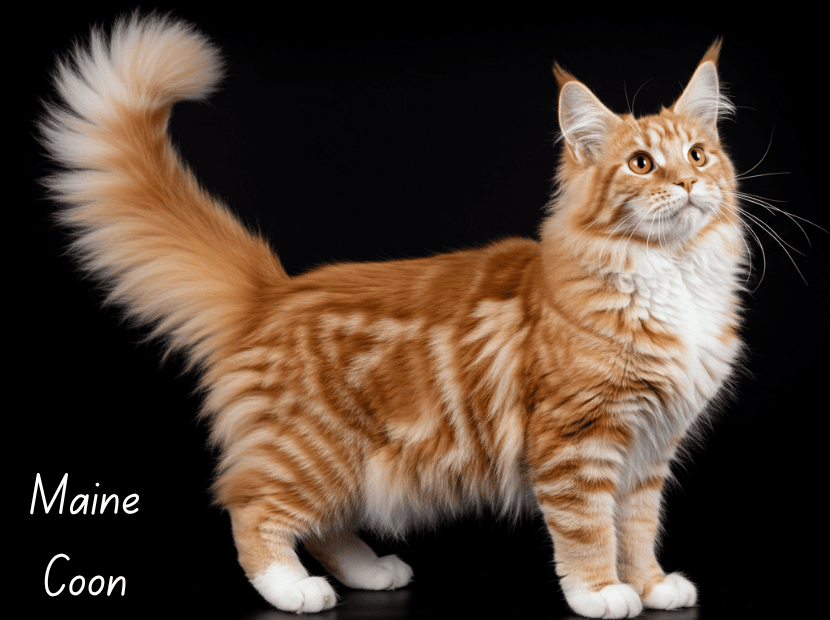
Maine Coon cats are the largest natural domestic cat breed, weighing 18-22 pounds with males sometimes exceeding 25 pounds. They reach full physical maturity between 3-5 years and are known for their dog-like personality, soft chirping vocalizations, water fascination, and gentle temperament. Maine Coons are prone to hypertrophic cardiomyopathy (HCM), hip dysplasia, and spinal muscular atrophy (SMA), requiring regular cardiac screening and genetic testing.
Maine Coon cat key characteristics:
- Largest natural domestic cat breed (18-22 lbs average)
- Dog-like behavior: trainable, loyal, follow owners
- Slow maturation: reach full size at 3-5 years old
- Brush 2-3 times weekly (daily during shedding)
- Prone to HCM, hip dysplasia, and SMA
- Lifespan: 12-15 years with proper care
The Maine Coon Cat, affectionately known as the “Gentle Giant,” is one of the oldest and largest natural cat breeds in North America. Known for its impressive size, full and beautiful coat, and affectionate personality, this majestic feline has captured hearts worldwide with its dog-like demeanor, impressive intelligence, and striking appearance.
Originating from the state of Maine (where it’s the official state cat), this rugged breed was built to withstand harsh New England winters. This comprehensive guide explores the behavioral characteristics, physical traits, and essential care requirements of the Maine Coon, helping you understand what makes this “gentle giant” truly special.
? Behavioral Characteristics of the Maine Coon Cat
? Tendency to Vocalize
Maine Coons are moderately vocal cats with a distinctive communication style. They have a broad range of vocalizations, but rather than loud meowing, they tend to “chirp” or “trill” in a soft, bird-like manner. These gentle sounds are endearing and quite different from the demanding meows of more vocal breeds. They use their voice to greet you, ask for attention, or communicate contentment, earning them praise for their sweet, quiet demeanor.
? Intelligence and Memory
Highly intelligent and easily trainable, Maine Coons are one of the smartest cat breeds. They learn tricks quickly, can be taught to walk on a leash, play fetch, and even respond to commands. Their problem-solving abilities are exceptional, and they’re known for figuring out how to open doors, cabinets, and puzzle toys. This intelligence combined with their curiosity means they need mental stimulation to stay happy and engaged.
? Affection Toward Humans
Despite her size and history, the Maine Coon cat is sweet tempered and gentle. She loves her parents and adapts to any environment as long as she has some exercise room. Often described as “dog-like,” Maine Coons form strong bonds with their families and are known for following their favorite humans from room to room. They’re affectionate without being overly demanding, content to simply be near you rather than constantly on your lap.
⚡ Activity Level
Maine Coons are moderately to highly active cats, especially in their youth. They love to climb, explore, and play. Their playful nature continues well into adulthood, though they mature slowly. These cats need sturdy cat trees and plenty of vertical space. They’re particularly fascinated by water and may “help” you wash dishes, dip their paws in water bowls, or join you in the shower.
? Patience with Children
Maine Coons are exceptionally patient and gentle with children, making them ideal family pets. Their tolerant nature and playful disposition mean they enjoy interactive play with respectful children. They rarely use claws during play and will typically walk away rather than become aggressive if overwhelmed. Their size and sturdiness also mean they can handle typical child interaction better than more delicate breeds.
? Receptiveness to Other Pets
These social giants generally get along wonderfully with other pets, including dogs and other cats. Their easy-going temperament and lack of aggressive tendencies make them excellent companions in multi-pet households. Proper introductions are still important, but Maine Coons tend to be accepting and even enjoy the company of other animals. Many form close friendships with family dogs.
✨ Physical Characteristics of the Maine Coon Cat ?️
The Maine coon is the largest domestic cat breed, and largeness is certainly one of its defining physical characteristics. This impressive breed is built to survive harsh winters, with every physical feature serving a practical purpose.
| Characteristic | Details |
|---|---|
| Size | One of the largest domestic cat breeds. Robust, muscular, and rectangular body structure. |
| Weight |
Males: 8–10 kg (18–22 lbs), sometimes exceeding 25 lbs. Females: 5.4–6.8 kg (12–15 lbs) |
| Length & Height | Height: 10–16 inches. Length: up to 40 inches including tail — one of the longest domestic cats. |
| Coat | Medium to long, heavy, and water-resistant. Silky double coat adapted for harsh climates. |
| Coat Structure | Uneven triple-layer texture: • Shorter on shoulders • Longer on stomach and back legs • Dense insulating undercoat • Glossy guard hairs for water resistance • Frontal ruff (lion-like mane) Seasonal shedding is significant. |
| Distinctive Features | • Large lynx-tipped ears • Bushy plume-like tail (as long as the body) • Toe tufts (“snowshoe paws”) • Pronounced neck ruff • Strong square muzzle • Large, expressive oval eyes |
| Head Shape | Large, slightly wedge-shaped with high cheekbones, squared muzzle, and prominent whisker pads. |
| Colors & Patterns | Over 75 accepted color combinations. Common: brown tabby, silver tabby, red, black, white, cream, blue. Patterns: solid, tabby (classic/mackerel/ticked), tortoiseshell, smoke, shaded. Not accepted: pointed patterns, chocolate, lavender, or hybrid-type colors. |
| Eyes | Large, wide-set, slightly oval. Colors: gold, green, copper, amber. White cats may have blue or odd eyes (heterochromia). |
| Tail | Long, wide at base, bushy and flowing like a plume. Carried high when walking; wraps around the body for warmth. |
| Physical Maturity | Very slow maturing. Reaches full size and coat development between **3–5 years**. Kittens may appear large yet slightly “gangly.” |
| Life Expectancy | 12–15 years on average; many live into their late teens. Some reach 20+ years with excellent care. |
Known as the “Gentle Giants,” Maine Coons are affectionate, highly sociable, and adaptable. Their thick, all-weather coat and impressive size make them one of the most iconic cat breeds worldwide.
? Polydactylism (Extra Toes)
Sometimes Maine Coons are polydactyls – meaning they have an extra toe or two on their paw. It generally causes no harm to them at all and runs no health risks – it’s just a gene defect they’ve inherited along the way! Approximately 40% of the original Maine Coon population was polydactyl. Today, polydactyl Maine Coons are recognized by some registries and are prized by enthusiasts for maintaining this historical trait.
? Essential Care Tips for Maine Coon Cats
Despite their long, luxurious coat, Maine Coons are surprisingly low-maintenance regarding grooming. Their silky coat doesn’t mat as easily as Persian coats, but regular brushing is still essential. Brush 2 to 3 times per week during normal seasons, increasing to daily during spring and fall shedding periods. Pay special attention to the undercoat, belly, and behind the ears.
A high-quality, protein-rich diet is crucial to support their large size, muscle mass, and coat health. Maine Coons are prone to obesity, so portion control is important despite their size. They need plenty of exercise and mental stimulation—invest in sturdy cat trees, puzzle feeders, and interactive toys. Due to their water fascination, consider providing a cat water fountain.
? Common Health Problems in Maine Coon Cats
Maine Coons are generally healthy, but their large size and genetic background predispose them to certain conditions:
- Hypertrophic Cardiomyopathy (HCM): The most common heart disease in cats, particularly prevalent in Maine Coons. HCM is a common hereditary heart disease in Maine Coons and can affect lifespan. Can lead to sudden death or heart failure. Regular cardiac ultrasounds recommended after age 1.
- Hip Dysplasia: The overall prevalence of FHD was 24.9% in Maine Coons, making it one of the most common orthopedic conditions in the breed. Hip dysplasia can develop between 3 months and five years of age. Causes arthritis and mobility issues.
- Spinal Muscular Atrophy (SMA): A genetic disorder affecting the spinal cord neurons. Cats with SMA should be kept indoors, as they cannot get out of harm’s way as quickly as a cat with no spinal abnormalities. Visible by 3-4 months. Causes muscle weakness and abnormal gait but cats can live normal lifespans.
- Polycystic Kidney Disease (PKD): Inherited kidney disease causing cyst formation. Less common in Maine Coons than Persians but still present. Regular screening recommended.
- Obesity: Due to their large frame, owners may overfeed. Obesity exacerbates hip dysplasia and other health issues.
? Ideal Nutrition for Maine Coon Cats
Maine Coons require high-quality, protein-rich food (minimum 40% protein) to support their substantial muscle mass and energy needs. Look for foods with real meat as the first ingredient. Due to their slow maturation, kittens should remain on kitten food until at least 12-15 months, and some benefit from it until age 2.
Large breed-specific formulas can support joint health. Omega-3 and Omega-6 fatty acids promote coat health and reduce inflammation. Due to their size, Maine Coons need more calories than average cats, but monitor body condition to prevent obesity. Fresh, clean water must always be available—consider multiple water sources given their fascination with water.
?️ Prevention of Health Problems in Maine Coon Cats
Annual cardiac screening (echocardiogram) starting at 1 year of age to detect HCM early. Genetic testing is available for HCM, SMA, and PKD—responsible breeders test breeding cats. Hip radiographs can screen for dysplasia in breeding cats or if lameness develops.
Maintain ideal body weight through portion control and regular exercise to reduce stress on joints. Provide high-quality nutrition to support overall health. Regular veterinary check-ups (at least annually, biannually for seniors) allow early detection of issues.
? Daily Care Routine for Maine Coon Cats
☀️ Morning Routine
- Feeding and fresh water (consider water fountain)
- Quick coat check and petting session
- Interactive play (10-15 minutes)
- Litter box cleaning
? Evening Routine
- Feeding time
- Thorough brushing session (2-3 times weekly)
- Vigorous play session (climbing, chasing, puzzle toys)
- Quality bonding time
- Nail check and trim as needed
? Weekly Tasks
- Deep brushing session including undercoat
- Ear cleaning check
- Dental care (tooth brushing)
- Weight monitoring
⚠️ Signs of Health Problems in Maine Coon Cats
- Difficulty breathing, rapid breathing, or open-mouth breathing (possible HCM)
- Lethargy or decreased activity level
- Limping, difficulty jumping, or reluctance to climb (possible hip dysplasia)
- Sudden hind limb weakness or paralysis (possible HCM complication)
- Wobbly gait or muscle weakness in kittens (possible SMA)
- Unexplained weight loss or gain
- Changes in appetite or increased thirst
- Vomiting or diarrhea lasting more than 24 hours
? How Much Does a Maine Coon Cat Cost?
Maine Coons are one of the more expensive cat breeds due to their popularity and the costs associated with responsible breeding. In the United States, prices typically range from $1,000 to $2,500 from reputable breeders, with show-quality or breeding cats costing $3,000 to $4,000 or more.
? Fun Facts About the Maine Coon Cat
? Do Maine Coons Like to Be Alone? Do They Like Laps?
Maine Coons are highly social and people-oriented but balanced in their neediness. They take a while to warm up to humans, but once they do their extroverted nature shows itself. They dislike prolonged solitude and prefer having company—human or animal. They’re excellent in homes where someone is usually present or in multi-pet households.
? Laps: Unlike the stereotype of aloof cats, Maine Coons are affectionate, though not always traditional “lap cats” due to their size. They prefer sitting beside you on the couch, lying across your feet, or draping themselves over your desk while you work. Some individuals do enjoy lap time, but many express affection by simply being in the same room, following you around, and offering gentle head bumps.
❓ Why Are They Called “Maine Coon”?
The breed’s name comes from its home state of Maine, where these cats evolved naturally. The “Coon” part has several theories: some believe it references their resemblance to raccoons (bushy tails, climbing ability, and survival skills), though genetically impossible. Others suggest it comes from Captain Charles Coon, who allegedly brought long-haired cats to New England in the 1800s. The most likely explanation is simply that “coon” was a common shortened term for “raccoon,” referring to their appearance.
Why Are Maine Coons So Big?
The Maine Coon’s impressive size developed naturally as an adaptation to the harsh climate of Maine. These cats have heavy, flowing coats for built-in protection from the cold and broad, well-tufted paws that appear designed to navigate snow banks. Larger body mass helps retain heat in freezing temperatures. Their size also aided in hunting larger prey like rabbits. This is a natural breed that evolved over centuries, with size being a survival advantage that was then selectively bred by enthusiasts.
Is There a Difference Between Maine Coon and Norwegian Forest Cat?
Yes, despite both being large, semi-longhaired, cold-climate breeds, they have distinct differences. Maine Coons have a more squared muzzle and slightly wedge-shaped head, while Norwegian Forest Cats have a more triangular face with a straight profile. Maine Coons have a gentle curve from forehead to nose, while Norwegian Forest Cats have a straight profile with no curve. Maine Coons have larger ears with prominent lynx tips, and their coat is uneven (shorter on shoulders, longer on belly). Norwegian Forest Cats have more even coat length throughout. Personality-wise, Maine Coons are typically more outgoing and dog-like, while Norwegian Forest Cats tend to be more reserved and independent.
Are Maine Coons Really Dog-Like?
Yes! Maine Coons are famous for their dog-like behaviors. They follow their owners from room to room, many can be trained to walk on a leash, they play fetch naturally, they’re loyal to their families and often choose a favorite person, they greet you at the door when you arrive home, they’re highly trainable and respond to commands, they’re social and enjoy being part of family activities, and many are less independent than typical cats, preferring companionship. This makes them ideal for people who want feline companionship with canine-like devotion.
Why Do Maine Coons Talk Differently?
Her soft, quiet voice reassures you that this lion is truly a lamb. Rather than meowing, Maine Coons often chirp, trill, or make bird-like sounds. This unique vocalization may have developed as communication with their human families—softer sounds work well in close human-cat relationships. Their gentle voice contrasts charmingly with their imposing size, earning them the “gentle giant” nickname. They use these chirps to greet you, express contentment, or ask for attention.
Do Maine Coons Like Water?
Yes, unusually for cats! Maine Coons are fascinated by water and many love playing with it. They’ll dip paws in water bowls, fish in water, play in sinks, and some even enjoy shallow baths or showers. This trait likely developed because they were historically working cats on ships and docks. Their water-resistant coat protects them better than most cats. Providing a cat water fountain often delights them and encourages proper hydration.
Is the Maine Coon the Largest Cat Breed?
The Maine Coon was considered the largest breed of domestic cat until the introduction of the Savannah cat in the mid-1980s, yet it is still the largest non-hybrid breed. While Savannah cats (a domestic-wild hybrid) can be larger, Maine Coons remain the largest natural domestic breed. The record for longest cat (Guinness World Records) has been held by multiple Maine Coons, with one measuring 48.5 inches from nose to tail tip. Males typically weigh 18-22 pounds, with some exceeding 25 pounds.
Do Maine Coons Have Serious Health Problems?
While generally healthy, Maine Coons have predispositions to certain conditions. HCM (Hypertrophic Cardiomyopathy) is the most serious concern—a genetic heart condition that can cause sudden death. Hip dysplasia affects about 25% of the breed. Spinal Muscular Atrophy (SMA) is a genetic neurological condition. Responsible breeders perform genetic testing and cardiac screening. With proper veterinary care, health screening, and choosing a responsible breeder, many Maine Coons live long, healthy lives of 12-15+ years.
Why Do Maine Coons Take So Long to Grow?
Maine Coons have an exceptionally slow maturation rate—one of the slowest of all cat breeds. They reach full physical maturity between 3 to 5 years old. This extended development allows their large skeletal structure to develop properly without putting excessive stress on growing bones and joints. Kittens appear gangly and disproportionate as different body parts grow at different rates. Their coat also takes years to reach full glory, with the ruff and tail taking longest to develop fully.
Can I Have a Maine Coon in an Apartment?
Yes, but with considerations. Despite their size, Maine Coons can adapt to apartment living if their needs are met. They need vertical space (tall, sturdy cat trees and wall shelves), daily exercise (interactive play sessions), mental stimulation (puzzle feeders, training, interactive toys), multiple sturdy scratching posts, and should not be left alone excessively as they’re social and need companionship. They’re actually less destructive than many breeds because of their calm temperament. Their soft voice is apartment-friendly. However, when she runs, she can be quite loud—their size means heavy footfalls!
Are Maine Coons Good for People with Allergies?
No, Maine Coons are not hypoallergenic. Their long coat and significant shedding actually produce more allergens than short-haired breeds. They produce normal levels of Fel d 1 protein (the primary allergen). Their dense undercoat and seasonal shedding mean substantial dander. However, some allergy sufferers report fewer reactions to Maine Coons than other breeds—this varies individually. Regular grooming and HEPA filters can help, but those with severe cat allergies should consider truly hypoallergenic breeds or spend time with Maine Coons before committing.
What Does the M on a Tabby Maine Coon’s Forehead Mean?
The distinctive M marking on the foreheads of tabby Maine Coons (and all tabby cats) has inspired many legends. Egyptian legend says the Virgin Mary blessed a tabby cat that comforted baby Jesus, leaving an M for Mary. Islamic legend tells of a tabby cat that saved Prophet Muhammad from a snake, receiving the M as thanks. The genetic reality is that the M is simply part of the tabby pattern, created by the agouti gene that produces the banded hair pattern. All tabby cats, regardless of breed, have this marking. It’s part of what makes tabby Maine Coons so striking, but it’s not unique to the breed.
Do Maine Coons Really Hunt Well?
Absolutely! Maine Coons are excellent hunters—it’s in their heritage as working farm cats. Their size allows them to hunt larger prey than typical cats, including rabbits, squirrels, large rodents, birds, and even small fish (given their water fascination). Their muscular build, large paws, excellent reflexes, and intelligence make them formidable predators. Indoor Maine Coons retain these instincts and excel at interactive hunting-style play. This is why they need plenty of exercise and enrichment—their prey drive is strong even in pampered house cats.
What Is the True Origin and History of the Maine Coon?
The Maine Coon’s origin is shrouded in mystery, myths, and fascinating legends. Most breeders believe the breed originated from matings between preexisting shorthaired domestic cats and overseas longhairs, perhaps Angora types introduced by New England seamen, or longhairs brought to America by the Vikings. Popular legends include the biologically impossible raccoon myth, the Viking theory (genetic testing suggests they’re descendants of Norwegian Forest Cats), the Marie Antoinette story (Queen of France allegedly sent her cats to Maine before her 1793 execution), and the Captain Charles Coon theory. Historical facts show they were first recorded in 1861 with “Captain Jenks of the Horse Marines,” are considered the only long-haired domestic cat breed native to the United States, were named official state cat of Maine in 1985, and nearly went extinct in the 1950s before dedicated breeders saved them.
Do Maine Coons Appear in Movies, Books, or Popular Culture?
Yes! Maine Coons have made notable appearances in popular culture. In the Harry Potter film series, Mrs. Norris (Argus Filch’s loyal cat) was played by four Maine Coons named Maximus, Alanis, Cornilus, and Tommy. Maximus was the primary actor, trained to run alongside Filch and jump on his shoulders. In Pet Sematary (1989 and 2019), Church the family cat was portrayed by Maine Coons in both versions. They’re featured in numerous cat breed guides and children’s literature, and countless Maine Coons are Instagram and TikTok celebrities due to their impressive size and photogenic qualities. They’re the official State Cat of Maine since 1985 and appear on Maine state memorabilia and tourism materials as a symbol of American natural cat breeds.
Explore veterinary and professional grooming resources: The ASPCA, AAFCO, and certified cat grooming professionals provide extensive guidance on feline coat care and health. Discover professional resources on long-haired cat care — access expert advice on nutrition, grooming techniques, and breed-specific health management.

Long-Haired Cats — Breeds, Characteristics & Essential Care
Majestic coats, gentle personalities, and special grooming needs — discover how to care for Persian, Maine Coon, Ragdoll and other long-haired breeds so they thrive and shine.

With the sensitivity of one who loves deeply, Sissi writes stories celebrating the animal world. Her felines Estrela and Safira illuminate her days, while Pete and Gabrich live eternally through her words. Every piece she writes is a love letter to the companions who make life truly meaningful.