
❄️ Siberian Cat: Temperament, Essential Care, and Why They Are Hypoallergenic ?
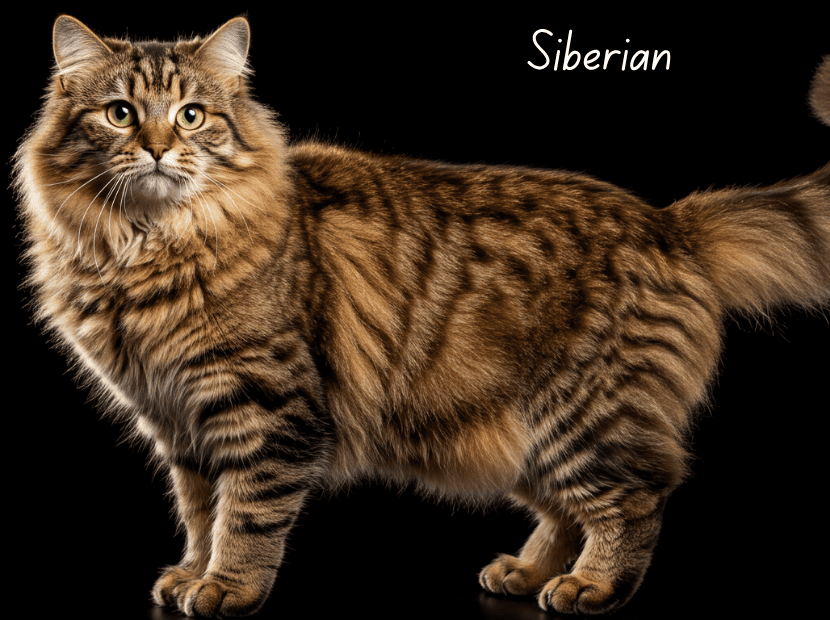
Siberian cats are large, semi-long-haired felines weighing 5-9 kg (males) with a thick triple coat adapted to cold climates. Known for their dog-like loyalty, exceptional affection, and playful personality, Siberians are highly intelligent and form deep bonds with their owners. They require brushing 2-3 times weekly and live 12-18 years on average, often reaching 20 years with proper care. Many are valued for producing lower levels of the Fel d 1 allergen, making them more tolerable for people with cat allergies.
Siberian cat key characteristics:
- Large breed: 5-9 kg males, 3.5-6 kg females
- Dense, triple-layered, water-resistant coat
- Dog-like, loyal, and highly affectionate temperament
- Brush 2-3 times weekly (daily during shedding)
- Prone to hypertrophic cardiomyopathy (HCM)
- Lifespan: 12-18 years (up to 20 with good care)
The Siberian Cat is a majestic, robust, and ancient natural breed from the cold forests of Russia, recognized by its wild appearance and a thick triple coat perfectly adapted for extreme climates. Despite its rugged look, this “dog-like” feline is cherished worldwide for its exceptionally affectionate and playful personality, and it is a popular choice due to being frequently cited as hypoallergenic.
This guide explores the behavioral characteristics, physical traits, and essential care requirements of the Siberian, helping you understand what makes this breed so captivating.
? I. Detailed Physical Characteristics of the Siberian Cat ??⬛
| Characteristic | Details |
|---|---|
| Weight (Adult) | Males: 5–9 kg (can reach 10 kg) Females: 3.5–6 kg. Medium-to-large, naturally heavy, strong, and robust breed. |
| Size | Large, powerful, and muscular with substantial bone structure. Long body with hind legs slightly longer than the front — excellent jumpers. |
| Height | Approximately 25–30 cm (10–12 in) at the shoulder. |
| Coat |
Length: Semi-long to long. Type: Dense triple coat (three layers), water-resistant — ideal for harsh cold climates. Features: Thick ruff around the neck, fluffy britches (hind legs), ear tufts, and toe tufts. Surprisingly low tendency to mat. |
| Colors & Patterns | All natural colors/patterns accepted: solids, bicolor, tabby and colorpoints (Neva Masquerade). Disallowed colors: chocolate, lilac, cinnamon, and fawn. Brown tabby is one of the most iconic. |
| Eyes | Large, slightly oval but almost round. Colors: green, gold, copper, or blue (in colorpoint varieties). |
| Head | Broad, modified wedge with rounded contours. Well-developed cheeks and a soft, gentle expression. |
| Ears | Medium-sized, rounded tips, set wide apart. Often feature lynx-like ear tufts. |
| T tail | Medium to long, thick, and heavily furnished with dense fur. Slight taper toward the rounded tip. |
| Life Expectancy | 12–18 years; many Siberians live up to 20 years thanks to strong natural health. |
| Estimated Price | Wide variation: typically $1,000–$4,000 (international reputable breeders). |
The Siberian cat is one of the healthiest natural breeds, with strong genetics and a highly protective coat. Regular grooming, hydration, and enrichment help maintain their well-being, especially during seasonal shedding.
❤️ II. Behavioral and Temperament Traits ???
The Siberian is deeply attached to its owners and is often described as a “dog-like cat” due to its loyalty and highly interactive nature.
- Affection Towards Humans: They love company, follow their humans around the house, and are known to snuggle on laps, chests, or even shoulders. They are very affectionate and enjoy interaction.
- Intelligence and Trainability: Extremely intelligent and curious, they demonstrate great problem-solving skills and are highly receptive to training with positive reinforcement. Their sharp memory means they will remember routines and loved ones. They can learn to walk on a leash, fetch toys, and respond to simple commands.
- Vocalization: They are considered soft-voiced cats. They communicate their needs and affection with chirps, trills, and small meows that are more like a song than a loud, demanding meow. They often “converse” with their humans.
- Activity Level: Siberians are active and playful cats, maintaining a playful spirit throughout life. They enjoy climbing, jumping, and interactive games. They need environmental enrichment (like tall cat trees) to exercise their athletic nature.
- Family & Other Pets: Due to their calm and patient nature, they generally get along very well with children. They are very sociable and welcoming towards other pets, including dogs and other cats.
? III. Essential Care and Preventive Health ??
- Grooming: Requires brushing two to three times a week to remove loose hair and prevent mats. Brushing should be daily during seasonal shedding (the molting period).
- Nutrition: A high-quality, balanced diet, emphasizing animal-based proteins to support their muscular development, is ideal. The inclusion of omega-3 and omega-6 fatty acids benefits their coat and skin health. Portion control is important to prevent obesity.
- Common Health Issues: The breed is generally robust, but can be predisposed to Hypertrophic Cardiomyopathy (HCM). They may also be prone to dental problems and lower urinary tract diseases.
- Prevention: Annual veterinary check-ups, vaccination, and parasite control are essential. Genetic testing for HCM may be recommended by the vet.
- Daily Care Routine: Includes fresh food and water, checking eyes and ears, cleaning the litter box, gentle brushing, and interactive playtime/cuddles.
? Want to Explore the Norwegian Forest Cat?
Discover their Viking origins, adventurous spirit, and thick coat:
Norwegian Forest – Care Guide & Viking Origin
❓ IV. Siberian Cat: Curiosities and Additional Questions ??
Are siberian cats truly hypoallergenic ?
u003cstrongu003eYesu003c/strongu003e. They are often called u0022u003cstrongu003ehypoallergenicu003c/strongu003eu0022 because they produce u003cstrongu003esignificantly lower levelsu003c/strongu003e of the protein u003cstrongu003eFel d 1u003c/strongu003e (the main cat allergen) in their saliva, making them u003cstrongu003emore tolerableu003c/strongu003e for many people with cat allergies. However, they are u003cstrongu003enotu003c/strongu003e 100% risk-free.u003cbru003e
u003cstrongu003e What types (variations) of Siberian Cats exist?u003c/strongu003e
The main variation is the u003cstrongu003eNeva Masqueradeu003c/strongu003e. This is the Siberian with u003cemu003ecolourpointu003c/emu003e markings (dark tips on the extremities: face, ears, paws, and tail, and a lighter body), which usually has u003cstrongu003eblue eyesu003c/strongu003e due to the associated colorpoint genetics. Most associations consider it an acceptable u003cstrongu003ecolor variationu003c/strongu003e.
u003cstrongu003eWhat is the origin of the breed and are there legends about it?u003c/strongu003e
The u003cstrongu003eSiberianu003c/strongu003e is a u003cstrongu003enatural breedu003c/strongu003e, originating in u003cstrongu003eRussiau003c/strongu003e and u003cstrongu003eSiberiau003c/strongu003e. Legends suggest they were companions and hunters in Russian monasteries over a thousand years ago, essential for protecting grain stores from rodents.
u003cstrongu003eIs it true that the siberian cat love to play with water?u003c/strongu003e
u003cstrongu003eYes!u003c/strongu003e Many Siberians show an unusual fascination with water. They may play with the water bowl, try to u0022fishu0022 objects out of a sink, or even be curious about bathing. This trait may be a heritage from their wild ancestors.
u003cstrongu003eDoes the Siberian Cat adapt well to apartments?u003c/strongu003e
u003cstrongu003eYesu003c/strongu003e, they adapt very well to apartment life, provided their needs for exercise (like climbing on cat trees) and mental stimulation are met.
u003cstrongu003eDoes the Siberian Cat shed a lot of hair?u003c/strongu003e
Yes, they shed, especially during seasonal changes (spring and autumn). However, the texture of their coat often causes loose hair to get u003cstrongu003etrapped in the coat itselfu003c/strongu003e, meaning the hair is u003cstrongu003eless likely to float around the houseu003c/strongu003e.
u003cstrongu003eHow long does the Siberian Cat take to reach full maturity?u003c/strongu003e
It is a slow-maturing breed. They continue to develop and increase muscle mass and body size until about u003cstrongu003e4 to 5 years of ageu003c/strongu003e.
u003cstrongu003eWhich country has the most specimens of this breed?u003c/strongu003e
The breed is native to u003cstrongu003eRussiau003c/strongu003e, and it is considered the u003cstrongu003eofficial felineu003c/strongu003e of the country. Russia is where the breed naturally developed and where its lineage is the oldest and purest.
u003cstrongu003eu003cstrongu003eWhat are the main signs my Siberian may be sick?u003c/strongu003eu003c/strongu003e
Warning signs include sudden weight loss or gain, lethargy or hiding behavior, changes in appetite or thirst, and frequent vomiting or diarrhea. Veterinary check-ups are crucial in these cases.
u003cstrongu003eWhat are u003cemu003etoe tuftsu003c/emu003e and why are they important?u003c/strongu003e
u003cstrongu003eu003cemu003eToe tuftsu003c/emu003e u003c/strongu003eare the clumps of hair that grow between the toes. They help keep the feet warm and dry, and provide extra traction, functioning like natural u0022snowshoes.u0022
u003cstrongu003eu003cstrongu003eu003cstrongu003eWhy is the Siberian compared to a u0022dog-catu0022?u003c/strongu003eu003c/strongu003eu003c/strongu003e
They get this nickname for their deep loyalty to their owners, their habit of following people around the house, and their potential to learn tricks like u003cemu003efetchu003c/emu003e.
Explore veterinary and professional grooming resources: The ASPCA, AAFCO, and certified cat grooming professionals provide extensive guidance on feline coat care and health. Discover professional resources on long-haired cat care — access expert advice on nutrition, grooming techniques, and breed-specific health management

Long-Haired Cats — Breeds, Characteristics & Essential Care
Majestic coats, gentle personalities, and special grooming needs — discover how to care for Persian, Maine Coon, Ragdoll and other long-haired breeds so they thrive and shine.

With the sensitivity of one who loves deeply, Sissi writes stories celebrating the animal world. Her felines Estrela and Safira illuminate her days, while Pete and Gabrich live eternally through her words. Every piece she writes is a love letter to the companions who make life truly meaningful.