
? Turkish Angora Cat: The Turkish Treasure of Elegance ✨
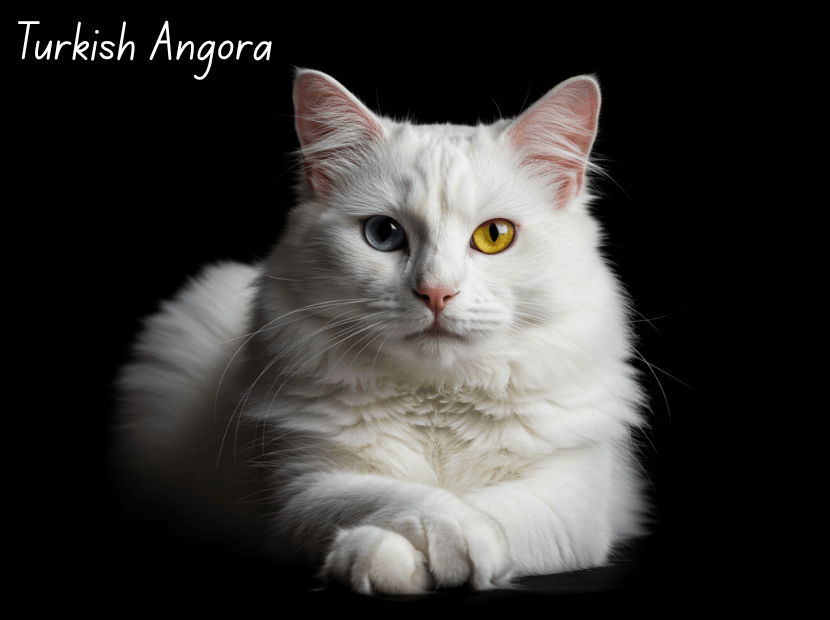
Turkish Angora cats are an ancient breed from Ankara, Turkey, featuring a slender ballerina-like body, silky semi-long coat with minimal undercoat, and large almond-shaped eyes. They are highly intelligent, energetic, deeply loyal to their primary guardian, and require brushing 1-2 times weekly. White Turkish Angoras with blue eyes have 60-80% probability of hereditary deafness, and the breed is prone to hypertrophic cardiomyopathy (HCM) and ataxia.
Turkish Angora cat key characteristics:
- Medium size with slender, elegant ballerina-like body
- Semi-long silky coat in various colors (white most iconic)
- Highly intelligent, active, and loyal to primary guardian
- Brush 1-2 times weekly (minimal undercoat)
- White cats with blue eyes: 60-80% prone to hereditary deafness
- Lifespan: 12-18 years (up to 20 with proper care)
The Turkish Angora Cat (Turkish Angora), affectionately known as Turkey’s national treasure, is one of the world’s oldest natural breeds, originating from the Ankara region (ancient Angora) in Turkey. Known for its ballerina-like elegant body, silky and flowing coat, and expressive eyes, this graceful and intelligent feline is considered a symbol of purity and elegance in its homeland.
This comprehensive guide explores the behavioral characteristics, social tendencies, physical traits, and essential care for the Turkish Angora, helping you understand what makes this “Turkish treasure” so special.
? Behavioral Characteristics of the Turkish Angora Cat
? Tendency to Vocalize
The Turkish Angora is a moderately vocal cat, with a tendency to “talk” with its guardians. They frequently communicate through soft and melodious meows, especially when they desire attention or are interacting with their favorite humans. They are not excessively noisy but enjoy expressing their opinions.
? Intelligence and Memory
Extremely intelligent, curious, and observant, Turkish Angoras are excellent problem solvers and learn quickly. They master tricks, open doors and drawers, and memorize routines with ease. Their sharp intelligence makes them highly responsive to positive reinforcement training, and they love interactive games that challenge their brilliant minds.
? Affection Toward Humans
This breed is known for developing total devotion to its primary guardian, creating deep and loyal bonds. They are affectionate, loving, and enjoy being involved in all household activities, observing and participating in what’s happening around them. They are cats that choose “their human” and follow them around the house, demonstrating canine-like loyalty.
⚡ Activity Level
Angoras are highly active, energetic, and athletic cats. They love to climb, jump, and explore vertical spaces, making tall cat trees and sturdy scratchers essential. They constantly seek “high ground” to observe their territory, enjoying perching on top of doors, shelves, and even on their owners’ shoulders. They maintain their playful spirit and energy throughout their entire lives.
? Patience with Children
Due to their playful, patient, and energetic temperament, the Turkish Angora is an excellent companion for families with children. They appreciate active play and respectful interactions, making them magnificent playmates when accustomed from kittenhood. Their tolerant and affectionate nature makes them suitable for family homes.
? Receptiveness to Other Pets
They are highly sociable and get along well with other pets, including dogs and other cats, as long as introductions are made gradually and respectfully. Their friendly, relaxed, and adaptable nature facilitates coexistence in multi-pet households, although they may try to assume group leadership.
✨ Physical Characteristics of the Turkish Angora Cat ?
The Turkish Angora Cat is a natural and elegant breed, known for its slender ballerina-like body and silky coat that floats as it moves.
| Characteristic | Details |
|---|---|
| Size | Medium-sized; elongated, slender, graceful body with long legs and fine bone structure — often described as a “ballerina’s body.” Elegant and lightweight build. |
| Weight | Males: 3.5–5 kg (7.7–11 lbs) Females: 2.5–4 kg (5.5–8.8 lbs) |
| Height | Approximately 23–28 cm (9–11 in) at the shoulder. |
| Coat | Semi-long, fine, silky, and flowing. Single coat with little to no undercoat — reduces matting. Longer around the ruff, tail, and belly. Moves fluidly with a feather-like motion. |
| Head Shape | Small to medium-sized, wedge-shaped head with a straight nose and soft, gentle contours. |
| Ears | Large, pointed, wide at the base, set high and upright on the head. Often feature delicate tufts. |
| Eyes | Large, almond-shaped, expressive. Colors include amber, green, blue, or odd-eyed (heterochromia — one blue and one amber/green), especially common in pure white cats. |
| Colors & Patterns | A wide variety of colors and patterns. Pure white with blue or odd eyes is traditional, but they also appear in black, blue, cream, red, tabby, tortoiseshell, and bicolor. All colors/patterns accepted. |
| Tail | Long, full, plume-like tail carried upright or gently curved — iconic of the breed’s elegance. |
| Physical Maturity | Fast development; typically reaches full physical maturity between 2–3 years of age. |
| Life Expectancy | 12–18 years; many Turkish Angoras live up to 20 years with excellent care. |
The Turkish Angora benefits from weekly brushing, hydration-rich diets, and regular vet checks. Their lightweight coat is easy to maintain, and their high intelligence means they thrive with enrichment and human interaction.
? Essential Care Tips for Turkish Angora Cats
Despite the long and silky coat, the Turkish Angora is low maintenance, as its fine coat with little undercoat rarely tangles or forms knots. Brushing once to twice a week is generally sufficient, increasing to three times during seasonal shedding periods.
A balanced diet rich in protein is important to maintain the silky coat quality and the breed’s natural energy. They need vigorous daily exercise and environmental enrichment to channel their high energy and intelligence.
? Common Health Problems of the Turkish Angora Cat
The breed is generally healthy and robust but has predisposition to some genetic conditions:
- Hereditary Deafness: Especially common in white cats with blue eyes or odd eyes. Approximately 60-80% of white Angoras with two blue eyes are deaf, and 30-40% of those with one blue eye are deaf in the ear on the side of the blue eye.
- Hypertrophic Cardiomyopathy (HCM): A heart disease that can affect the breed, where the heart muscle thickens, impairing heart function.
- Ataxia: A rare neuromuscular disorder affecting very young kittens (2-4 weeks of age), causing coordination problems. Responsible breeders carefully screen to reduce incidence.
? Ideal Nutrition for Turkish Angora Cats
Due to their active metabolism and high energy level, a high-quality diet with high quality animal protein content is essential. Controlled portions help maintain a healthy body weight and prevent obesity.
Fresh and clean water should always be available. Consider foods that promote coat health with omega-3 and omega-6 fatty acids.
?️ Prevention of Health Problems in Turkish Angora Cats
Regular veterinary examinations, including cardiac monitoring (echocardiogram) for early HCM detection, are recommended. For white Angoras, hearing tests (BAER – Brainstem Auditory Evoked Response) can be performed by responsible breeders.
Genetic testing and careful screening of breeding stock help reduce ataxia incidence. Maintaining an ideal weight and regular exercise are fundamental to overall health.
? Daily Care Routine for Turkish Angora Cats
☀️ Morning Routine
- Feeding and fresh water
- Quick check of eyes and ears
- Interactive play session (15-20 minutes)
? Evening Routine
- Gentle brushing (2-3 times per week)
- Vigorous play session and climbing
- Litter box cleaning
- Petting and interaction time
⚠️ Signs of Health Problems in Turkish Angora Cats
- Unexplained weight loss or sudden weight gain
- Breathing difficulty or rapid breathing (possible HCM)
- Unusual lethargy or loss of interest in play
- Lack of response to sounds (possible deafness in white kittens)
- Coordination problems in kittens (possible ataxia)
- Gingivitis or persistent bad breath
? How Much Does a Turkish Angora Cat Cost?
The cost of a Turkish Angora kitten from a reputable breeder can vary significantly. In Brazil, prices typically range between $500 to $1,200 USD, depending on lineage, pedigree, breeder reputation, and purpose (pet or show).
White Angoras with odd eyes or blue eyes tend to be more valued in the breeding market.
? Turkish Angora Personality: Independence and Affection
The Turkish Angora is known for its intense loyalty and devotion to its primary guardian. They do not like being alone for long periods and can develop separation anxiety if left isolated frequently. They need human companionship or another pet to stay happy.
❄️ Curious About the Hypoallergenic Siberian?
Explore their temperament, coat care, and allergy-friendly traits:
Siberian – Temperament, Care & Hypoallergenic Guide
? Fun Facts About the Turkish Angora Cat
? Do Turkish Angoras Like to Sit on Laps?
Turkish Angoras aren’t always the classic “lap cats,” but they are deeply affectionate and love being close to their humans. Rather than curling up on your lap for hours, they prefer to stay involved in everything you do — following you from room to room, sitting beside you, perching on your shoulders, or watching you intently. When they want physical affection, they’ll seek it out in their own charming way.
❓ Why Is It Called “Turkish Angora”?
The name comes from the ancient city of Angora (current Ankara), capital of Turkey, where the breed developed naturally over centuries. Ankara is historically known for being home to various animals with long, silky, and delicate coats, including Angora goats and Angora rabbits, whose fur was used to produce fine and luxurious fabrics. The cat inherited this name for its equally silky and elegant coat.
Is the Turkish Angora the Same Breed as the Persian?
No. Although both have long coats, they are completely different breeds. The Turkish Angora has a slender ballerina-like body, fine and silky coat with little undercoat, and a more natural facial profile. The Persian has a cobby body (compact and robust), dense coat with abundant undercoat, and a flat face. Historically, Angoras were used in the early development of the Persian breed, but the breeds have diverged significantly.
what is the Turkish Angora’s Connection to Royalty and Nobility?
In the 18th century, Turkish Angoras were so coveted that they became symbols of power, wealth, and elegance, adorning the palaces and residences of European noble families. They were gifted to monarchs and aristocrats as valuable and rare presents. In France, Marie Antoinette was known to adore her long-haired cats, possibly Angoras or their ancestors.
Why Are White Angora Cats Often Deaf?
Deafness in white Angoras is linked to the dominant W (White) gene, which produces the pure white coat. This gene can also affect the development of inner ear cells, causing congenital deafness. White cats with blue eyes have a higher probability of deafness (60-80%). Those with one blue eye may be deaf only on the side of the blue eye (auditory heterochromia). White cats with amber or green eyes have a lower incidence of deafness.
Was the Turkish Angora Almost Extinct?
Yes. During the 19th and 20th centuries, indiscriminate crossbreeding with Persians and other long-haired breeds almost led to the extinction of the true Turkish Angora. Recognizing the danger, the Ankara Zoo in Turkey initiated a preservation program in the 1960s, creating a careful breeding program with pure white Angoras, especially those with odd eyes, considered the most valuable. This program saved the breed from extinction.
Do Turkish Angoras Like Water?
Yes! Unlike most cats, many Turkish Angoras show fascination with water. They may play with running faucets, observe running water with curiosity, touch the water surface with their paws, and some even enjoy getting into sinks or shallow bathtubs. This unusual characteristic adds charm to the breed and can surprise first-time owners.
Is There a Difference Between the Turkish Angora and the Turkish Van?
Yes, they are distinct breeds, both originating from Turkey. The Turkish Angora has a slender ballerina-like body and silky coat in all colors, including the iconic pure white. Eyes can be various colors, including odd eyes. The Turkish Van has a more robust and muscular body, with a specific pattern called “van pattern” (white body with colored markings only on head and tail). Traditionally has amber eyes, but odd eyes also occur. They are known for loving to swim.
Why Is the Turkish Angora Considered a National Treasure in Turkey?
In Turkey, especially the white specimens with odd eyes (one blue and one amber/green), are considered national symbols of purity, beauty, and good luck. They are called “Ankara Kedisi” (Ankara Cat) and are deeply revered. The Ankara Zoo’s preservation program protects these cats as living cultural heritage, and they are seen as feline ambassadors of Turkish heritage.
Can the Turkish Angora Be Trained Like a Dog?
Due to their exceptional intelligence and loyal nature, Turkish Angoras can be trained to perform tricks, come when called, fetch toys, walk on a leash, and even use the human toilet instead of a litter box. They respond very well to positive reinforcement (treats and praise) and appreciate the mental challenge of training. Their canine-like loyalty makes training a rewarding experience and strengthens the bond with the guardian.
What Is the Turkish Angora’s Connection to Disney’s The Aristocats?
The cat Duchess from the classic Disney film “The Aristocats” (1970) is inspired by a white Turkish Angora. Her elegance, grace, silky white coat, and expressive eyes perfectly reflect the physical and behavioral characteristics of the breed. The film helped popularize the Turkish Angora worldwide, consolidating its image as a symbol of feline refinement and nobility.
What Is the Exact Origin of the Turkish Angora and Where Are Most Specimens Found Today?
The Turkish Angora is one of the oldest known domestic cat breeds, believed to have originated in central Turkey, specifically in Ankara (formerly called Angora), dating back to the 15th century. The first written reference to the breed dates from the 16th century in France. Regarding current population, Turkish Angoras are widely distributed in Turkey, Cyprus, and neighboring regions. The Ankara Zoo maintains the original preservation program. However, the largest concentration of registered Turkish Angoras is found in the United States and Europe, where structured breeding programs have expanded the population since the 1960s-70s. American soldiers discovered the breed at the Ankara Zoo in the 1950s and brought specimens to the United States, where they were actively bred.
? Final Thoughts on the Turkish Angora Cat
The Turkish Angora is a remarkable breed that combines ancient heritage with modern charm. Their intelligence, loyalty, and elegant appearance make them exceptional companions for the right family. Whether you’re drawn to their silky white coat, their expressive odd-colored eyes, or their dog-like devotion, the Turkish Angora offers a unique feline experience.
When considering adding a Turkish Angora to your family, remember to choose a reputable breeder who conducts health testing, especially for hereditary deafness and HCM. With proper care, nutrition, and love, your Turkish Angora will bring elegance and companionship to your home for many years to come.
? Additional Resources
Ready to deepen your understanding of long-haired cat care?
Explore veterinary and professional grooming resources: The ASPCA, AAFCO, and certified cat grooming professionals provide extensive guidance on feline coat care and health. Discover professional resources on long-haired cat care — access expert advice on nutrition, grooming techniques, and breed-specific health management.

Long-Haired Cats — Breeds, Characteristics & Essential Care
Majestic coats, gentle personalities, and special grooming needs — discover how to care for Persian, Maine Coon, Ragdoll and other long-haired breeds so they thrive and shine.

With the sensitivity of one who loves deeply, Sissi writes stories celebrating the animal world. Her felines Estrela and Safira illuminate her days, while Pete and Gabrich live eternally through her words. Every piece she writes is a love letter to the companions who make life truly meaningful.